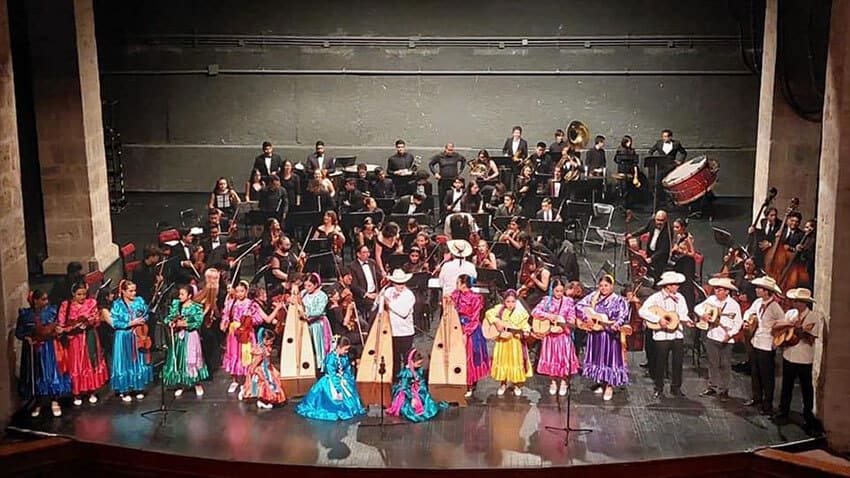
A music program in Apatzingán, Michoacán, not only gives children and adolescents the opportunity to sing and play instruments but also serves as a beacon of peace in the state’s notoriously violent Tierra Caliente region.
Formed just over a year ago, the Tierra Caliente Youth Orchestra and Choir (OCJTC) is made up of 80 members who make music under the guidance of Emilio Medina González. The ultimate aim of the group is for music to prevail over the sound of gunshots.
“It’s a sad reality that [violence] came … to this part of the country but in one way or another the [music] programs have come to benefit [youth in Tierra Caliente],” Medina told the newspaper El Universal.
He said there are a lot of talented young people in Tierra Caliente, but their talent has been obscured by the violence that has plagued the region.
Medina directed another musical group that was the forerunner to the youth orchestra and was also in charge of the broader “Culture in Harmony” program, a federal government initiative that began in late 2014.
However, the OCJTC is not government-affiliated and survives purely on donations and contributions from its members’ parents, according to an El Universal report. The orchestra initially didn’t have anywhere to rehearse, but the principal of an Apatzingán primary school came to the rescue and allowed it to practice there.
Medina said that the security situation in Apatzingán is currently better than it has previously been, but violence remains a problem in the broader Tierra Caliente region.

He said that both the forerunner group and the current orchestra were formed “for peace” and that the primary objective is for children’s voices and musical instruments to ring out more loudly than “the roar of bullets in the streets.”
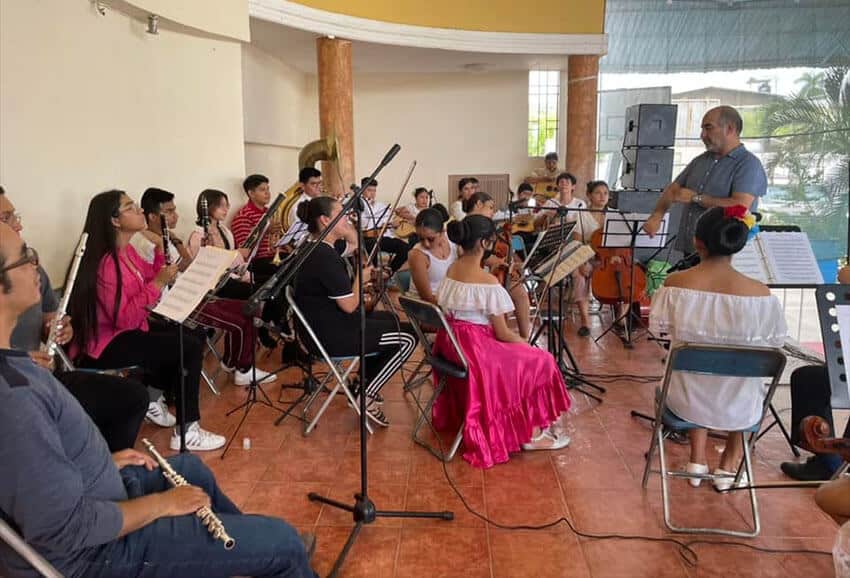
Music teachers travel from Morelia to impart classes to the orchestra members, who are loaned instruments so they don’t have to buy their own. That allows children and teenagers from families of limited means to join the program.
Twelve-year-old Mariana Flores Aguilar, who plays the violin, told El Universal that she enjoys playing with the OCJTC. “Music relaxes me and at the same time I like it,” she said. “… I didn’t imagine playing an instrument.”
Alejandro Marconi Ruíz Vargas, 13, also said he enjoys the experience of being part of a musical group.
“I like collaborating in a project in which I feel good, I feel at ease and I’m part of something very beautiful, very healthy,” he said. The parents of the orchestra members are similarly pleased.
“The children will grow up in a different environment [to that of the dangerous streets] in which they’ll develop culturally. Values, attitudes and aptitudes that will be very important in their formation as adults will be inculcated in them,” said Marisa Salas González.
“… The teacher Emilio is a great orchestra director who has rescued the traditional music of Apatzingán and made it known,” she said.
“Art must be part of the education of all children,” said Medina. “It’s a universal right. It’s important because it generates a lot of the values that society is asking for, that it demands.”
With reports from El Universal