Central Americans are not the only migrants entering Mexico at the southern border: more than 500 Africans, Asians and Haitians have also arrived recently in Chiapas.
Migrants from the Congo, Cameroon, Angola, Senegal, Sierra Leone, Uganda, Nepal, India, Sri Lanka, Bangladesh and Haiti crossed into Mexico from Guatemala in the final days of February and the first week of March, according to a report in the newspaper El Universal.
The migrants voluntarily reported their entry to immigration authorities and requested transit visas that will allow them to legally continue their journey to the United States’ southern border, where they plan to seek asylum.
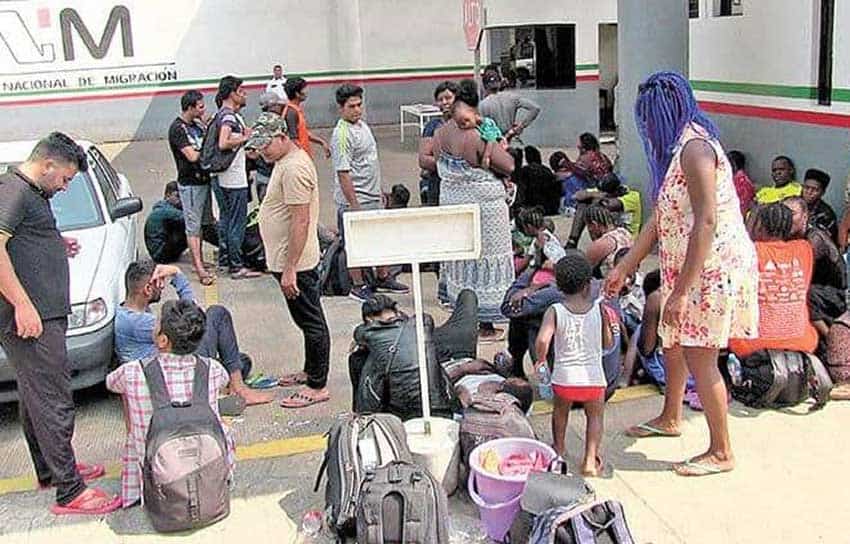
As they wait for their visas to be processed, most migrants are staying at a National Immigration Institute (INM) facility in Tapachula, where some of them claim they have been discriminated against because of the color of their skin.
“[There’s] a lot of discrimination in Mexico, a lot of discrimination . . . The whites eat first and once a day we get the little that’s left over,” a group of migrants told El Universal.
They also said they have to sleep on the floor or in the bathroom area of the shelter and that they are involuntarily hosed down each morning with cold water.
In addition, the migrants claim that Central Americans staying at the same facility smoke cigarettes and marijuana inside the facilities.
However, some of the migrants – including pregnant women and children – say that they haven’t been allowed into the immigration facility and have instead been forced to sleep outside on a concrete floor.
Around 200 migrants from African countries and Haiti claim that they have also been prevented from requesting 20-day transit visas that will allow them to continue their journey north.
Without money to pay for alternative accommodation, the migrants are forced to wait in front of the facility in temperatures that can rise to as high as 40 C.
African migrants said they flew from their countries of origin to South America before continuing to Mexico’s southern border via Central America.
Many said they were attacked by criminals and police during their journeys and spent all their money on people smugglers, transportation, accommodation and food.
Source: El Universal (sp)