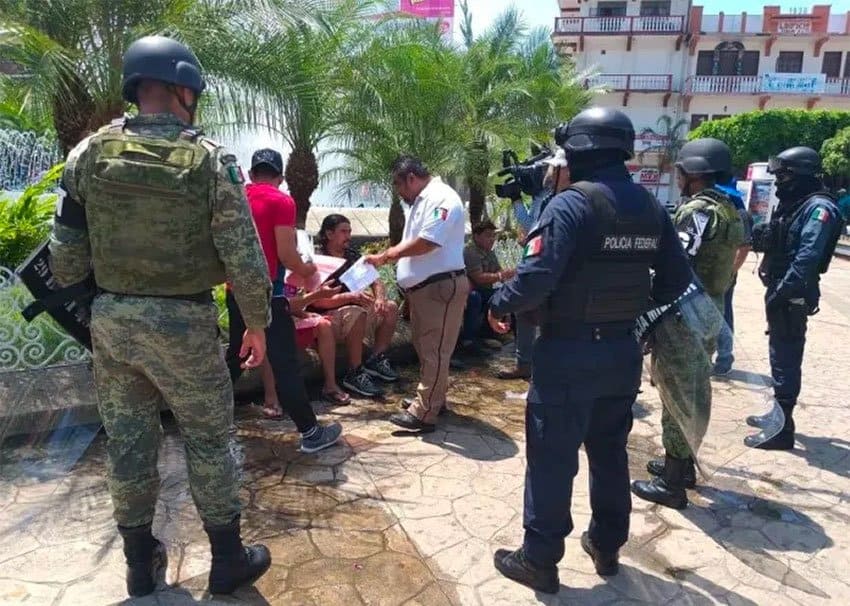
A group of African migrants rioted at a temporary shelter in Tapachula, Chiapas, yesterday to demand food, better conditions and the prompt issuance of visas that allow them to travel to the northern border.
Immigration authorities said the incident occurred at around 4:00pm at the front door of a shelter that has been set up on fairgrounds in the southern city to house the large number of migrants currently awaiting the outcome of their visa requests.
The newspaper Milenio reported that members of the National Guard, Federal Police and the navy attended the disturbance and managed to foil an attempted breakout from the facility.
Shortly after, National Immigration Institute (INM) vehicles arrived with additional food supplies, Milenio said.
During the commotion, migrant women complained about the conditions in the overcrowded detention facility and shouted for help.
“We don’t have access to anything and they [immigration authorities] don’t do anything [about it],” one African woman said.
“. . .They don’t let us leave here and we don’t know why. What is the process to leave this place? They don’t tell us anything, they don’t care.”

Another African woman said there are migrants from Cameroon, Ghana, Nigeria, the Congo, Angola, India and Bangladesh being held at the shelter and complained that there is no food.
Other migrants complained about severe overcrowding, delays in the processing of their visa requests and the inability to communicate with their families.
At the start of this year, the INM issued more than 10,000 humanitarian visas to migrants that allowed them to work in Mexico and access services for up to a year, or travel to the northern border to apply for asylum in the United States.
However, in more recent months, authorities started implementing stricter immigration policies amid increasing pressure from the United States to stop the flow of undocumented migrants from Central America.
The number of arrests and deportations increased and the INM stopped issuing humanitarian visas.
The tougher approach to dealing with the migrants has caused overcrowding at some immigration facilities including the Siglo XXI migrant detention center in Tapachula, where there have been several riots and mass escapes in recent months.
Now, as the result of an agreement reached with the United States to stave off tariffs threatened by President Donald Trump, Mexico has committed to even stricter enforcement against undocumented migrants.
On Saturday, police stopped four semi-trailers carrying almost 800 undocumented migrants in Veracruz, and authorities have pledged to block the bank accounts and pursue criminal charges against those responsible for the people smuggling attempt.
However, even though the presence of security forces has been beefed up in the south of the country, soldiers found themselves outnumbered and outmaneuvered in a confrontation with smugglers and informal merchants at the Suchiate river on the Mexico-Guatemala border on Sunday.
Yesterday, Milenio reported that there was no federal security presence at the river crossing at Ciudad Hidalgo, Chiapas, where tens of thousands of migrants, including several large caravans, have entered Mexico since late last year.