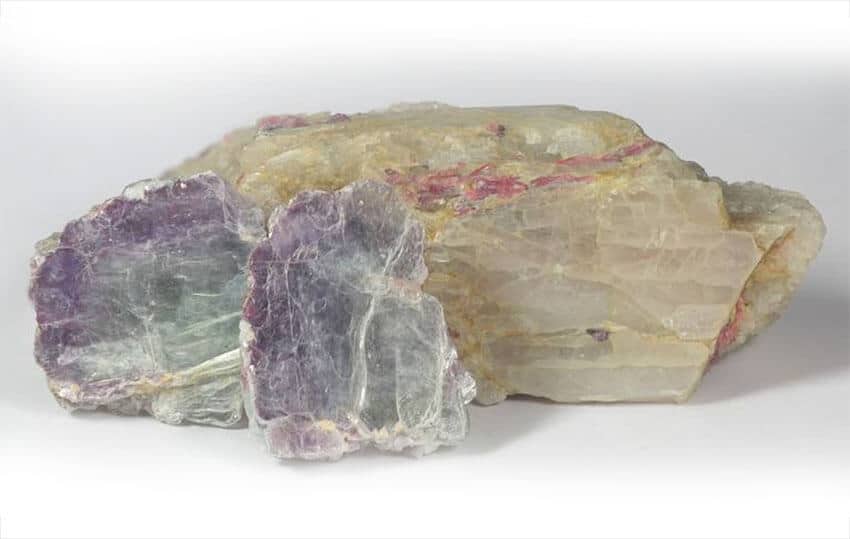
President López Obrador has pledged to nationalize lithium deposits but Mexico’s capacity to extract the sought-after metal is currently non-existent, according to the Mexican Chamber of Mines (Camimex).
Camimex president Jaime Gutiérrez Núñez told the newspaper Reforma that putting the state in charge of lithium exploration and extraction would appear to be a bad idea.
“We have to recognize that as a government we’re not sufficiently capable of doing this. In addition, there is no certainty that there is lithium in sufficient quantities in the country to be exploited economically,” he said.
Gutiérrez asserted that Mexico doesn’t have the technology required to extract lithium from potential deposits. “We could get it but we don’t have it now,” he said.
That hasn’t stopped the Mexican Geological Service from looking for lithium, known colloquially as “white gold” and “the new oil.” It is investing 55.2 million pesos (US $2.7 million) in 2021 and 2022 to detect potential deposits.
But Gutiérrez charged that the government “doesn’t have the faintest idea” of the investment needed to “really explore lithium deposits.”
He noted that the government failed in its attempts some 40 years ago to exploit uranium via a state-owned company called Uramex.

Lithium, a key component of lithium-ion batteries used for green energy storage, is coveted for the role it can play in the transition to clean energy. Mexico has large potential reserves of the alkali metal in Sonora and smaller potential deposits in states such as Baja California, San Luis Potosí and Zacatecas.
However, most of Mexico’s potential reserves are in clay deposits that are technically difficult and expensive to mine.
Recognizing that, the ruling Morena party said in June that it was no longer seeking to nationalize lithium mining and would instead encourage private investors to help develop Mexico’s potential to produce the ultralight metal.
But López Obrador sent a constitutional bill to Congress in October that would nationalize future lithium exploration. A vote on the bill, which would also overhaul the electricity market to favor the state-owned Federal Electricity Commission, is expected in April.
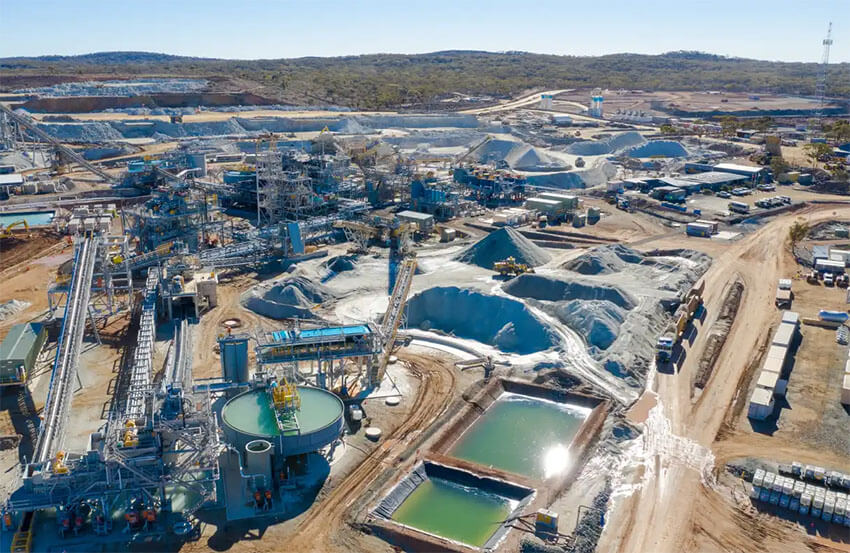
López Obrador pledged this week that no additional concessions will be issued for the exploitation of lithium in Mexico.
However, firms with active lithium mining permits, such as China’s Ganfeng Lithium, will not be affected by the nationalization plans, the government has said. There is no certainty that the reform will pass Congress because Morena and its allies don’t have the supermajority required to pass constitutional bills.
López Obrador said Tuesday that his government has a “plan B” if the bill doesn’t pass Congress, and sought to dispel doubts that lithium reserves in Mexico would end up in foreign hands. He also said that a state lithium institute will be created.
“There is no doubt that [lithium] is a strategic mineral for the future development of the world, and we want to keep it in the hands of Mexicans, of the nation,” López Obrador said.
With reports from La Jornada and Reforma