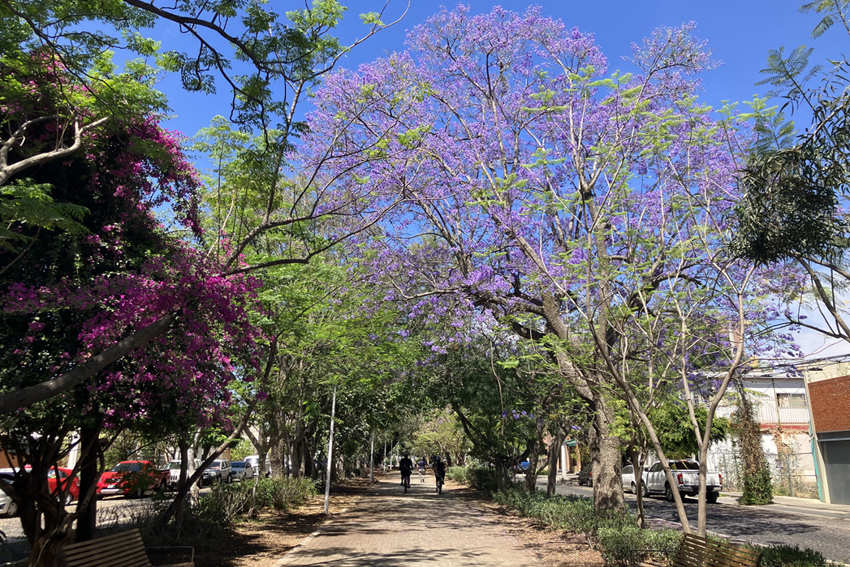
April in Guadalajara means enjoying top foreign films screened at the annual film festival in cool, dark theaters to beat the springtime heat. In this week’s article, we also take a look at how Zapopan is doing in protecting its dwindling tree canopy.
Guadalajara International Film Festival returns
The Guadalajara International Film Festival (FICG) is one of the city’s most significant cultural events of the year. It’s also one of Latin America’s largest and longest-running film festivals, now in its 41st edition.

The event showcases both Mexican and Ibero-American cinema, including full-length features, documentaries, animated films and shorts. In many cases, directors attend the screenings and host post-film Q&As, enabling attendees to gain behind-the-scenes insights into the creative process.
The FICG this year features 192 films from Mexico, Latin America, Europe and the United States. As the guest country of honor this year, there will also be 28 films from Chile, including works that tackle challenging but timely themes, such as political oppression, violence, political resistance, morality and death.
Films are screened at various locations around the city, but most happen at Cineteca FICG in north Zapopan, which is owned and operated by the University of Guadalajara. The vast majority of the festival’s films are shown in Spanish, but a handful are screened in English, Portuguese or German, with subtitles.
To check out the full calendar of screenings and purchase tickets, visit the FICG 2026 homepage.
Date: April 17-25

Location: Cinteca FICG, Centro Cultural Universitario, Av. Perif. Pte. Manuel Gómez Morín 1695, Rinconada de La Azalea, Belenes Norte, Zapopan, plus other locations. View the full schedule here.
Tickets: Available from Cineteca (University of Guadalajara). Most films cost 60 pesos.
Dwindling green spaces in Guadalajara
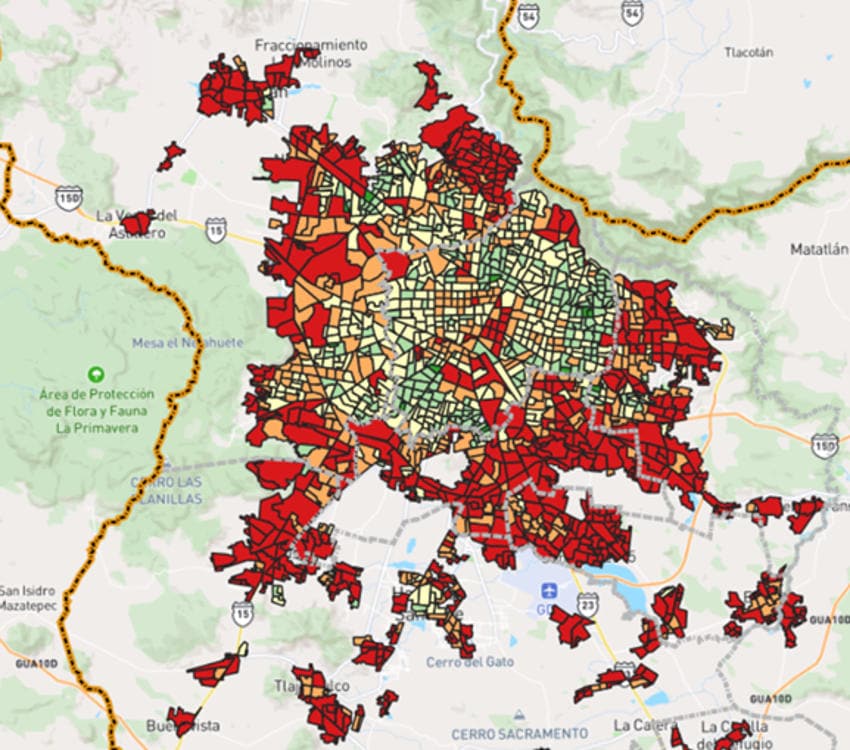
As we approach Earth Day celebrations on April 22, one of the things Guadalajara residents frequently hear is that theirs is the most arboleda (wooded) major city in Mexico. And yet, a new tree census of the Guadalajara Metropolitan Area (GMA) published in January by IMEPLAN (the city’s urban planning institute) suggests that the city’s green spaces are coming under increasing pressure.
The GMA’s tree canopy has been steadily declining over recent decades, according to analyses of satellite imagery. Beyond the ubiquitous towers springing up in the city center, an urban sprawl westward (into Bosque la Primavera) and northward (into Bosque El Nixticuil) has consumed vast swaths of local forest in recent years.
Large infrastructure projects have also contributed, with the Line 3 light-rail route that was completed in 2020, removing roughly 8,000 mature trees along the city’s north side. The tree census found that the Guadalajara Metro Area (GMA) contains 1.3 million trees, or one tree for every four residents. But the distribution is far from equal.
A green space disparity
One of the census’s more surprising findings is that the city of Guadalajara is doing a better job in tree conservation than its suburbs. It also revealed wide disparities in conservation across municipalities — the GMA is made up of nine municipalities — and between wealthier and lower-income neighborhoods.
The city of Guadalajara, which encompasses a mere 6% of the total land area in the GMA, accounts for 42% percent of the total tree cover. Zapopan, which occupies 40% of the GMA’s land area, contains just 29% percent of its tree cover. Examined from another angle, Guadalajara’s wealthier neighborhoods like Monraz, Providencia and Bugambilias contain far more trees per hectare than the city’s poorer areas.
Utilizing these latter insights, Guadalajara’s city government has identified priority areas for reforestation as part of its 2025 tree planting plan. Residents interested in adopting a tree to plant on their sidewalk can request one by sending an email to arboladourbano@guadalajara.gob.mx.
Zapopan residents decry tree removals
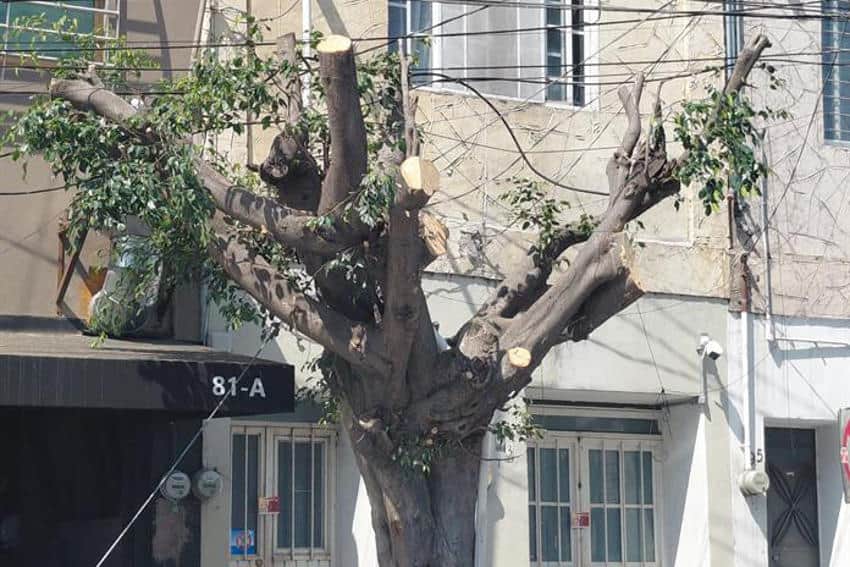
To better understand what’s happening to Zapopan’s trees, we examined earlier urban canopy management in several of its northern neighborhoods.
In February, neighbors in Zapopan’s historic center reacted angrily to the city government’s aggressive pruning and removal of multiple healthy trees. City officials defended their decision, stating that their actions were intended to discourage homeless people from sleeping under the trees.
Area residents bemoaned the aesthetic damage and loss of migratory bird habitats. Others are concerned about how the tree losses will impact temperatures in the historic center.
“People complain so much about the heat, and it’s precisely because of the lack of trees,” a historic center resident who gave her name as Elizabeth told UDGTV.
A short walk east of the historic center, residents who live alongside Villa Fantasia Park were similarly caught off guard when city workers removed 10 trees inside the park last month. When residents sought answers, the government stated that the trees had been eliminated because they were not native species.
Citizen input is not being taken into account
Residents also learned that the trees were cut as part of a park rehabilitation project, created without citizen input. The plan, not yet fully implemented, calls for a total of 36 trees to be removed.
Neighbors have mobilized to seek changes to the plan so that mature trees aren’t sacrificed. As of now, no decision has been made.
Separately, in expat favorite Colonia Ecológica Seattle, residents have been increasingly dismayed by the aggressive culling of more than 80 trees from the Parque Lineal Aurelio Ortega over the past year. This neighborhood is famous for its well-preserved tree canopy, low density and bikeability.
With so much conflict lately, it seems that Zapopan’s municipal government and residents are not well aligned when it comes to the importance of preserving what’s left of the city’s tree canopy.
MND Writer Dawn Stoner is reporting from Guadalajara.