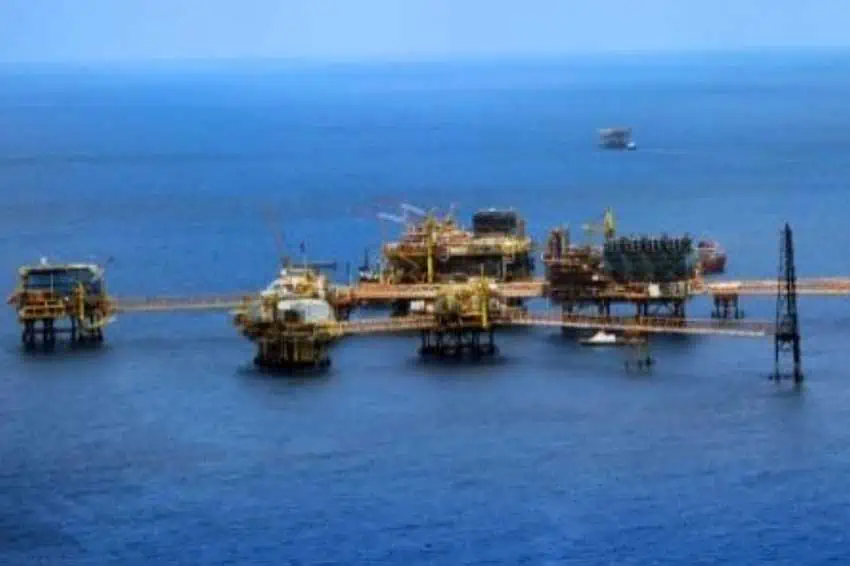
Pemex has not only been looted on land in recent years through illegal taps on its petroleum pipelines, but also at sea.
Attacks by pirates on the state oil company’s drilling platforms in the southern Gulf of Mexico increased fourfold over the past three years, according to declassified documents seen by the newspaper Milenio.
In 2016, there were 48 acts of piracy in the Bay of Campeche and off the coast of Tabasco but last year the number of attacks on Pemex’s offshore platforms soared to 197, a surge of 310%. In 2017, there were 147 attacks.
The increased incidence of the crime has occurred despite efforts by Pemex to prevent it, including the establishment of an agreement with the navy to help protect the platforms.
According to accounts from local fishermen, the modern-day pirates travel on fast boats to the drilling rigs, board them, threaten the workers with guns and knives and then steal objects of value that have included specialized equipment and building materials.
Among the pirates’ loot are drilling equipment, measuring instruments, batteries, firefighting and diving suits, wire rope, non-slip aluminum floor plates, hoses, ladders, lighting, gate valves, metal beams and even screws.
President López Obrador asserted this week that criminals are also stealing crude oil directly from drilling platforms.

Between 2016 and 2018, the pillaging cost Pemex 224 million pesos (US $11.7 million at today’s exchange rate), according to information obtained by Milenio through transparency laws.
But the real monetary damage to the company is undoubtedly much higher: Pemex didn’t reveal the losses incurred in 312 attacks – 80% of the total in the three-year period – stating that the information was “not available” or “unknown.”
According to Pemex, some attacks have been carried out by large numbers of pirates who arrive at their oil rigs in a flotilla rather than a single vessel.
On January 22, in waters off the coast of Ciudad del Carmen, Campeche, the Abkatun-A platform was surrounded by “23 motorboats,” the company said.
The perimeter lighting of the rig’s heliport as well as 84 meters of cable were stolen. In another incursion last year, thieves got away with a large portion of a 20-million-peso heliport from the Tsimin-B platform.
Although Pemex said that it was implementing measures to prevent piracy, it didn’t specify what those measures were, arguing that the information was classified.
While attacks on drilling platforms are on the rise, the financial damage they inflict on the state oil company is dwarfed by that wreaked by fuel theft from onshore pipelines.
López Obrador claims that the crime costs Mexico more than US $3 billion a year. In response, his government has implemented an anti-fuel theft strategy that has caused a prolonged and widespread gasoline shortage.
In the first 10 months of 2018, there were 12,581 illegal taps on pipelines, a 45% increase on the number recorded in the same period of 2017, but federal authorities say that the efforts to combat the crime, which have included closing major pipelines, are working.
López Obrador said billions of pesos have already been saved and the army general in charge of the deployment to protect Mexico’s pipelines asserted this week that the quantity of fuel stolen on a daily basis has fallen from 80,000 barrels in November to 2,500 this month.
Source: Milenio (sp)