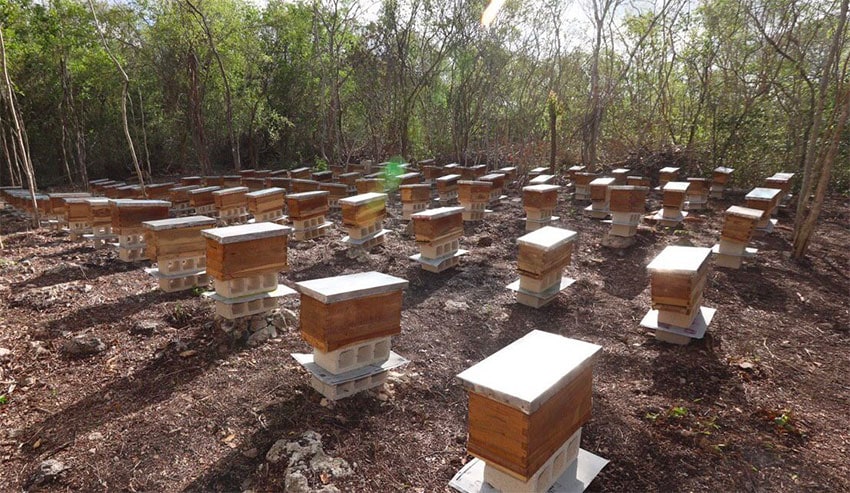
Beekeepers in Tizimín, Yucatán, have once again reported a massive die-off of bees and like last year, it appears that crop dusting is to blame.
Three apiarists who work in the Yohactún de Hidalgo area told the newspaper Milenio that the bees in at least 50% of their hives have been killed.
Joel Ramírez Francisco said that the problem began 10 days ago after the aerial spraying of crops near the forested land where the hives are located.
“. . . When I arrived at my apiary I was surprised to find that I’d lost 15 hives, the bees were dead . . .” he said, adding that the crop dusting also affected vegetation in the area.
“The kind of spraying they do with light planes affects us a lot,” Ramírez said. He claimed that those responsible are ranch owners who are not originally from the local area.
Yohactún de Hidalgo is 18 kilometers east of the Mayan community of Dzonot Carretero, where bees belonging to more than 30 beekeepers died en masse in July 2018 after a nearby farm was sprayed with pesticide.
In that case, beekeepers filed a complaint with the environmental protection agency, Profepa, against an agro-industrialist responsible for the corn and soybean crop spraying that allegedly killed their bees. However, no action was taken against him and, according to the beekeepers, Profepa officials never showed up to collect samples of the dead bees for testing.

Ramírez said that affected beekeepers in Yohactún de Hidalgo also intend to file a complaint against those who carried out the aerial spraying.
“We’re looking for other [beekeepers] who were affected. We’re going to collect evidence to send it to Mérida,” he said.
Ramírez explained that the deaths of the bees came just before the annual honey harvest, so apiarists will take a big financial hit.
“. . . We fight for a year to keep the bees alive and suddenly they spray and they die, imagine the loss . . .” he said.
Statistics suggest that crop spraying has killed bees across Yucatán this year. Data from the information agency of the federal Secretariat of Agriculture shows that honey production in the state fell to 206 tonnes in August, a 64.6% decline compared to the same month of 2018.
Source: Milenio (sp)