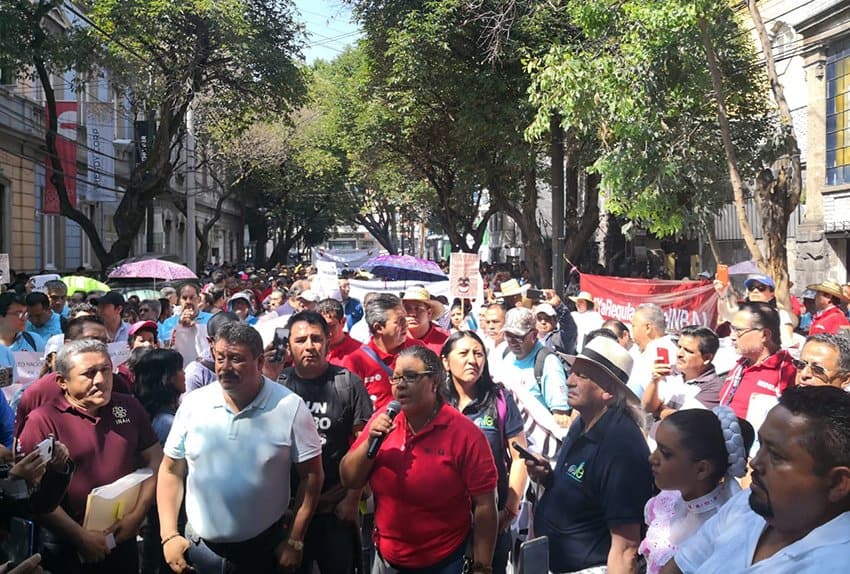
Employees of the federal Secretariat of Culture have rejected president-elect López Obrador’s plan to move the department from Mexico City to Tlaxcala.
“The transfer of our source of work to the state of Tlaxcala would affect the quality of life of thousands of workers and their families,” union-affiliated employees said in an open letter directed to the president-elect.
“Listening and taking into account the opinion of the workers of the Secretariat of Culture [is required] to build the necessary consensus and agreement in relation to the design and implementation of any decentralization measure,” they continued.
López Obrador has said that he wants to move as many as 31 government agencies out of the capital to spread public sector job opportunities to smaller cities.
The first federal government department to move out of Mexico City will be the Culture Secretariat, he said last month.
However, its employees are not the first to oppose the decentralization plan.
Employees of the federal Environment Secretariat (Semarnat) directed a letter to López Obrador in July, sending a clear message that they don’t want to move to Mérida, Yucatán, as proposed.

The Semarnat workers stated that the move fails to take into account the fact that many workers have mortgages nor does it consider the education situations of workers’ children.
Culture Secretariat employees said in their letter that they are concerned about the “lack of infrastructure, services, security [and] transport” in Tlaxcala, adding that it may be impossible for some workers and their families to make the move.
Real estate industry representatives have welcomed federal government plans to decentralize some of its departments, contending that it will be a boon for the sector.
However, others, such as the president of the Mexican Employers Federation (Coparmex), are less enthusiastic about the idea.
Gustavo de Hoyos Walther said last month that decentralization of federal government departments, with an estimated cost of at least 125 billion pesos (US $6.5 billion), will be one of the costliest processes ever undertaken in the history of public administration in Mexico.
He urged the incoming federal administration to perform a “multidisciplinary rigorous technical analysis open to the public” that assesses the pros and cons of the proposed relocation and leads to “making the decision that’s best for the country.”
Source: El Economista (sp)