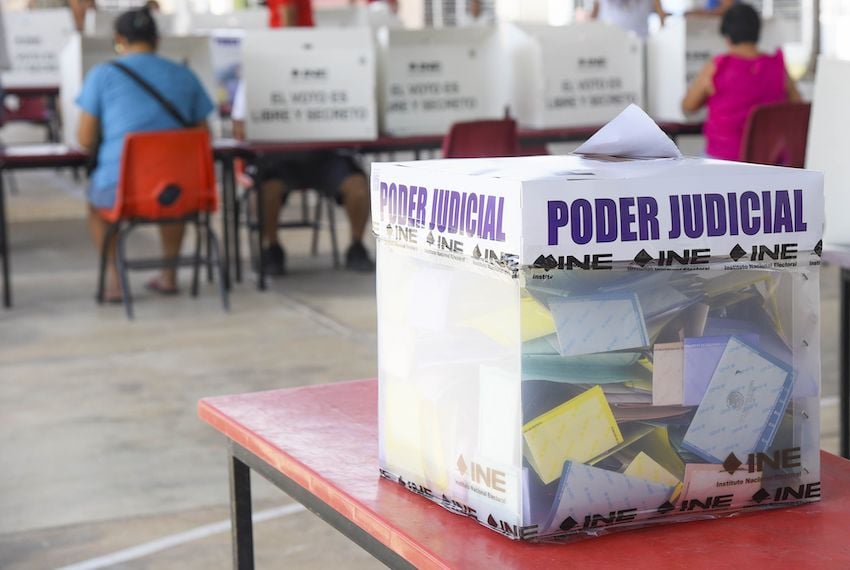
Reducing the number of federal senators from 128 to 96 and cutting election costs by 25% are among the objectives of the federal government’s electoral reform proposal.
The constitutional reform proposal was unveiled on Wednesday, ahead of its submission to Congress next Monday.
(Andrea Murcia/Cuartoscuro)
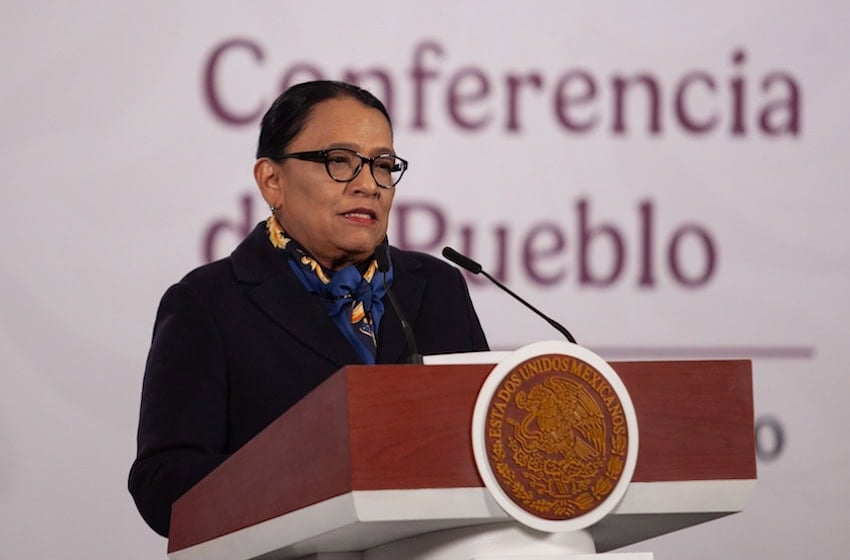
“Rosa Icela [Rodríguez], the interior minister, will present the proposal,” President Claudia Sheinbaum said at the start of her morning press conference, noting that the proposed reform has 10 key points.
Fewer lawmakers, lower election costs
Rodríguez explained that the government is proposing that the Chamber of Deputies continue to be made up of 500 lawmakers, all of whom would be directly elected by citizens, including proportional representation (plurinominal) candidates, whose names would have to appear on ballots.
Among the proposed changes to the makeup of the lower house of Congress is that eight Mexicans who live outside Mexico would become deputies.
Rodríguez said that the government is proposing a reduction in the number of senators from 128 to 96. The proposal entails the elimination of senators who are elected via proportional representation based on their party’s share of the national vote.
Rodríguez said another proposal is that the cost of elections be slashed by 25% by reducing the amount of resources allocated to the National Electoral Institute, political parties, local electoral bodies and electoral tribunals.

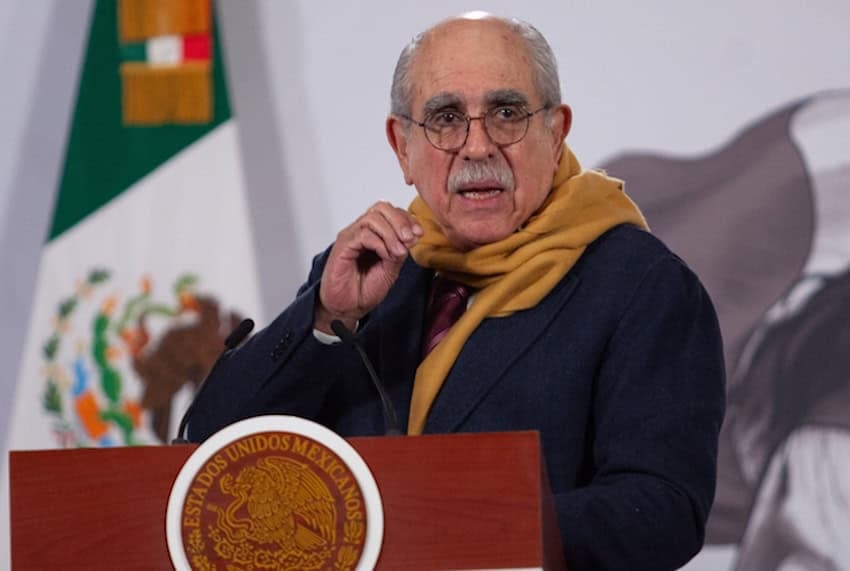
In 2024, when Mexico’s last federal election was held, 61 billion pesos (US $3.55 billion) was spent on “Mexico’s electoral systems,” said Pablo Gómez Álvarez, head of the presidential commission for the electoral reform. He asserted that Mexico’s per-voter election expenses are higher than those of any other country.
Presenting the third “point” of the proposed reform, Rodríguez said that the government wants greater oversight of resources allocated to and used by political parties and candidates, a measure that, in part, aims to prevent organized crime groups from funding campaigns.
The other aims of the proposed reform are to:
- Facilitate the voting process for Mexicans abroad.
- Reduce political parties’ permitted per-day advertising time on TV and radio.
- Regulate the use of artificial intelligence “in relation” to elections and ban the electoral-related use of bots on social media.
- Modify the vote-counting system.
- Increase “participatory democracy,” including via the use of electronic voting.
- Prevent elected positions being filled by relatives of existing officeholders starting in 2030.
- Ban politicians from seeking immediate reelection to all positions of public office starting in 2030.
The last two points have already been approved by Congress in separate legislation, but the government nevertheless decided to include them in this reform proposal in order to “reiterate” their importance.
Sheinbaum: ‘We don’t want a state party, we don’t want a single party’
Sheinbaum noted that the reform proposal seeks to eliminate “party lists for proportional representation” of deputies and senators that are not subject to endorsement or rejection by voters.
Mexico’s current plurinominal lawmakers — 200 in the Chamber of Deputies and 32 in the Senate — were not directly elected by citizens, but rather acquired their positions via selection by the parties they represent. Under the government’s proposal, the names of plurinominal candidates selected by parties would appear on ballots.
Sheinbaum said that polls and consultations with citizens have found that people don’t want leaders of political parties to remain as deputies and senators without winning their position via the popular vote.
“We don’t want a state party, we don’t want a single party,” she said, responding to claims put forward by opposition parties even before the proposed electoral reform had been unveiled.
(Andrea Murcia/Cuartoscuro)
“We want the political diversity of our country to be recognized in accordance with the votes cast in the election,” Sheinbaum said.
“There is just one thing in particular — everyone has to go out into the territory to earn their votes, everyone. Nobody can stay at home, relaxing, waiting to be number 1 on … [a party’s] proportional representation list,” she said.
“… Everybody has to seek the popular vote — those who go for direct [election] and those who go for the representation that corresponds to the percentage of their party [vote].”
Sheinbaum said that reducing election costs is also a “popular demand,” adding that savings could be allocated to education, health care and welfare programs.
“[There is] excessive spending on elections in Mexico, we have to reduce it,” she said.
“… There are a lot of needs in the country, many,” Sheinbaum said before asserting that cutting costs will not have a detrimental impact on elections or the autonomy of the National Electoral Institute.
Will the reform proposal pass Congress?
As the proposal seeks to modify the Mexican Constitution, it must be approved by two-thirds of lawmakers in both houses of Congress in order to become law.
Thus, the ruling Morena party will need to convince its two congressional allies, the Labor Party (PT) and the Green Party (PVEM), to support the proposal. Those two parties have expressed reservations about proposals to cut electoral funding and change the way in which proportional representation candidates are elected.
Morena may need to make concessions to those parties to get the legislation through Congress.
Sheinbaum said she did not yet know whether the reform proposal will be submitted first to the Chamber of Deputies or the Senate. Both houses of Congress could modify the constitutional bill before voting on it.
The national president of Mexico’s main opposition party, the National Action Party (PAN), said on social media on Wednesday that the PAN won’t support an electoral reform that doesn’t include sanctions for parties that use money that comes from organized crime.
“Without free and fair elections, there is no democracy,” Jorge Romero Herrera wrote on X.
According to Reuters, PAN Senator Ricardo Anaya said he believed the government’s arguments concerning party lists and funding were a “smokescreen.”
“The government’s goal is not to have more democracy, it is to have control of the electoral processes,” he said.
By Mexico News Daily chief staff writer Peter Davies (peter.davies@mexiconewsdaily.com)