The family of Joaquín “El Chapo” Guzmán will build a university for indigenous students in Badiraguato, Sinaloa, according to a Mexican lawyer who represented the convicted drug trafficker.
José Luis González Meza, who revealed in September that “El Chapo” wants his money to go Mexico’s indigenous communities, said that Guzmán’s family will receive financial support from a range of foundations in order to open the university in the ex-narco’s birthplace.
It will be designed by Guerrero painter Hugo Zúñiga and have several different faculties, he said. The total cost of the project is unclear.
González said that he was hopeful that President López Obrador would make the time to travel to Badiraguato and preside over a groundbreaking ceremony during his tour of Sinaloa this weekend.
“What we’re hoping for is that . . . he’ll go to Badiraguato and along with Chapo’s mom, María Consuelo, he’ll lay the first stone and the work to build the university will finally start,” he said.
The president said in February that his government was committed to the establishment of a new public university in the town that will specialize in forestry, while this week he pledged to extend the agroforestry employment program Sembrando Vida (Sowing Life) to parts of the country where illicit crops are grown, including Badiraguato.
González said that two other projects backed by Guzmán’s family are also planned, provided that assets seized from the former leader of the Sinaloa Cartel are returned to Mexico.

One is the establishment of a cooperative-run chain of stores and the other is the creation of a pharmaceutical company, the lawyer said.
The aim of the former project, González said, is to replicate the cooperative stores that existed when Joaquín Hernández Galicia was the leader of the Pemex workers’ union, an era that spanned almost three decades from the early 1960s to the late ‘80s.
He said that the new stores would sell a range of products, including “food, coffee, tequila, beer [and] mezcal” for up to 50% less than their usual retail price.
If the pharmaceutical company idea gets off the ground, it would start off selling cheap medicine in Mexico but could expand into Central America once production ramps up, González said.
Both the cooperative store chain and the drug firm will be led by management teams made up of campesinos and indigenous people, he added.
“They’re going to be the future industrialists of this country,” González said.
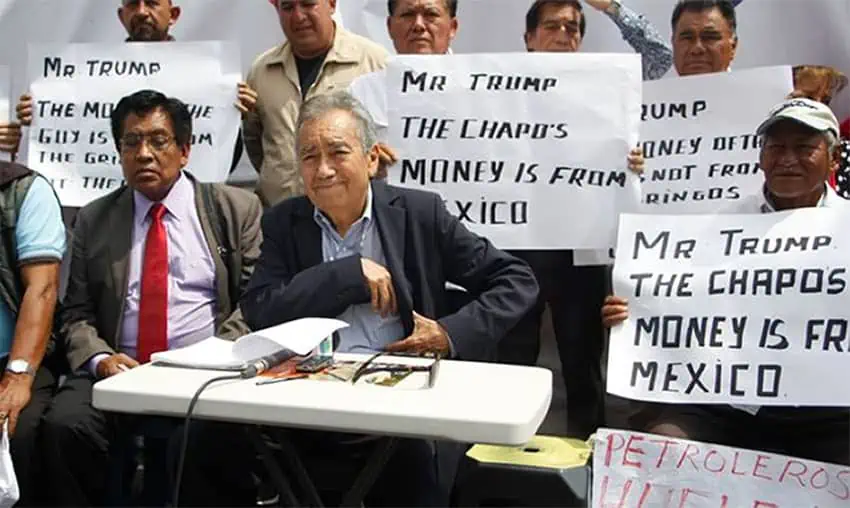
The lawyer reiterated that the billions of dollars that United States authorities are seeking in forfeiture from Guzmán rightfully belong to Mexico.
López Obrador said in July that González had convinced him that Mexico has a claim to Guzmán’s assets and pledged that his government would seek to seize them.
“I believe that everything confiscated that has to do with Mexico should be returned to Mexico, to the Mexican people, and I believe that the United States government is going to agree to turn [it] over,” he said.
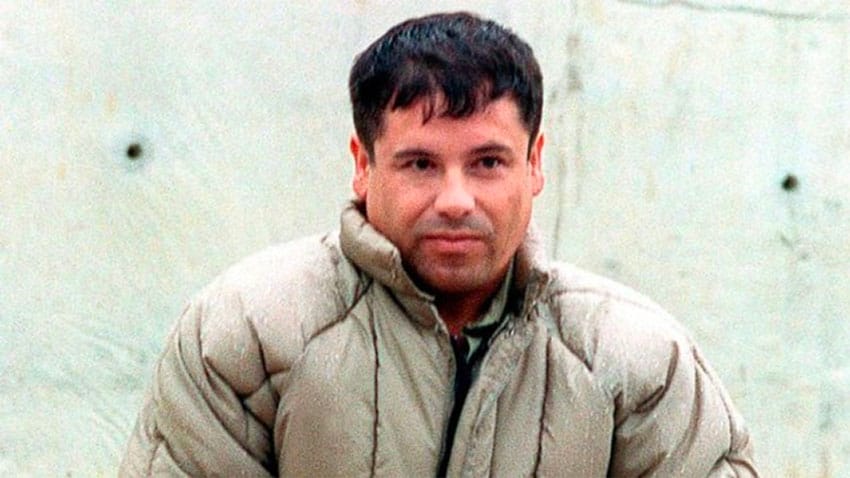
Guzmán was found guilty of drug trafficking by a United States federal court in February after a three-month trial during which jurors heard tales of grisly killings, political payoffs, high living and a massive drug-smuggling operation that moved at least 180 tonnes of cocaine into the United States, along with heroin, methamphetamine and marijuana.
He was sentenced to life in prison on July 17 and transferred soon after to the “Supermax” prison in Florence, Colorado, the United States’ most secure penitentiary.
Source: Milenio (sp)