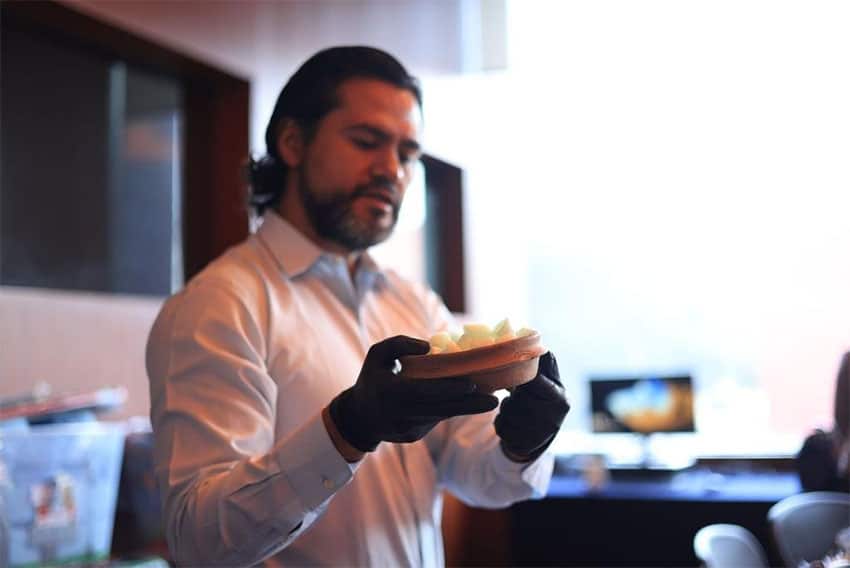
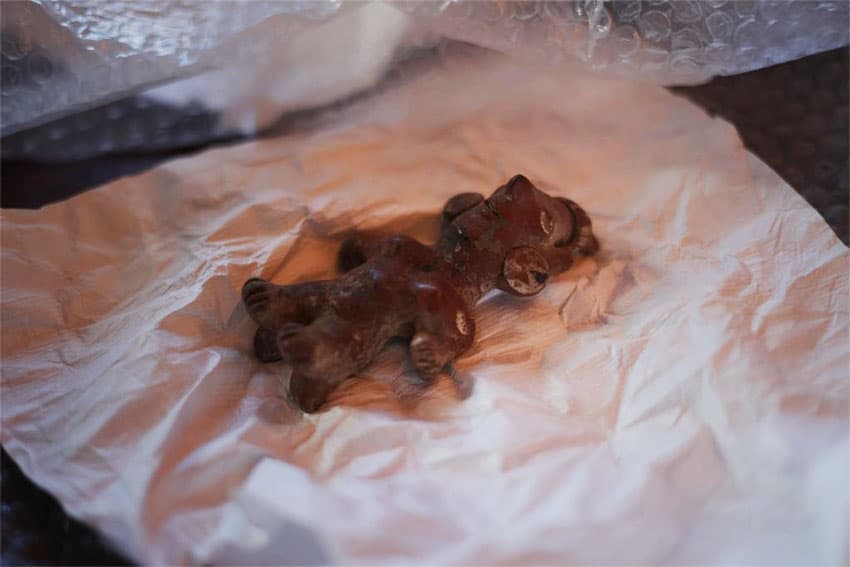
On Thursday, the Ministry of Culture announced that 223 archeological pieces were returned home to Mexico from the Netherlands, thanks to an agreement with the European country.
According to the Ministry, the repatriated artifacts are already under the protection of the National Institute of Anthropology and History (INAH) for analysis, care, conservation and cultural promotion.
An initial inspection of the pieces, carried out by INAH’s experts, confirmed that they are pre-Hispanic artifacts from cultures in western Mexico, the central highlands (also known as the Mexican Altiplano), the Gulf of Mexico and the southeast region of the country. They date from the Mesoamerican Preclassic Period (1200 B.C.-400 B.C.) to the Postclassic Period (A.D. 800-A.D. 1,521).
In the repatriation ceremony, Foreign Affairs Ministry official Bernardo Aguilar Calvo expressed the Mexican government’s gratitude to the deputy ambassador of the Netherlands in Mexico, Anne Le Guellec, for her collaboration in the recovery of the pieces.
In turn, the deputy ambassador recognized the positive trend in the international arena to return cultural and heritage objects to their original communities, based on the principles of ethics and respect.
Also present in the ceremony was SRE’s deputy legal consultant, Salvador Tinajero, who described the Netherlands’ support as invaluable to fight illicit trafficking of archaeological and cultural objects.

Mexico’s current administration has prioritized the recovery of national cultural heritage from abroad. According to the national news outlet Aristegui Noticias, around 9,000 national pieces have been recovered since López Obrador took office in December 2018.
As part of the recovery strategy, Mexico has filed lawsuits in different countries against the auction of Mexican pieces. In 2021, the government also launched an international campaign called #MiPatrimonioNoSeToca (#Don’tTouchMyHeritage) promoted by Mexican ambassador in France, Blanca Jiménez Cisneros.
Countries like Guatemala, Honduras, Peru, and Colombia have joined the campaign as they also try to recover heritage that is illegally sold in foreign countries.
In November, two different manuscripts signed by Spanish conquistador Hernán Cortés were also returned to Mexico as part of the country’s efforts to recover its cultural heritage abroad.
With reports from Aristegui Noticias