A court in Chiapas has issued a provisional suspension order against the Maya Train project, halting construction in three municipalities due to coronavirus concerns.
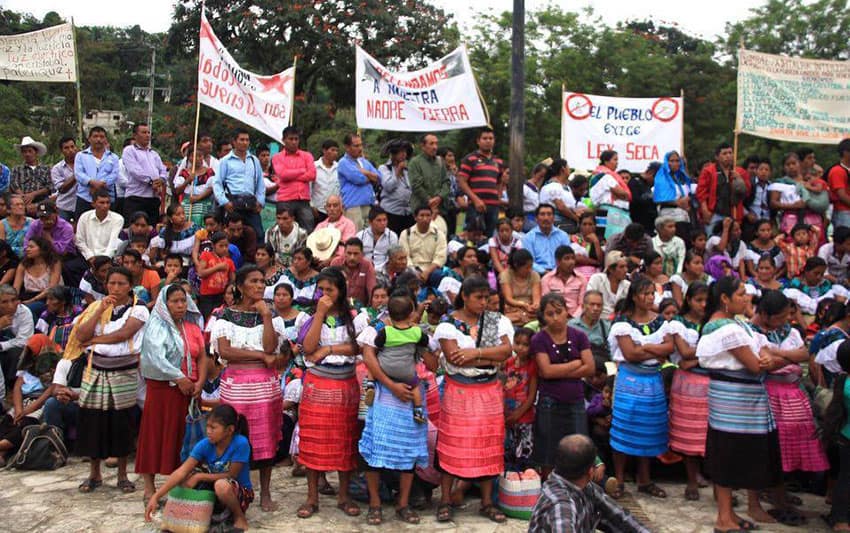
The ruling came in response to an injunction request filed by a group of Maya Ch’ol people from the municipalities of Palenque, Ocosingo and Salto de Agua.
The indigenous residents argued that construction of the project during the coronavirus crisis would violate their constitutional right to health protection because it could increase their risk of being exposed to Covid-19.
They also said that they would be prevented from protesting against construction of the 1,500-kilometer-long railroad during the pandemic period due to restrictions put in place to contain the spread of the coronavirus.
In a written decision approving the injunction, the judge agreed that construction would “undoubtedly” increase the risk of the Maya Ch’ol people being infected.
However, the residents can’t celebrate fully yet: another hearing will be held on May 14 at which a judge will decide whether to upgrade the provisional suspension order to a definitive one, which would provide an even stronger guarantee that work on the railroad in the three municipalities won’t start while Covid-19 remains a health threat.
The Maya Ch’ol residents ultimately want to stop the train project altogether, arguing that it will cause irreparable damage to the environment, including natural resources such as water.

The suspension order comes two months after a judge in Campeche granted a definitive suspension order against the Maya Train to a group of indigenous people in the municipality of Calakmul.
The federal government has said that it will enter into dialogue with people who oppose construction of the railroad although it already held a vote last December that found 92.3% support for the mega-project.
However, some indigenous groups were highly critical of the consultation process, while the United Nations said that it didn’t meet all international human rights standards.
Despite the criticism of the consultation, the legal obstacles and the coronavirus crisis, the government is forging ahead with the tourist train project, which will link cities and towns in Tabasco, Campeche, Yucatán, Quintana Roo and Chiapas.
Two contracts to build different sections of the US $8-billion railway have already been awarded, one going to a consortium controlled by billionaire businessman Carlos Slim and another to a Portuguese/Chinese one.
President López Obrador confirmed this week that construction of the first sections of the railway will commence next week. But the injunction might affect the second contract, which is for a section of track between Palenque, Chiapas, and Escárcega in Campeche.
The president said in April that the Maya Train and the government’s other large infrastructure projects, including the Santa Lucía airport near Mexico City and the new Pemex oil refinery on the Tabasco coast, will help to create 2 million new jobs and thus help the economy recover from the sharp coronavirus-induced downturn.
Source: Milenio (sp)