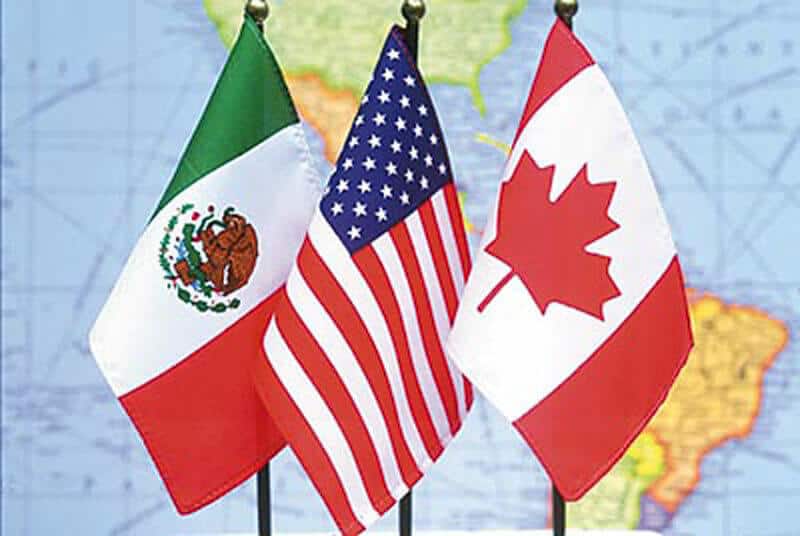
Cuba and energy loom as potentially contentious issues at Thursday’s North American Leaders Summit in Washington D.C., where President López Obrador will meet face to face with United States President Joe Biden and Canadian Prime Minister Justin Trudeau for the first time since he took office in late 2018.
United States officials have indicated that the situation in Cuba, where a nationwide protest planned for Monday was suppressed before it happened, and energy integration will be on the agenda at the White House summit, the first between the leaders of the three North American nations since 2016.
According to an unnamed high-ranking United States official cited by the newspaper El País, Biden will ask López Obrador and Trudeau to join forces with the U.S. to demand that the Cuban government respect those who are seeking greater freedoms in the Caribbean island nation.
Monday’s planned “Civic March for Change” – at which Cubans opposed to the government intended to protest the lack of freedom under Communist Party rule and build on the momentum generated by mass demonstrations in July – fizzled because Cuban security forces prevented dissidents from leaving their houses to take to the streets.
Biden’s national security advisor said in a statement Monday that the Cuban regime had “predictably deployed a set piece of harsh prison sentences, sporadic arrests, intimidation tactics, and acts of repudiation all in an attempt to silence the voice of Cuban people.”
“… By its actions, the Cuban regime failed to respect the civil and political rights enumerated in the Universal Declaration of Human Rights and international human rights treaties ratified by Cuba, including the right to peaceful assembly and association, the right to freedom of opinion and expression, and freedom from arbitrary arrest, detention, or exile,” Jake Sullivan added.
An attempt by the United States to gain the support of its neighbors to pressure Cuba is unlikely to be well received by López Obrador, who has indicated his support for the Cuban government on repeated occasions and hosted President Miguel Díaz-Canel as a guest of honor at this year’s Independence celebrations.

He has also railed against the United States’ embargo against Cuba, and Foreign Minister Marcelo Ebrard told the United Nations General Assembly in September that “an end to the economic blockade against Cuba is urgent.”
“You can’t choke the Cubans who have decided to stay in Cuba,” López Obrador said Monday. “I’m against the blockade, I believe it’s inhumane. Nobody has the right to cause people to rebel against their government via these practices,” he said.
Conflicting views on energy policy could cause another flashpoint at Thursday’s summit. López Obrador sent a constitutional bill to Congress in October that seeks to overhaul electricity market rules so that the state-owned Federal Electricity Commission is guaranteed a 54% share.
The proposed reform, which would represent a significant blow to private and foreign power companies that operate in Mexico and likely scuttle future private investment in the sector, has been criticized by United States Ambassador Ken Salazar, although he expressed cautious confidence last week that the two countries could reach a mutually agreeable resolution.
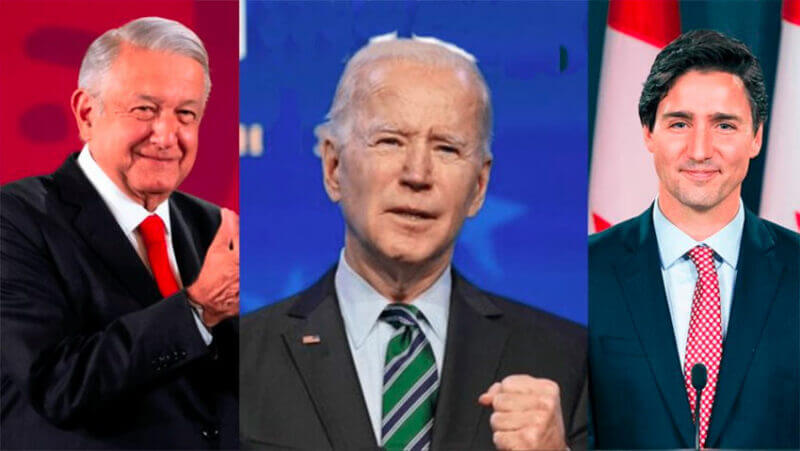
López Obrador said last week he didn’t expect his proposed electricity reform would be a topic for discussion in Washington, but U.S. Assistant Secretary of State for Western Hemisphere Affairs Brian Nichols said that energy issues will be on the agenda.
“I don’t want to totally preview the president’s meeting but I will say there will be a broad discussion of integrating North American supply chains, labor issues [and] ensuring that we continue to make progress in North American energy integration,” he told the U.S. House of Representatives Foreign Affairs Committee on Tuesday.
“[These] are some of the examples of the issues in USMCA [that will be up for discussion],” Nichols said, referring to the North American free trade agreement that took effect in July last year.
United States companies have denounced the Mexican government’s energy policies and plans, including the proposed electricity reform and oil sector changes, arguing that they violate the USMCA.
The United States’ top oil lobby, the American Petroleum Institute, wrote to the U.S. government twice earlier this year to ask it to urge the Mexican government to uphold its trade agreement commitments to treat American petroleum sector investors and exporters fairly.
Canadian companies, and Canada’s ambassador to Mexico, have also raised concerns about Mexico’s energy sector policies and plans, which in a nutshell seek to give the state greater control at the expense of private and foreign companies.
While issues related to Cuba and energy could cause discord, Thursday’s trilateral meeting – the first gathering in five years of the so-called “three amigos” – is slated to focus more on commonality and cooperation than things that divide the nations.
The White House said in a statement last week that the countries will reaffirm their strong ties and integration during the summit, “while also charting a new path for collaboration on ending the COVID-19 pandemic and advancing health security; competitiveness and equitable growth, to include climate change; and a regional vision for migration.”
Foreign Minister Ebrard said the main issues Mexico will raise are development cooperation for southern Mexico and Central America, “regional economic integration to promote investment in our country,” preparation for the next pandemic and “how to achieve fair economic recovery in 2022 and 2023.”