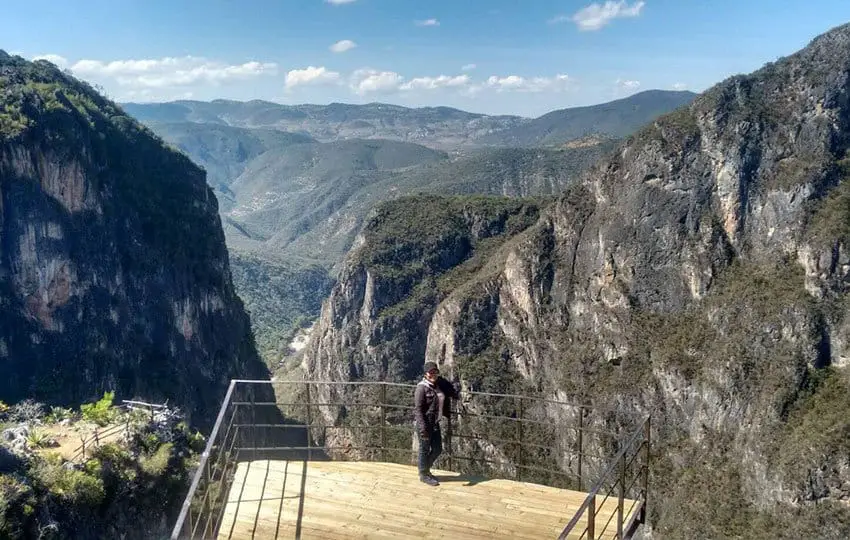
Oaxaca community hopes to draw more visitors with canyon viewpoints

Scenic lookouts that hang out over a deep canyon in the mountains of Oaxaca are intended to bring more tourists to an area whose principal export has been migrants to the United States.

The lookouts have been built in Santos Reyes Tepejillo on the edge of the Ñuu Kava canyon, where residents are promoting canyoneering and other ecotourism activities.

Ñuu Kava is known for its caves in the sheer canyon walls where there are indications of a human presence at some point in the past, despite the difficulty of access.
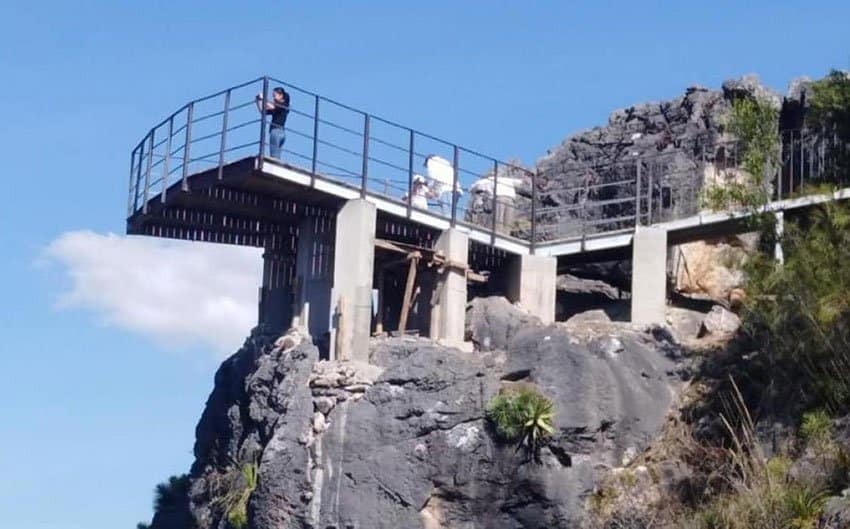
One of the scenic lookouts in Santos Reyes Tepejillo.

A community tourism organization offers tours of the canyon and an opportunity to experience local culture, including the regional cuisine.

One example of that cuisine is atole, a corn-based, pre-Hispanic dish that is celebrated annually with a two-day Atoles Festival. The third such event was held last weekend.

[wpgmza id=”113″]

The two new lookouts have been built with financial aid from the Commission for the Development of Indigenous Peoples, which provided 800,000 pesos in funding to improve tourism infrastructure.

Santos Reyes is located in Oaxaca’s lower Mixteca region from which a large number of people have left to find a better life either in the north of Mexico or in the U.S.

Many families rely on remittance payments from those who have left.

Source: NVI Noticias (sp), El Imparcial (sp)

Have something to say? Paid Subscribers get all access to make & read comments.
Mexico's navy has deployed 11 coastal sargassum collection vessels, each with a collection capacity of 20 tonnes; one offshore sargassum collection vessel; two amphibious sargassum collection vessels; 18 smaller boats; and 13,230 meters of containment barriers in Isla Mujeres, Benito Juárez, Puerto Morelos, Playa del Carmen, Cozumel, Tulum and Othón P. Blanco.

Playa del Carmen starts October with new sargassum arrivals, though seasonal decline is underway

0
The threat of sargassum remains active along Quintana Roo's coastline, but a progressive reduction is expected heading into November and December. 
Students from the Emiliano Zapata Popular Revolutionary Union took to the streets of Toluca in México state to commemorate the students killed on Oct. 2, 1968, in Tlatelolco and the 43 missing students from Ayotzinapa.

Mexico’s week in review: Peso sinks to 18 as school safety, storms and trade talks dominate

1
Attacks on and by students collided with the anniversaries of past violence this week, while the peso behaved as erratically as the weather. Here's what happened the week of Sept. 28 in Mexico.
Aerial view of the malecon and downtown of La Paza, Baja California Sur, at sunset

Mexico’s fastest-growing states aren’t the ones having the most children

0
Why are Quintana Roo and Baja California Sur leading the country for population growth, even as their birth rates plummet?
BETA Version - Powered by Perplexity