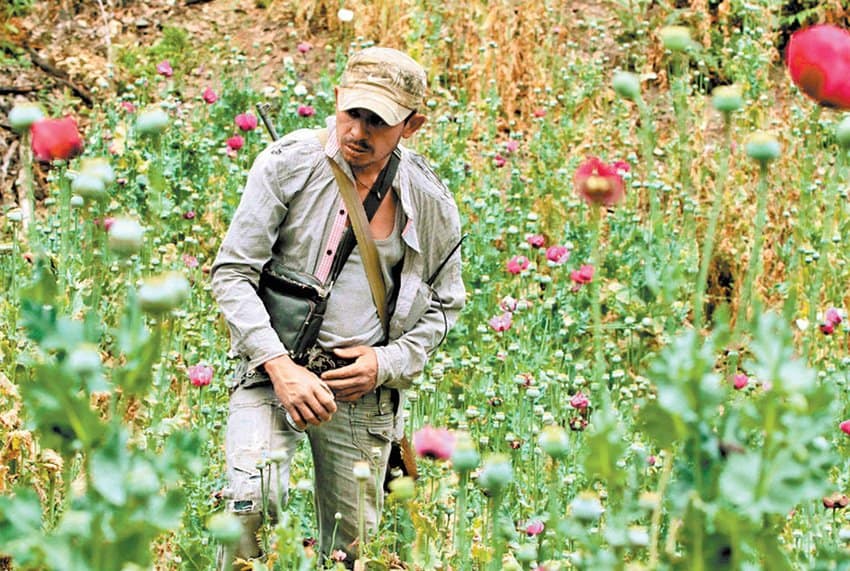
Drug trafficking gangs in Guerrero are turning their attention to mining as opium gum prices plummet, violence increases and the opioid known as “china white” floods into Mexico, a local bishop says.
Salvador Rangel, bishop of the diocese of Chilpancingo-Chilapa, told reporters this week that cultivating opium poppies is no longer profitable due to the low prices their paste yields.
So they are turning their attention to mines and sawmills.
Turf wars between competing criminal gangs have intensified, Rangel said, as they attempt to seize control of gold and silver mines and lumber mills.
The bishop conceded that the Christmas truce he attempted to broker was unsuccessful.
“As long as drugs, in particular opium gum that is extracted from poppies, doesn’t provide a good profit, the problems will continue,” Rangel said.

“The price fell completely. Three years ago, [opium gum] cost 35,000 or 40,000 pesos [US $1,800 to $2,000] a kilo and now they’re paying 3,500 or 4,000 pesos [US $180 to $200]. The people in the Sierra with whom I have contact don’t want to plant [poppies] anymore, they say simply that ‘it doesn’t maintain us anymore.’”

The bishop said that in mountainous areas of Guerrero, where the cultivation of poppies has supported communities for decades, people are now living in poverty.
“. . . Especially the campesinos [small-plot farmers], who were forced by organized crime to plant [poppies] and sell to a certain group. A lot of murders occurred in Guerrero because one community chose to sell to a different group who paid better,” Rangel said.
“They’re going through an unprecedented situation because of the fall in the price of opium gum and the invasion of china white into Mexico from the United States. It’s an opportune moment for the government to do something to support these people who are very poor. Hunger is the mother of all wars. If only there was economic stability so that there would be social stability,” he added.
Earlier this year, a group of community leaders from the state’s Sierra region appealed to then president-elect Andrés Manuel López Obrador to legalize the cultivation of opium poppies for use in the manufacture of legal pharmaceuticals.
In August, the Guerrero Congress almost unanimously approved a proposal to decriminalize the cultivation of poppies for medicinal purposes but it requires federal support in order for it to become law.
Interior Secretary Olga Sánchez Cordero has said that legalizing drugs is a possibility as part of the quest to bring peace to the country.
Source: Milenio (sp)