Two senior Pemex officials were secretly recorded explaining how to engage in bribery at the state oil company during a 2017 dinner with two former Israeli intelligence agents.
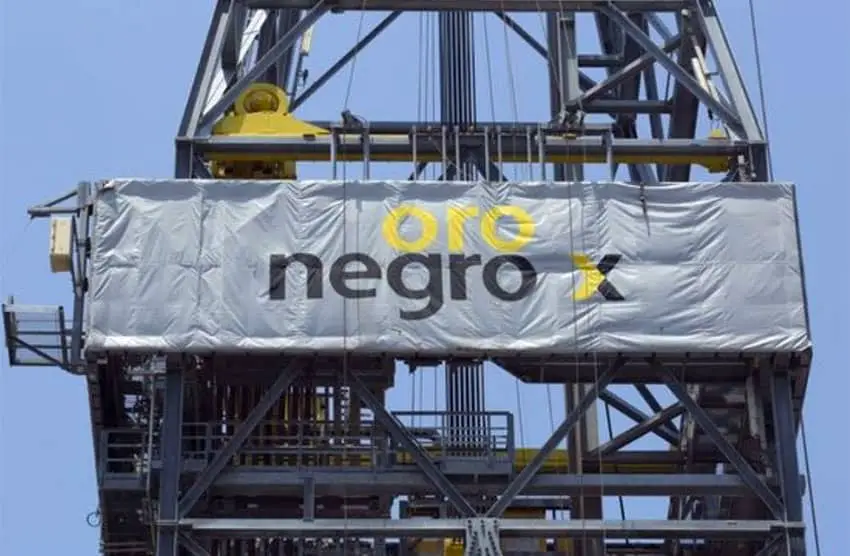
Two ex-agents of Mossad, a man and a woman who were employed by the Israeli investigation company Black Cube, passed themselves off as representatives of a United Arab Emirates (UAE) investor interested in buying the Mexican oilfield services company Oro Negro.
In that context, the private investigators – who were actually hired by Oro Negro – invited former Pemex drilling and services chief José Carlos Pacheco Ledesma and former exploration and production deputy director Luis Sergio Guaso Montoya to dinner at Sir Winton Churchill’s restaurant in Mexico City.
Audio recordings made during the meeting were presented as evidence in a lawsuit filed by Oro Negro against the Mexican government last year and have now been reviewed by media organizations including the newspapers El Universal and The Wall Street Journal.
Oro Negro claims that Pemex drove it into bankruptcy because it refused to pay bribes and is seeking US $700 million in damages, a payout which would be a heavy burden for an oil company that has in excess of US $100 billion in debt.
According to a report published Monday by El Universal, Pacheco revealed a range of details about corruption at Pemex during the presidency of Enrique Peña Nieto, focusing specifically on the period between 2012 and 2016 when Emilio Lozoya – who is currently sought by authorities on corruption charges – was at the helm of the state-run company.
Pacheco told the investigators which Pemex officials had to be paid bribes to in order to win contracts, how large the bribes had to be and how much of that money ended up in Lozoya’s pocket.

He also provided details about how much had to be paid in order to arrange an appointment with the Pemex CEO – up to US $100,000 – and how the bribe money was laundered.
Pacheco explained that Pemex officials often used sham companies operated by their children to collect and launder bribes.
Pemex directors had received up to US $5 million in exchange for a single contract, Pacheco said at one stage in the conversation, adding that the amount that the purported UAE investor would have to be pay would likely be less because the deal would involve taking over contracts already awarded to Oro Negro.
However, he added that bribe money also has to “permeate” the lower ranks of Pemex in order for a deal to go ahead.
Both Pacheco and Guaso also said that former energy secretary Pedro Joaquín Coldwell was aware of corruption at the state oil company and “also received his part” of the bribes. Coldwell rejected the accusation in an interview with the broadcaster Univision.
After the private investigators asked how a bribe would be disguised, Pacheco explained again that payments are usually made to companies with links to the corrupt officials.
“There are deputy directors, for example, that his son is the one responsible” for collecting payments, he said. “A lot of times everyone knows it.”
Asked why Oro Negro had run into problems with Pemex – which canceled its contracts in late 2017 after it filed for bankruptcy protection – Pacheco said it was “an economic issue.”
Asked by a Black Cube agent whether the contracts were lost due to a failure to pay bribes, the Pemex official responded: “they didn’t have money, that is the main problem.”
During the dinner, Pacheco also told his companions that Carlos Morales, a former director of exploration and production at Pemex, collected more than 2 billion pesos (US $103.8 million at today’s exchange rate) from contractors to fund the 2012 presidential campaign of Peña Nieto.

No further details about the scheme were offered, El Universal said, and the Black Cube agents didn’t pursue the matter.
Lozoya, who authorities believe is on the run in Europe, has also been accused of funneling part of a US $10-million bribe that he allegedly received from Brazilian construction company Odebrecht in exchange for the awarding of Pemex contracts.
Lozoya didn’t become Pemex CEO until after Peña Nieto assumed the presidency in December 2012 but part of the Odebrecht bribe was allegedly paid before he took on the role.
Pacheco and Guaso were not the only Pemex officials secretly recorded by Black Cube.
Between September and November 2017, several other former and then-current Pemex officials described what The Wall Street Journal called an “elaborate pay to play system” at the oil company.
The Journal reported that Pacheco acknowledged in a telephone conversation that he met with people he believed were interested in purchasing Oro Negro but he denied that he spoke about bribery.
“I worked for Pemex for more than 25 years, and I never had anything to do with that sort of thing, that sort of corruption,” he said.
Mexican and United States authorities are already investigating overpayments of hundreds of millions of dollars in the state oil company’s purchase of several fertilizer plants and a phosphorite reserve during the presidency of Peña Nieto.
The investigations have implicated high-level officials in the previous administration for bribery, including Lozoya, Coldwell and the former president himself.
United States authorities are investigating Peña Nieto in connection with the 2015 sale of a Michoacán plant owned by the fertilizer company Fertinal, El Universal said.
The former president, Coldwell and Lozoya have all denied the accusations of corruption leveled against them.
Source: El Universal (sp), The Wall Street Journal (en)