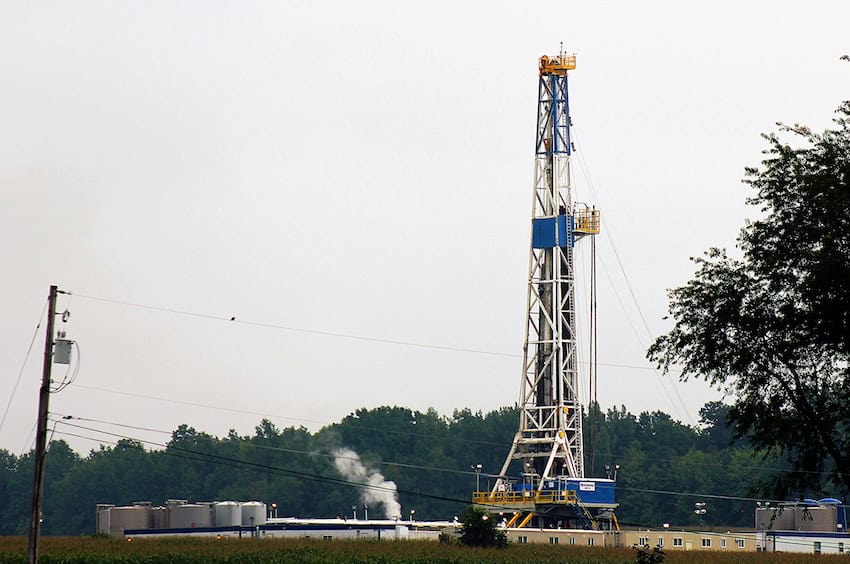
Mexico is conducting feasibility studies in Coahuila that could lead to the use of hydraulic fracturing — fracking — to extract gas from under the northern border state.
Petróleos Mexicanos (Pemex, the state-owned oil company) has drilled a well in the Coahuilan community of Hidalgo to assess the characteristics and availability of the water and to ensure that the water source is separate from that used for human consumption, Pemex Director General Juan Carlos Carpio Fragoso told members of Congress on Monday.
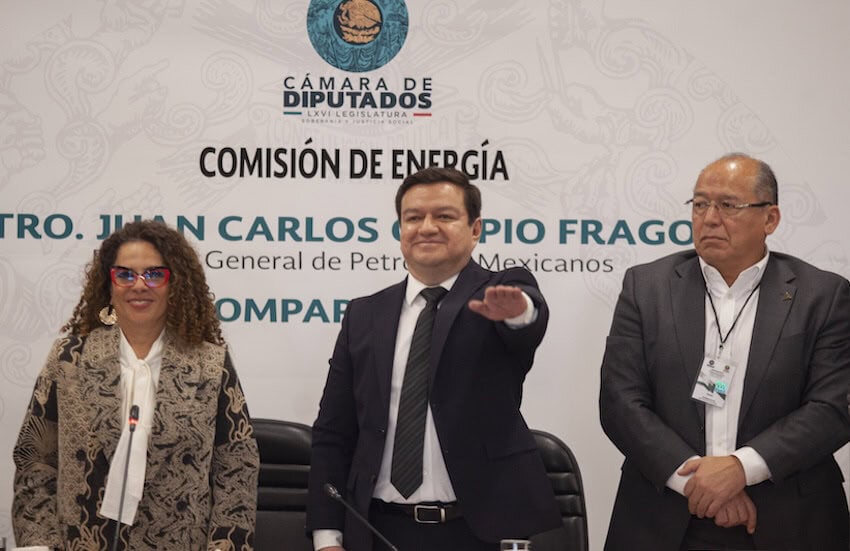
“We are waiting for the results that will confirm the characteristics of the brackish water and verify that there is no connection to freshwater aquifers,” Carpio Fragoso said.
Water availability is one of the conditions established by the government to allow fracking to take place in Mexico. “If there is not enough safe drinking water, the project will not move forward,” Carpio said.
Fracking is a hydrocarbon extraction method that involves drilling deep into the ground and injecting water, sand and chemicals under pressure to fracture the rock, thereby releasing gas or oil. The method can help operators access hard-to-reach deposits.
The Sheinbaum administration is considering expanding fracking operations in Mexico to reduce the country’s dependence on gas imports, particularly amid global price volatility and uncertainty about the future of the United States-Mexico-Canada Agreement.
Mexico currently imports up to 75% of its gas supply from the United States.

A government technical committee assessed the Burgos and Sabinas-Burro-Picacho basins in the northern states of Coahuila, Nuevo León and Tamaulipas and found they have the greatest potential for fracking operations, with prospective resources of 120.8 million cubic feet, as reported by the magazine Expansión.
However, experts believe that reducing Mexico’s gas import dependence will require developing 24 entirely new natural gas exploration and production projects to supply an additional 9 billion cubic feet per day, with an estimated required investment of $108 billion.
Mexico’s Environment Minister Alicia Bárcena said in October that there is a “series of restrictions under which fracking cannot be carried out at this time,” including water availability. If the study area of Hidalgo, Coahuila, yields sufficient availability of deep, saline water, then fracking pilot tests could potentially proceed.
With reports from López-Dóriga Digital, Expansión, Excelsior and Reuters