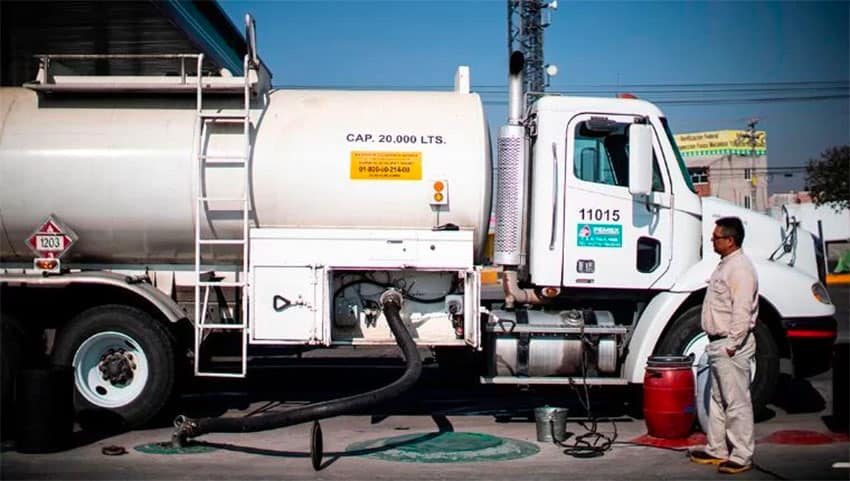
Pemex can now sell wholesale gasoline and diesel at any price it wishes after the Energy Regulatory Commission (CRE) revoked a year-old regulation that essentially restricted the state oil company from selling below cost or well above market prices.
The A/057/2018 regulation had forced Pemex to follow a set methodology to determine the prices at which it sold fuel to gas stations.
The methodology was based on U.S. Gulf Coast reference prices but made adjustments for quality and logistics, added a premium for imported fuel and considered Mexico’s crude price adjustment factor known as the K-factor.
Pemex was also required not to exceed maximum wholesale fuel prices set by the CRE on a monthly basis and had to give its customers – regardless of the retail brand under which the fuel was to be sold – equal discounts based on volumes purchased and contract length.
The members of the governing body of the CRE voted unanimously on Monday to terminate the regulation that was developed by the previous federal government after the fuel market was opened up to foreign and private companies. The rule was meant to be temporary until companies other than Pemex supplied at least 30% of the Mexican fuel market.
The energy news organization Argus Media reported that Pemex supplied 87% of Mexico’s gasoline in September, although it only met 57% of diesel demand. The CRE did not explain the rationale behind its decision, Argus said.
Energy analyst Ramsés Pech told the newspaper El Economista that the revocation of the regulation could force some gas stations to close because Pemex is now able to decide the price of the fuel it sells to them. The company will thus adjust prices dependent on its own business interests, he said.

Alejandra Palacios, president of the Federal Economic Competition Commission (Cofece), said that without limits on wholesale fuel prices, there are “risks of Pemex selling under cost and losing money, and for private companies the risk is that it will become impossible to compete with Pemex.”
She said Cofece will monitor how the change affects the fuel market.
Gas station trade organization Onexpo said in a statement that the CRE decision could have a “cascade of consequences in the market” including the possibility that Pemex-branded stations will benefit.
In light of the CRE decision, Onexpo said it has begun an “exhaustive analysis of the challenges, opportunities and new scenarios” in the fuel market. “Its conclusions will be announced soon,” the organization said.
Pemex has lost almost 2,000 of its gas stations to private companies in the last three years, Argus said, noting also that private-sector importers have eaten into the state oil company’s wholesale market share over the past year by supplying greater quantities of gasoline and diesel to retailers.
President López Obrador, a critic of the previous government’s energy reform, is determined to reduce Mexico’s reliance on fuel imports and says that upgrading Mexico’s six state-owned refineries – and building a seventh on the Tabasco coast — will allow the country to be more self-sufficient in its energy needs.
Source: Argus Media (en), El Economista (sp)