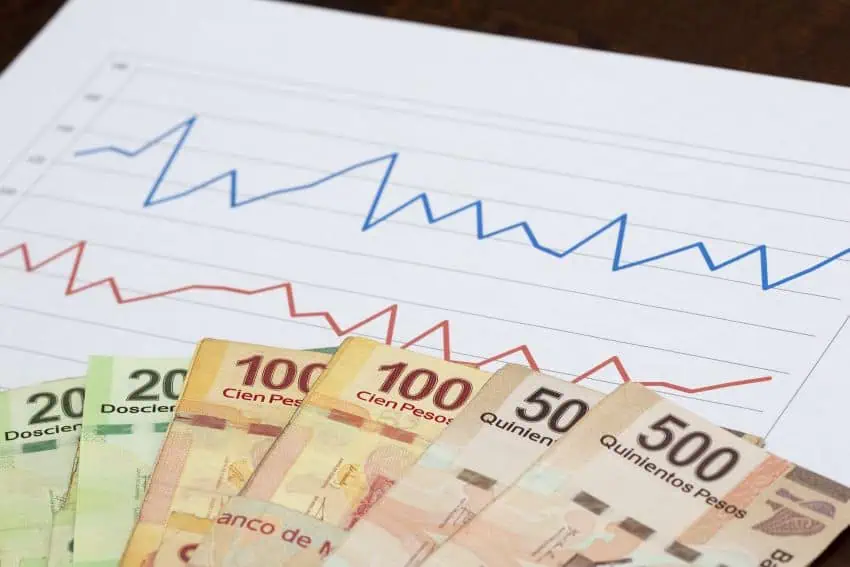
The Mexican peso depreciated against the US dollar for a fourth consecutive trading day on Monday, according to end-of-day exchange rate data from the Bank of Mexico (Banxico).
The peso closed at 20.72 to the greenback after ending Friday at 20.70 to the dollar, Banxico data shows.
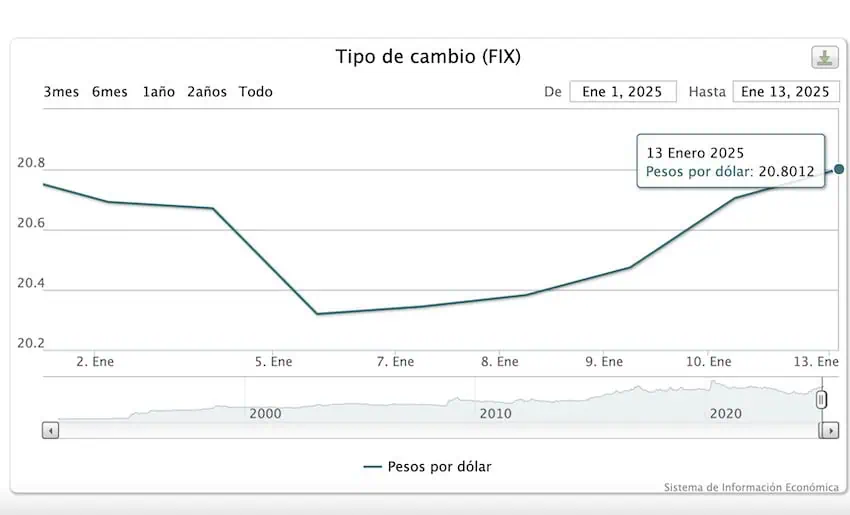
The peso also weakened on Wednesday, Thursday and Friday of last week.
Based on Banxico’s end-of-day data, the peso depreciated just over 2% against the dollar between last Tuesday and today.
The currency’s weakest position on Monday was 20.87 to the dollar, according to the newspaper El Economista.
A general strengthening of the dollar during North American trading hours on Monday contributed to the peso’s weaker position at the end of the trading day in Mexico.
However, the DXY index, which measures the value of the greenback against a basket of foreign currencies, was in negative territory shortly after 5 p.m. Mexico City time. At the same time, the peso was trading at the stronger position of 20.60 to the dollar, according to Yahoo Finance!

Labor market data out of the United States last week raised expectations that the U.S. Federal Reserve will adopt a cautious approach toward monetary policy decisions this year, contributing to the weakening of the peso.
“U.S. job growth unexpectedly accelerated in December while the unemployment rate fell to 4.1% as the labor market ended the year on a solid footing, reinforcing views that the Federal Reserve would keep interest rates unchanged this month,” Reuters reported on Friday.
In contrast, many analysts are forecasting that Banxico will cut its benchmark rate by at least 25 basis points in early February. Such a move would reduce the gap between the official interest rate in Mexico (currently 10%) and that of the Fed (4.25-4.50%), and likely cause the peso to further weaken against the dollar.
The peso had a turbulent year in 2024, strengthening to its strongest position against the greenback (16.30) in almost nine years in April before depreciating significantly after the ruling Morena party dominated Mexico’s elections in June and Donald Trump won the U.S. presidential election in November.
The peso got close to 21 to the dollar in late 2024 before strengthening slightly in the first week of 2025.
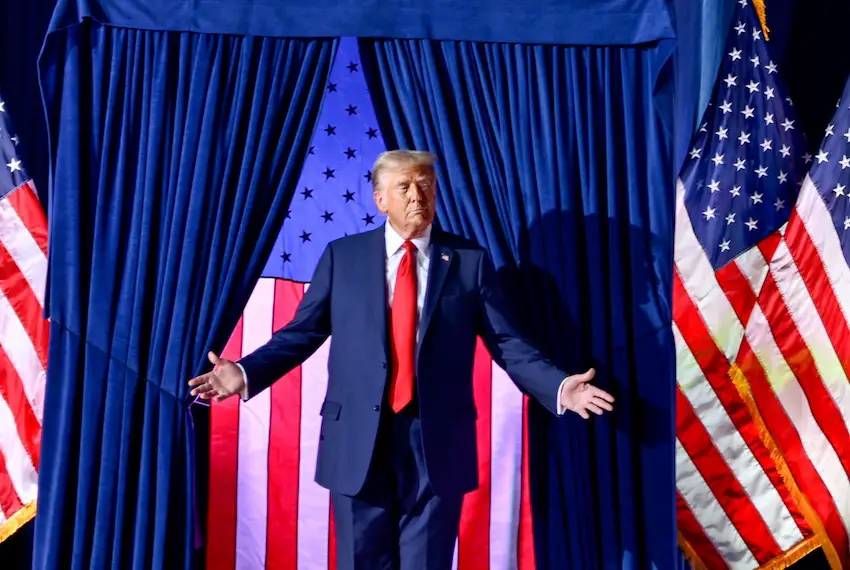
According to financial consultant and trader Juan Carlos Cruz Tapia, a USD:MXN exchange rate above 21 is a likely scenario in the near term due to Trump’s impending return to the presidency.
In late November, the former and future U.S. president pledged to impose a 25% tariff on all Mexican exports to the United States on the first day of his second term, prompting a sharp depreciation of the peso.
With reports from El Economista