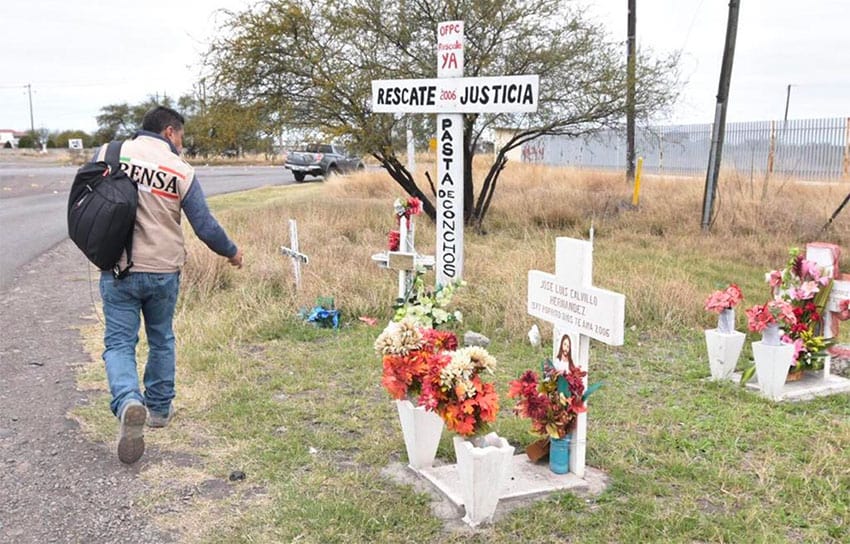
On the 14th anniversary of an explosion at a Coahuila coal mine that killed 65 miners, Labor Minister Luisa María Alcalde outlined on Wednesday the progress made in preparations to recover the bodies of 63 of the miners and the steps that still need to be taken.
A methane explosion at the Pasta de Conchos mine in the municipality of San Juan de Sabinas killed all of the miners working the night shift in the early hours of February 19, 2006. The explosion trapped the miners underground and only two bodies were ever recovered.
For years, relatives of the victims pleaded for efforts to be made to retrieve the other bodies but the mine owner, Grupo México, insisted that conditions were too dangerous to do so. However, President López Obrador wouldn’t be deterred, announcing on May 1 – International Workers’ Day – last year that he had ordered a recovery operation.
“This is a humanist government. So we are going to carry out this action,” he said.
Speaking at the president’s press conference this morning, Alcalde said that the ministry she leads formed a group in May 2019 called the Committee for Reparation and Justice at Pasta de Conchos.
The committee, she said, summoned mine rescue experts and the family members of the deceased miners and put together a file of more than 1,000 pages that outlined all the details of the mine disaster.
The next step, Alcalde explained, was to translate all the information into English before submitting it to mining experts in the United States, Germany, China and Australia.

Fourteen mining experts from those countries and seven from Mexico subsequently came together to discuss the contents of the file before concluding that the recovery of the 63 bodies was technically possible, the minister said.
Alcalde explained that the expert group concluded the bodies could be recovered by building a new tunnel into the mine. In order to do that, she added, the experts said the government would have to carry out preliminary testing to determine the current state of the mine.
The Mexican Geological Service (SGM), a government agency, began the necessary tests in October and will present its conclusions in March, the minister continued. Alcalde said that the SGM has already identified a location from which the construction of the recovery tunnel can possibly commence.
She said that the government will open a tendering process to find a company to carry out basic engineering work for the construction of the tunnel and predicted that work on it will start in October this year. She didn’t indicate how long the tunnel would take to build nor estimate when family members might be able to receive the remains of their loved ones.
Alcalde’s update on the recovery mission comes a day after Grupo México, the country’s largest mining company, announced that it would cede the concession for the Pasta de Conchos mine to the government in order to facilitate the recovery efforts.
In a statement sent to the Mexican Stock Exchange, the company said that it was relinquishing control of the mine in response to a request from López Obrador.
Source: El Financiero (sp)