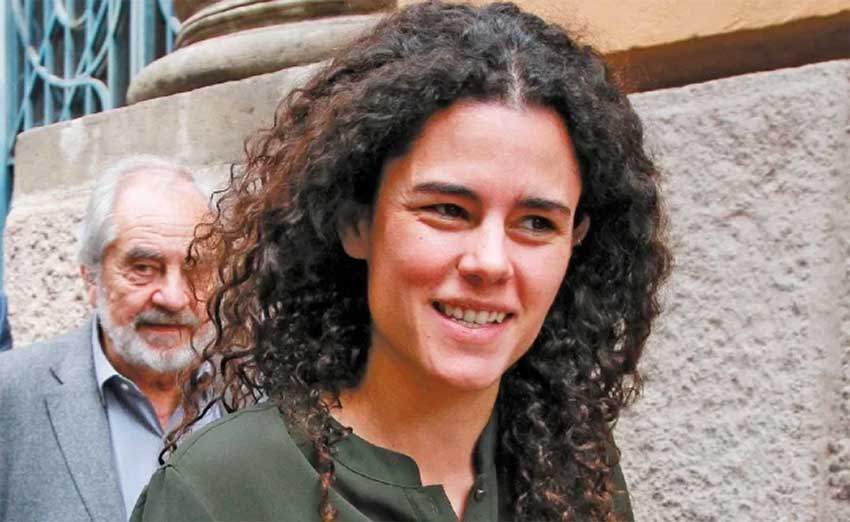
“Low salaries are in no one’s interest,” the federal labor secretary said yesterday while pledging that the government will implement policies that seek to ensure that low-income earners are able to support their families.
Interviewed after attending a national forum called “Planning the Transformation of Mexico Together,” Luisa María Alcalde said the 2018-2024 National Development Plan – a wide-ranging public policy blueprint – will aim to recover a living wage for those who currently “can’t even afford to support their family at the most basic level.”
She explained that meant they are unable to purchase all the items in the canasta básica, a basic selection of foodstuffs including beans, rice, eggs, sugar and canned tuna.
A 2018 study conducted by international relocation firm MoveHub found that Mexicans earning upper-middle incomes had to work an average of 36 hours per month to feed a family of four whereas United States and Canadian workers only had to work 10.4 and 12.8 hours respectively.
To strengthen consumers’ purchasing power, the federal government has already increased the daily minimum wage by 16% to 102.68 pesos (US $5.35) and doubled it in the northern border region to 176.72 pesos (US $9.25).
Alcalde said yesterday that the government’s proposed labor reform seeks to strengthen workers’ collective bargaining power to allow them, in theory, to negotiate higher wages.
She added that there has been a “positive impact” on workers’ salaries in the months since the new government took office but acknowledged that more needs to be done to ensure that they continue to trend upwards.

“You can’t change things from one moment to the next,” Alcalde said.
The government can’t solve the wages issue on its own, the labor secretary suggested, arguing that companies have a responsibility to pay wages to their employees that reflect their increasing profit margins.
Welfare Secretary Luisa María Albores agreed with Alcalde that salaries for low-income workers must improve, explaining that data from the social development agency Coneval shows that more than 40% of employed Mexicans are unable to adequately support themselves and their families.
“. . . Even though they have a job . . . they can’t afford to buy the canasta básica; that’s very sad,” she said.
Source: El Universal (sp)