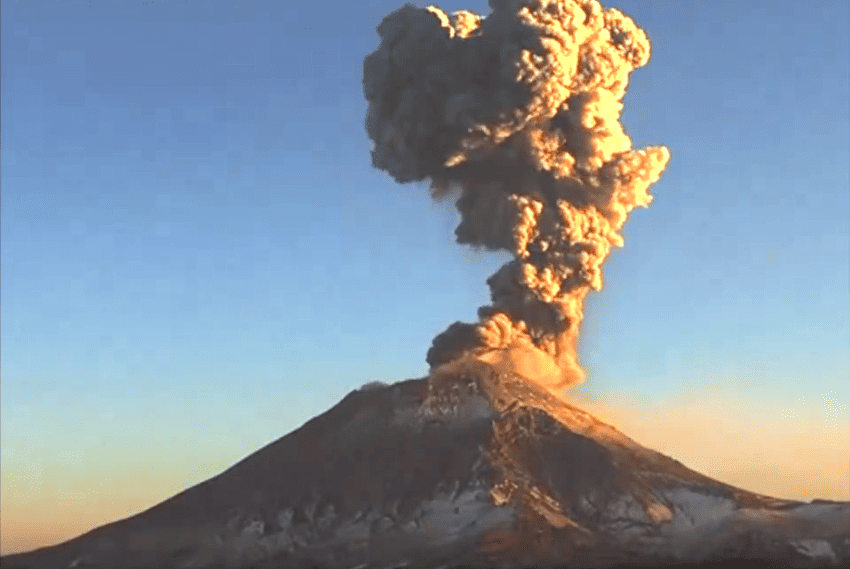
Popocatépetl, one of Mexico’s most active volcanoes, released a large plume or fumarole on Tuesday evening at 6:25 p.m; civil protection authorities have maintained a Phase 2 Yellow Alert.
A column of steam and volcanic ash, which rose over 1.5 km above the crater, was visible from the Valley of Mexico and surrounding regions.
Si fue complicado sacar este video del #Popocatépetl el día de hoy, pero todo sea por la bandita pic.twitter.com/qbaeXmIWFi
— Dansonar (@dansonar) February 21, 2024
As of Wednesday morning, the volcano continued to spew steam and gas with low levels of ash content, and had registered 27 exhalations and 939 minutes of tremors.
According to the alert system developed by federal authorities and the National Autonomous University of Mexico (UNAM), a yellow alert indicates increased activity and suggests that residents should remain vigilant and prepare for a potential evacuation.

To the south of the city of Puebla, ash is expected to fall in Angelópolis, Atlixco, Matamoros and the Mixteca region. Authorities have also warned of ashfall in parts of the states of Tlaxcala, Veracruz, Morelos and Guerrero.
It is unlikely that ash will reach Mexico City.
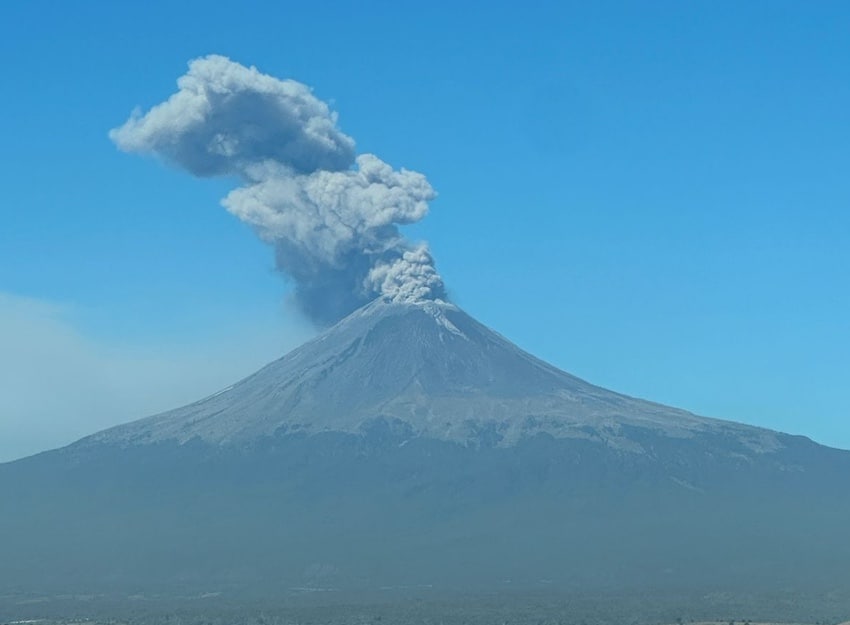
Located about 70 km southeast of Mexico City, the Popocatépetl volcano is colloquially known as “el Popo” or “Don Goyo.”
In May 2023, Popo’s volcanic activity put the area on high alert after registering intense activity for over two weeks.
After the volcano’s activity diminished early in June, the state government of Puebla announced it would create a permanent action plan for those who live near the volcano.
With reports from Aristegui Noticias, La Jornada, Infobae and Contra Réplica