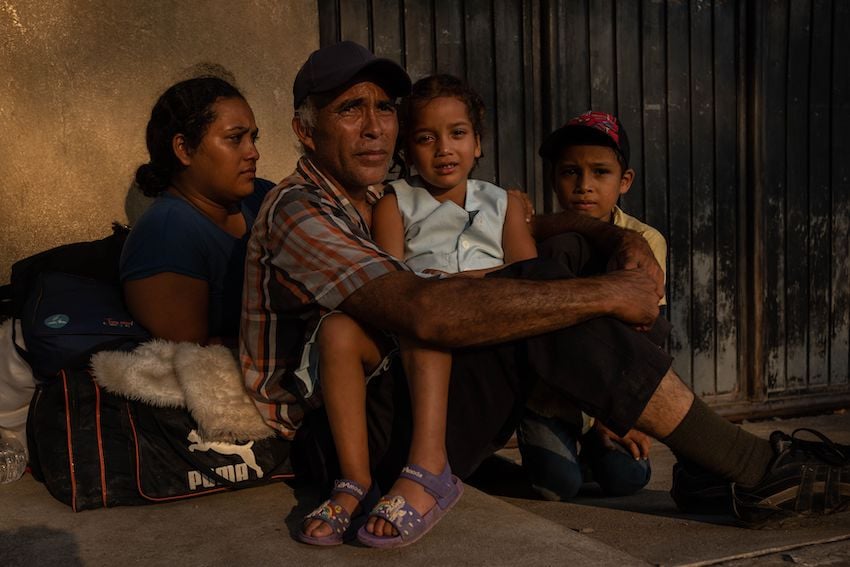
Mexico leads Latin America in poverty reduction, owing primarily to recent increases in the minimum wage, according to a newly released United Nations report.
The U.N. Economic Commission for Latin America and the Caribbean (ECLAC) states in its annual report that Mexico finished 2024 with its population living in poverty reduced by 3.1 percentage points.
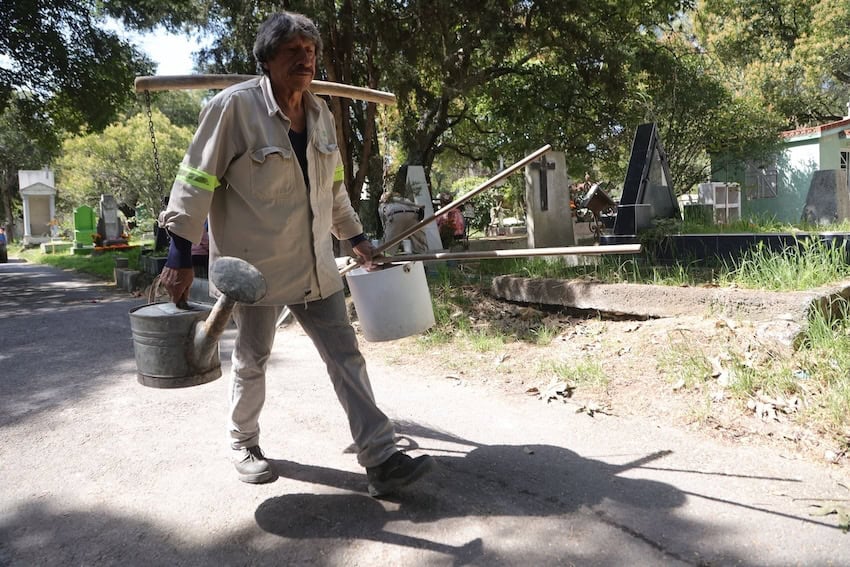
“Two of those percentage points can be explained largely by the sharp increase in the minimum wage, which was around 135% in real terms between 2018 and 2025,” said ECLAC’s executive secretary, José Manuel Salazar-Xirinachs, during the Social Panorama of Latin America and the Caribbean 2025 presentation.
Poverty rates fell last year in Latin America as a whole as well, which the ECLAC report attributes mainly (60%) to Mexico’s performance and to a lesser extent (30%) to Brazil’s.
Inequality remains a major concern in Mexico and throughout Latin America despite a 14% fall in economic inequality in Mexico over the last decade. According to the report, 10% of Mexico’s population continues to control one-third of the national income, while the poorest 10% receive just 2% of the income.
Mexico’s Gini coefficient — an indicator that measures inequality and social deprivation —decreased from 0.50 to 0.43 during the period, although there are fears that this trend could stall due to the current challenges facing the global economy.
Poverty in Latin America: Down but not nearly out
Around 25.5% of the Latin American population (162 million people) lived in income poverty in 2024, which was 2.2 percentage points lower than in 2023 and the lowest figure since comparable data has been available, according to ECLAC.

Meanwhile, extreme poverty affected 9.8% of the population (62 million people), marking a decrease of 0.8 percentage points compared to 2023. However, these levels are 2.1 points higher than those recorded in 2014.
There has been a decrease in multidimensional poverty — which includes non-income factors such as health and education — from 34.4% of the Latin American population in 2014 to 20.9% in 2024, largely owing to improvements in housing and services.
Yet Latin America and the Caribbean region continue to experience the second-highest level of economic inequality in the world, after Sub-Saharan Africa, despite the gradual decrease in inequality in recent years.
President Sheinbaum’s first year in office in 12 numbers: Part 1
Across the region, the richest 10% hold 34.2% of total income, while the poorest 10% receive just 1.7%.
“More comprehensive measurements, which incorporate information from surveys, tax records, and national accounts, suggest that inequality is even greater: the share of the richest 10% would exceed 50% of total income on average in the region,” Salazar-Xirinachs said.
Several challenges persist in further reducing inequality. For example, in 2023, 28% of the Latin American population aged 20 to 24 had not completed secondary school. Meanwhile, 47% of the region’s employed population was working on an informal basis.
ECLAC has offered the following suggestions for reducing inequality and poverty in Latin America:
- Free universal secondary education, implementing inclusion policies for disadvantaged groups and strengthening the role of teachers
- Formalizing the labor market by creating quality jobs
- Advancing gender equality to increase young women’s participation in the job market
- Introducing policies to increase the participation in the workforce of people with disabilities, Indigenous populations and migrants
With reports from La Jornada