The Federal Attorney for Environmental Protection (Profepa) detected irregularities in emissions from power plants in La Paz, Baja California Sur, resulting in fines for the offending companies.
The La Paz Internal Combustion Power Plant and the Punta Prieta Thermoelectric Power Plant — both managed by the state-owned Federal Electricity Commission (CFE) — were slapped with fines of 610,956 pesos (US $34,317) and 678,840 pesos (US $38,137), respectively.
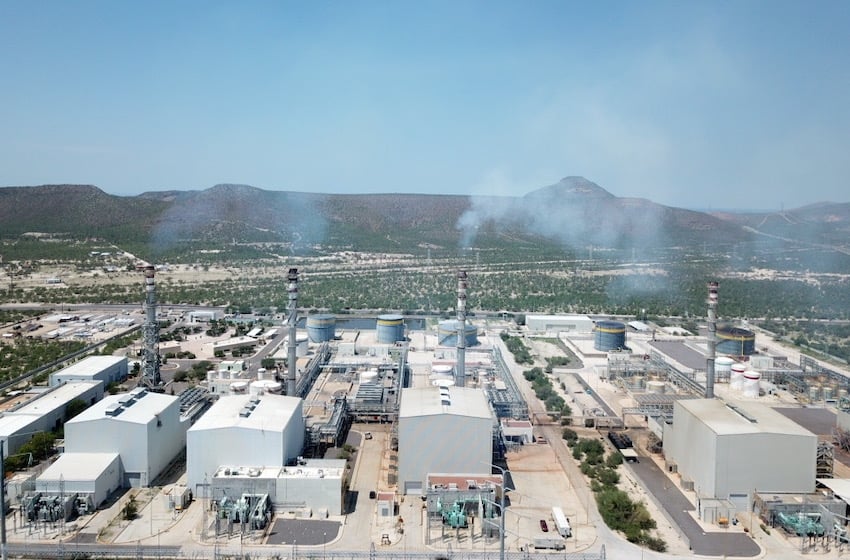
After years of complaints about the pollution and a request for a public inquiry failed to generate a response, a federal judge ordered Profepa to carry out inspections.
Profepa said it sanctioned the two companies for failing to demonstrate compliance with the maximum pollutant emission limits established in environmental law. Both companies lacked technical information, had incomplete emissions reports and were unable to produce reliable operational records.
The La Paz plant was also found to have deficient fuel consumption records and lacked adequate maintenance of emissions control equipment. At the Punta Prieta plant, Profepa detected similar omissions, including a lack of records on the operation of pollution reduction systems.
La Paz Mayor Milena Quiroga Romero blamed the pollution on the continued burning of fuel oil at the plants, adding that long-term solutions can be achieved by relying on renewable energy.
“The transition to cleaner energy championed by President Claudia Sheinbaum must be driven by the federal government and it will take time,” she said.

The previous administration had promised to reduce emissions by installing filters in chimneys and transitioning to natural gas, but the plants continue to operate with fuel oil and without the implementation of sufficient controls.
Promises aside, the Mexican Center for Environmental Law (Cemda) said in a press release that although the fines exceed 1 million pesos, that alone is not enough to repair the environmental damage, guarantee the implementation of corrective measures or result in the reduction of toxic emissions.
For its part, the La Paz-based Alianza por la Calidad del Aire (Air Quality Alliance) asked local authorities to accompany the sanctions with a comprehensive strategy that promotes the proper operation of existing plants in the city, as well as a quicker transition to the use of clean energy sources.
La Paz is the main energy center of Baja California Sur. Most of the state’s electricity is produced in power plants located in the state capital.
With reports from Excelsior, BCS Noticias and Diario El Independiente