For Mexico’s two most recent past presidents their first days in office were marked with loud protests in Mexico City.
Things are no different this year for President López Obrador but with one exception: he was not leading the demonstrations this time around.
AMLO, as he is commonly known, argued strenuously in 2006 and again in 2012 that the elections had been stolen from him after losing both and staged large protests in the city center.
No one is arguing this year about the validity of the election that put López Obrador in office, but there are worries about what he might do now that he is finally there.
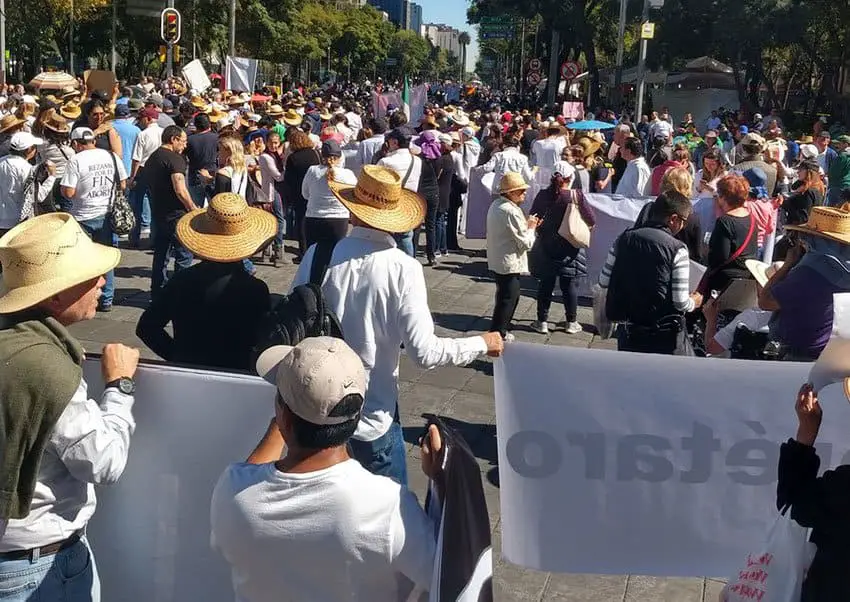
The protesters marched yesterday from the Angel of Independence to the Monument to the Revolution, calling themselves a “responsible front” that will challenge any impositions by the federal government.
Among the group’s slogans were “Mexico, don’t fall asleep, this is how Venezuela started,” “Neither chairos [a pejorative term used to describe extreme left-wingers in general and López Obrador’s supporters in particular] nor fifís [snobs], we’re Mexican,” and “Democracy and federalism, not authoritarianism.”
One of the fears expressed by yesterday’s demonstrators was that social, political and financial conditions in Mexico could duplicate those in Venezuela while others said they were against social polarization, the militarization of the country and pardons for criminals, and in favor of the construction of the new Mexico City airport in Texcoco.

They asked for an end to public consultations whose outcome, they said, is decided beforehand.
“We will be the thorn in his side, but we can be his best collaborators,” said María Elena Herrejón, leader of the Pro-Neighbor Movement, who announced that a national citizens’ front will be created as a counterweight to the new administration.
Source: El Financiero (sp)