Quintana Roo regressed on Monday to high-risk orange from medium risk yellow on the state government’s coronavirus stoplight map as case numbers increase in the resort city of Cancún.
The state had already reverted to orange on the federal stoplight map a week ago. The Quintana Roo government has its own stoplight system to guide the reopening of the state economy.
Governor Carlos Joaquín said the orange-light restrictions will remain in effect until at least Sunday.
As of Monday, hotels, restaurants, archaeological sites, theme parks and public transit are permitted to operate at 50% capacity while beaches, public parks, cinemas, theaters, shopping centers, department stores, casinos, places of worship, hair and beauty salons and factories are all limited to 30% capacity. Bars, cantinas and nightclubs must close during the orange-light period.
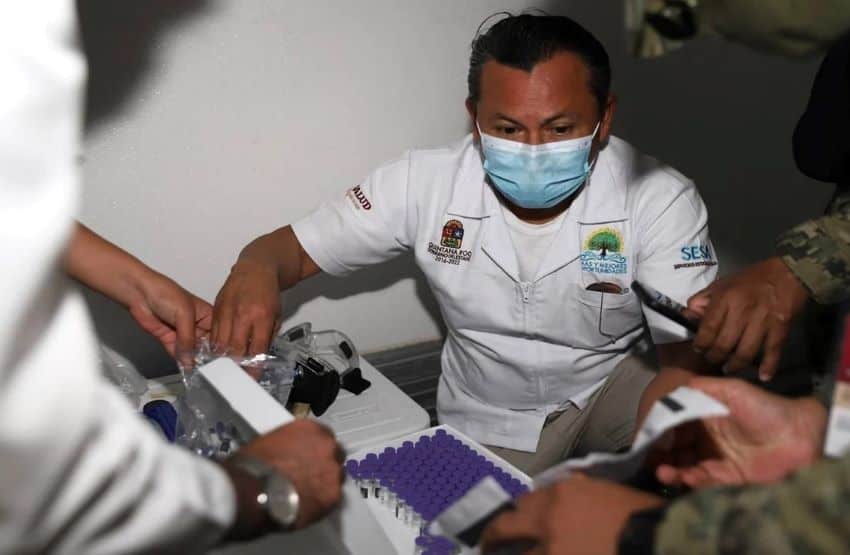
Authorities will seek to ramp up Covid-19 testing this week and roll out vaccines in areas where they are most needed. The state government will also complete deep cleaning of public spaces and carry out patrols to ensure that citizens are complying with health protocols such as social distancing and the wearing of face masks.
The state government made the decision to switch to orange even though several municipalities, including Isla Mujeres, Puerto Morelos and Lázaro Cárdenas, didn’t record any new coronavirus cases during the past week.
However, new cases increased 14% in the municipality of Benito Juárez, which includes Cancún. Quintana Roo recorded 556 new infections between April 26 and May 2, pushing the accumulated case tally to 23,381. There are an estimated 705 active cases, while the official Covid-19 death toll is 2,623.

Joaquín said that hospital occupancy levels are not currently a concern because they are below 20% both in the northern and southern regions. However, he warned that the situation could change quickly if case numbers continue to rise.
According to state government data, 19% of hospital beds set aside for coronavirus patients are currently occupied in Benito Juárez (Cancún) and Solidaridad, which includes Playa del Carmen. The occupancy level is 5% in Othón P. Blanco, which includes state capital Chetumal, and 2% in Tulum. The hospital occupancy rate in the state’s seven other municipalities is 0%.
Meanwhile, Mexico’s accumulated case tally rose to almost 2.35 million on Sunday with 1,093 new cases recorded. It was the lowest daily case tally since April last year. The official Covid-19 death toll rose to 217,233 with 65 additional fatalities reported, also the lowest daily total since April 2020.
The national hospital occupancy rate is 11% for general care beds and 16% for those with ventilators. As of Sunday night, just over 18.3 million vaccine doses had been administered in Mexico, a figure that represents 14 shots per 100 people.
Source: El Economista (sp)