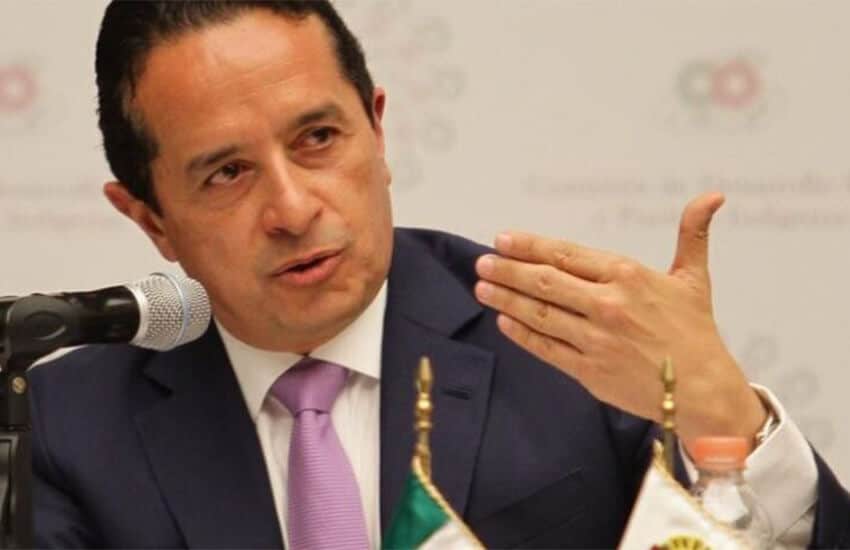
Mexican, United States and Canadian officials will attend a security summit in Quintana Roo this Friday, Governor Carlos Joaquín announced.
Joaquín said in late January that personnel from the Federal Bureau of Investigation, the Drug Enforcement Administration and the Royal Canadian Mounted Police would travel to the Caribbean coast state this month to meet with local authorities.
Asked about the meeting on Monday, the governor confirmed it would take place in Cancún this Friday. Federal and Quintana Roo security officials will meet with representatives of the U.S. and Canadian security agencies to exchange intelligence, review international crime trends and discuss anti-crime strategies.
A similar meeting attended by military personnel from Mexico, France, Canada and Belize took place in Chetumal in early February.
Joaquín said last month that the U.S. and Canadian agencies would help Mexican authorities identify international criminal organizations operating in Quintana Roo and look at ways to avoid incidents such as the murder of two Canadian citizens, both of whom had long criminal histories, at a hotel between Playa del Carmen and Tulum on January 21.
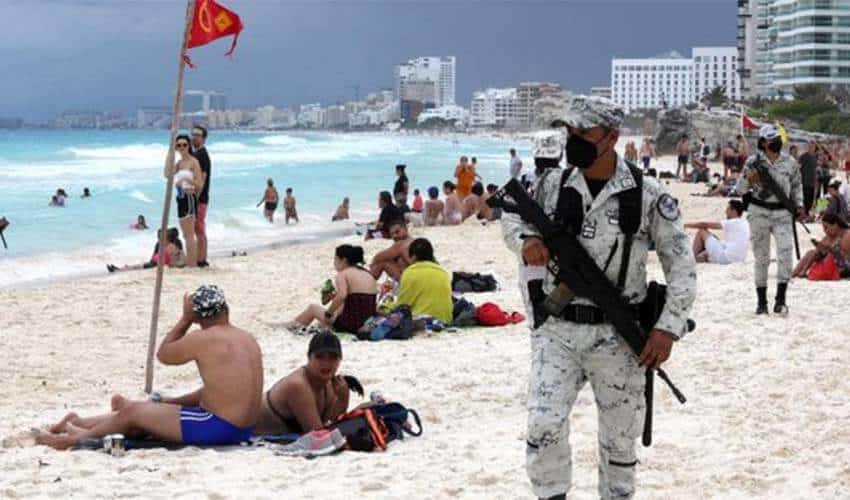
There has been a recent spate of armed attacks in Quintana Roo, including one that claimed the lives of two foreign tourists in Tulum last October.
Mexico’s most powerful cartels, including the Jalisco New Generation Cartel, the Sinaloa Cartel and the Gulf Cartel, as well as smaller local gangs, operate in the state, which for decades has been used as an intermediate destination for cocaine headed to the United States from South America.

Criminal groups from at least eight foreign countries, including China, Russia and Colombia, also operate in Quintana Roo, according to a recent report by the newspaper Milenio. The state – a major tourism destination for domestic and foreign tourists – recorded just over 650 homicides last year, making it the country’s 18th most violent federal entity.
The United States issued a security alert for Quintana Roo in late January due to the wave of violence.
“In light of recent security incidents and criminal activity in popular tourist destinations, including Cancún, Playa del Carmen, and Tulum, U.S. citizens are reminded to exercise increased caution when traveling to the state of Quintana Roo. Criminal activity and violence may occur throughout the state, including areas frequented by U.S. citizen visitors,” the alert issued by the U.S. Consulate General in Mérida, Yucatán, read.
With reports from Milenio