Information in the environmental impact statement (EIS) for the new refinery in Tabasco is incomplete and the project shouldn’t be approved, environmental groups warn.
Greenpeace México, the Mexican Center for Environmental Law and two other organizations claim that the EIS presented by Pemex doesn’t provide “complete, exhaustive and adequate information that takes into account the principles of prevention and precaution in order to guarantee the right to a healthy environment.”
The lack of fundamental information makes it impossible for the US $8-billion project to be evaluated in a comprehensive and objective way and therefore cannot be approved, the groups said.
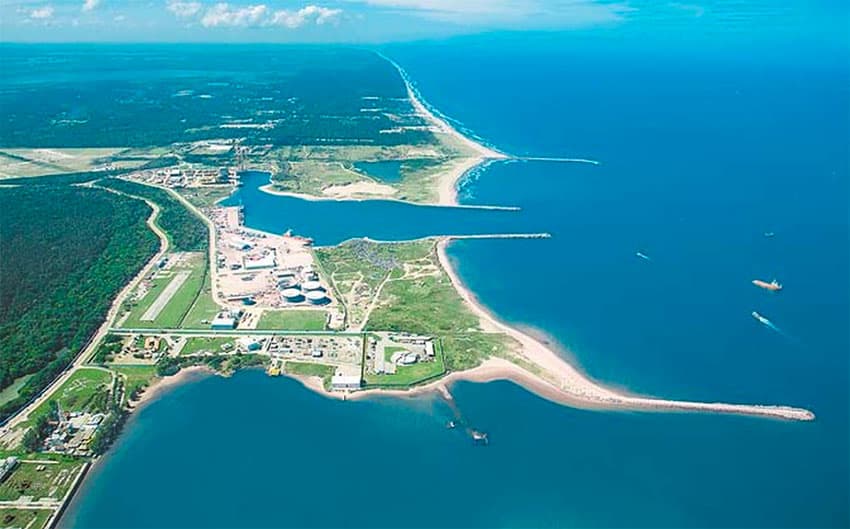
Released by the Security, Energy and Environment Agency (ASEA) last month, the EIS says the plan to build the refinery on the Gulf of Mexico coast in the municipality of Paraíso involves high risks of flooding and other environmental problems but remains viable.
Pemex said that the impacts on the environment “will be controlled, mitigated or compensated” and the operation of the refinery “will totally comply” with existing environmental laws.
However, in a letter to the ASEA, the environmental organizations charge that the EIS doesn’t reveal the full extent of the impact that the project will have on the environment.
They said it doesn’t provide information about smaller projects associated with the refinery, which could damage habitats, modify the site’s natural drainage features and involve the clearing of yet more mangroves.

The groups also said that the impact statement fails to include information about preparatory work required at the site and the roads and railways that will link to it, and charged that Pemex has presented the project as if it will comply with all environmental regulations when there is evidence that it will not.
The organizations said the EIS fails to mention that 212 hectares of vegetation have already been illegally cleared, doesn’t set out a rescue and relocation plan for native animals and omits details about the project’s impact on hydrological flows at the site.
They pointed out that even the state-owned Mexican Institute of Petroleum, which worked on the EIS, has previously said that the site is not appropriate for a refinery.
A 2008 report by the institute said that among the factors that made the site unsuitable was that it’s home to a range of protected and endangered species including the howler monkey, the northern tamandua anteater and the Mexican crocodile.

The report also said that extensive preparation would be needed due to the presence of lagoons and swamps, that it is prone to flooding and that it has significant potential to be used for ecotourism.
“It’s clear that the site . . . is a priority ecosystem for conservation,” the letter said, concluding that “in consideration of everything expressed here . . . the ASEA must issue a negative environmental impact ruling.”
Investors and ratings agencies have also criticized the refinery project, arguing that it will divert funds from Pemex’s more profitable exploration business.
But Energy Secretary Rocío Nahle said this week that the government would not be deterred by the opposition.
“This government will build it,” she said in a radio interview on Thursday.
“Why would we backtrack on that? It is a viable project, it’s a necessary project, it’s a Pemex project.”
President López Obrador announced in May that the oil company and the Secretariat of Energy would build the refinery because the bids made by private companies were too high and the project would take too long.
He has pledged that the refinery will be ready in May 2022 and that it will help reduce Mexico’s reliance on imported petroleum.
Once open, it is expected to process 340,000 barrels per day of Mexico’s flagship grade, Maya heavy crude.
Mexico News Daily