Remittances sent home by Mexicans working abroad fell 2.25% in November compared to the same month of 2018, the first annual decrease in more than three years.
Bank of México data shows that total remittances in the penultimate month of the year were US $2.89 billion whereas overseas workers – most of whom are in the United States – sent US $2.96 billion home in November 2018.
The average single remittance in November 2019 was US $328, down 4% from US $342 a year earlier.
The annual decline was the first since March 2016, when remittances fell 2.8%. The month over month decline between October and November was 7.2%.
Experts who spoke with the newspaper El Financiero said that a slowdown in the industrial sector in the United States, economic uncertainty in that country and the strength of the Mexican peso in the last months of 2019 were the main reasons why remittances decreased in November.
“The majority of remittances come from compatriots who are employed in the industrial sector, construction for example,” said Ángel Huerta, an analyst at the financial group Ve por Más.
“What has been seen in recent months is that industry in the United States has been slowing down more than the rest of the economy, which becomes a risk for the sending of money to Mexico.”

Janneth Quiroz, deputy director of economic analysis at the Monex financial group, said the 40-day General Motors strike, which ended in late October, and the strength of the peso were factors in November’s decline.
Alberto Ramos, chief Latin America economist at Goldman Sachs in New York, said that “remittances slowed down more than expected in November due to the 5% appreciation of the peso against the dollar since November 2018.”
He added that the annual decline in remittances when converted to pesos was 6.9%.
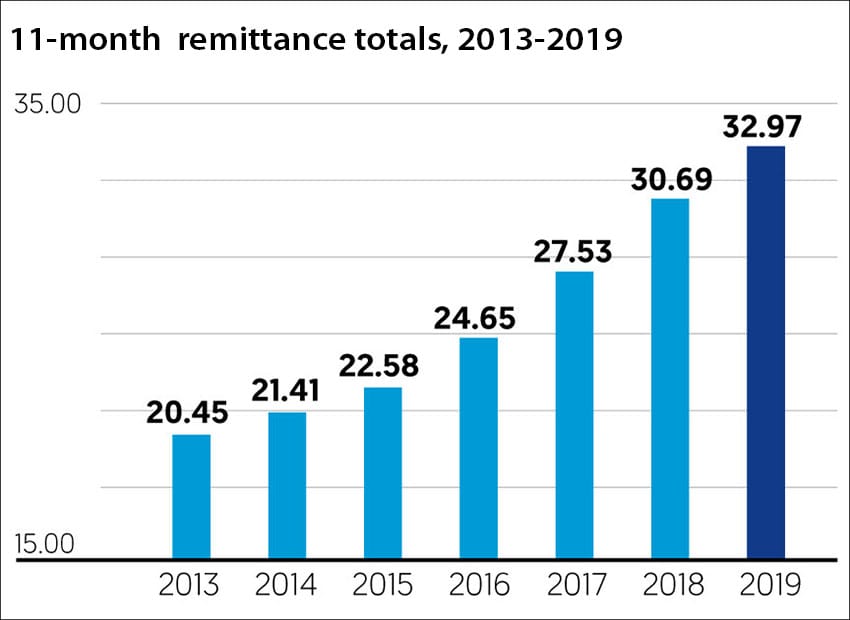
Despite the fall recorded in November, remittances sent to Mexico in the first 11 months of the year were the highest ever recorded by the central bank.
Mexicans working abroad sent a total of US $32.96 billion home between January and November, a 7.43% increase compared to the same period of 2018, a year in which remittances hit a record high. Annual remittances have increased every year since 2013, statistics show.
Remittances will likely pick up in early 2020, according to a report by Monex, which said that it’s probable that money transfers will recover due to the normalization of automotive production in the United States and positive construction figures seen in recent weeks.
Ramos of Goldman Sachs said he expected remittances to “stabilize to a moderately positive level in coming months,” adding that the record transfers in 2019 helped Mexico’s current account and had a positive impact on private consumption, particularly that of low-income families “who have a high propensity for consumption” and receive the lion’s share of the money.
Source: El Financiero (sp)