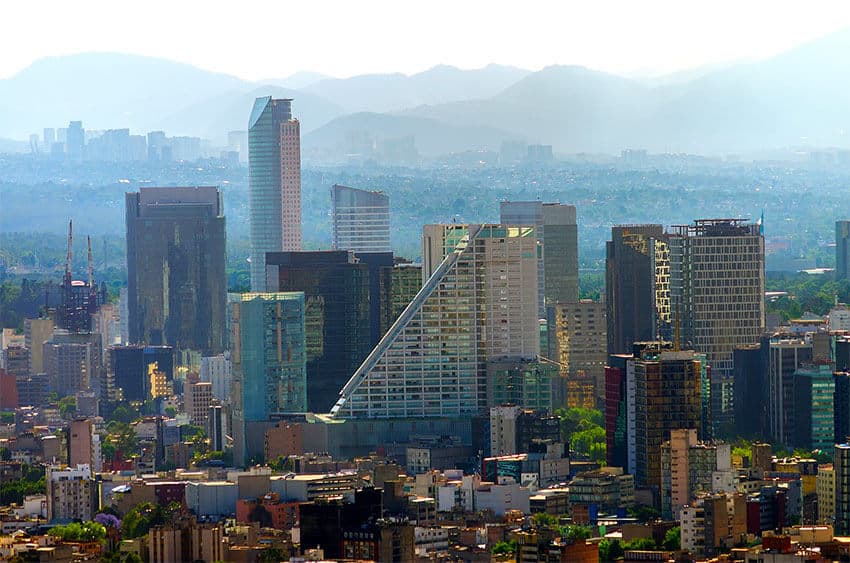
Due to high levels of air pollution, some 1.7 million vehicles are prohibited from using roads in the Mexico City metropolitan area on Wednesday.
The restriction applies between 5:00 a.m. and 10:00 p.m. to a large number of vehicles whose license plates end with 2, 3, 4, 6, 8 and 0 as well as vehicles whose plates only consist of letters.
New cars – which have previously been exempt from no-drive orders – with plates that end with 3 and 4 are among the vehicles that are banned. Electric and hybrid vehicles are exempt.
The 1.7 million vehicles that authorities estimate to be affected by the restriction represent almost one-third of the 5.3 million vehicles that use Mexico City roads on a daily basis.
A phase 1 environmental contingency alert was activated by the Environmental Commission of the Megalopolis after high levels of ozone pollution were recorded in Mexico City on Tuesday. The commission announced at 10:00 a.m. Wednesday that the alert would remain in place.
At 4:00 p.m. Tuesday, ozone levels of 162 parts per billion (ppb) were recorded in the western district of Santa Fe, while levels of 156 ppb were recorded in La Merced, part of the capital’s historic center. The pollution was exacerbated by intense solar radiation and a lack of wind.
The Mexico City government considers concentrations of ground-level ozone over 70 ppb (averaged over eight hours) are unhealthy.

The general director of the air quality unit at the Mexico City Environment Ministry told the newspaper El Universal that March, April and May are typically the worst months for air pollution due to high temperatures, a lack of cloud cover and scant wind.
Sergio Zirath said the last environmental alert for high ozone levels was in June 2021. He noted that it’s the first time that some new cars as well as some older models certified as having low emissions levels will be among the vehicles prohibited from circulating on Wednesday. Mexico City factories that emit ozone precursors must reduce their emissions by 40%, El Universal reported.
Residents of the Valley of México metropolitan area are advised to avoid outdoor activities including exercise between 1:00 p.m. and 7:00 p.m. Wednesday.
Excessive ozone in the air can have a marked effect on human health, according to the World Health Organization. “It can cause breathing problems, trigger asthma, reduce lung function and cause lung diseases.”
The United Nations declared Mexico City to be the most polluted city on the planet in 1992. While air pollution is still a problem at times, the situation in the capital and surrounding areas has improved significantly over the past three decades.
With reports from El Universal