A huge tide of sargassum has once again invaded shores of the Caribbean, including some of Mexico’s most popular beaches.
But despite the magnitude of the problem, the federal government has not allocated the funding that has been requested to deal with it.
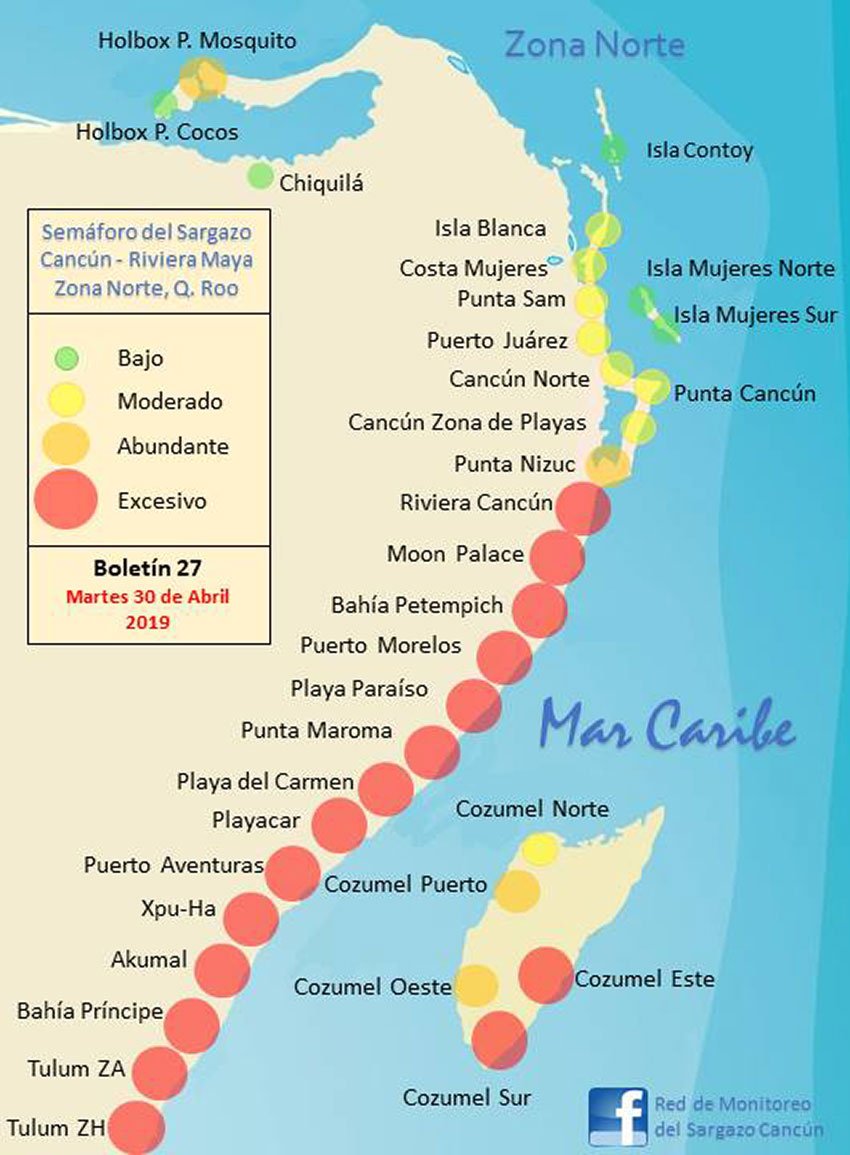
According to the Cancún sargassum monitoring network, 30 countries, territories and protectorates are forecast to receive massive amounts of sargassum, including Mexico, the United States, Cuba, Honduras, Costa Rica, Nicaragua, Guatemala, Belize, Colombia, Panama, Haiti, Puerto Rico, Dominican Republic, Jamaica and the Bahamas among others.
So far in Mexico, the beaches of the Riviera Maya in Quintana Roo have been the hardest hit, including Playa del Carmen, Tulum, Cozumel, Puerto Morelos the Sian Ka’an Biosphere Reserve, Othón P. Blanco and Bacalar.
Cancún Mayor Mara Lezama said the sargassum problem was especially serious because of how quickly the macroalgae often accumulates on beaches within just a matter of hours.
Quintana Roo Governor Carlos Joaquín González has said that addressing the phenomenon is a federal matter, but the state’s requests for 405 million pesos (US $21 million) to set in motion a strategy to remove the incoming sargassum before it reaches the shore have gone unanswered.
On Monday, Cancún and Puerto Morelos Hotels Association president Roberto Cintrón, together with other local tourism industry leaders, met with the Senate to call for funds to deal with the “sargassum nightmare,” citing the seaweed’s arrival as a serious threat to tourism and the productivity of businesses in related industries.

Quintana Roo Senator Mayuli Martínez Simón urged her fellow lawmakers to create a committee to specifically deal with the sargassum problem. She also suggested changes to the law to allow the government to declare sargassum an emergency or a natural disaster, which would in turn free up funding to deal with the problem.
Senator José Luis Pech, also from Quintana Roo, agreed with the urgency of assigning funding to the problem but urged his companions to create mechanisms for transparency within any legislation that provides money for relief efforts.
Querétaro Senator Freyda Maribel Villegas Canché said sargassum also threatens the fishing industry in the Caribbean, as well as the financial stability of the many families whose income depends on the tourism industry.
Source: El Universal (sp)