Three scientists were stranded on a rattlesnake-infested island in the Gulf of California for three days after the boatman who dropped them off last weekend failed to return.
The marine biologists – two men and one woman from La Paz, Baja California Sur (BCS) – hired a boatman to take them from San Bruno, BCS, to Isla Tortuga (Turtle Island) last Saturday for a research trip. They also arranged for him to pick them up and take them back to the peninsula, but he didn’t keep that end of the bargain.
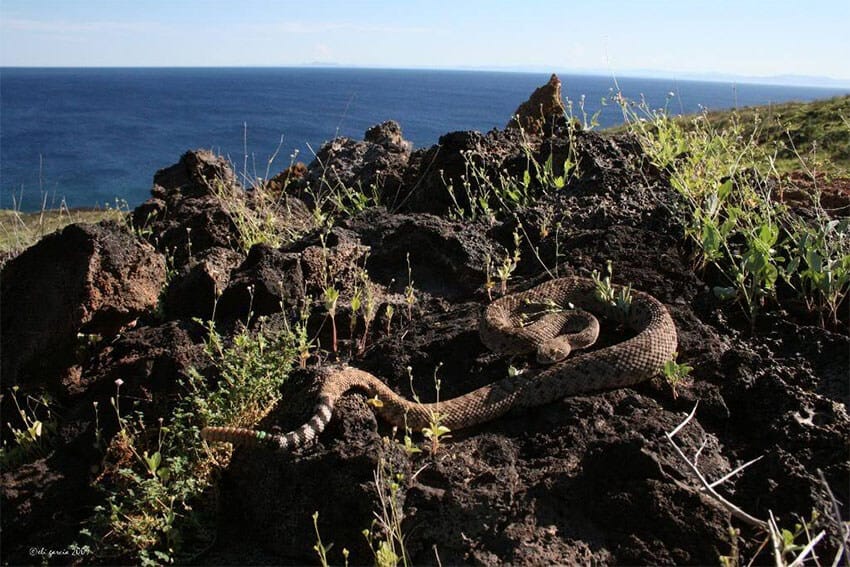
It wasn’t until three days later and after the scientists were reported missing that a naval vessel was dispatched to collect them from the island, located 40 kilometers east of Santa Rosalía, BCS. It is home to an endemic rattlesnake species commonly known as the Tortuga Island rattlesnake.
Such is the ubiquity of the pit vipers on the island that it has been described as “the biggest rattlesnake nest in the world.”
The news website Metropoli reported the rescue of the marine biologists but didn’t say how much food or water they had with them or whether they had any close encounters with the venomous snakes.
The Northwest Biological Research Center scientists were found safe and sound, Metropoli reported, but nevertheless received medical care from navy personnel in Santa Rosalía, the municipal seat of Mulegé.
Isla Tortuga, a volcanic island with a kilometer-wide, 100 meter-deep caldera, has attracted herpetologists from around the world. Reptile researchers from countries such as the United States, Canada, Italy, Japan and Germany have camped on the island while they observed and collected data on the endemic rattlesnake species, known scientifically as Crotalus atrox tortugensis.

With reports from Metropoli