A recent surge in New World screwworm (NWS) infestations near Mexico’s northern border is causing concern in Texas where authorities are warning livestock producers to take preventive action immediately.
At the same time, Mexican authorities expressed alarm after the death of a howler monkey, an endangered species, was linked to a larval infestation on its left forelimb.
🚨 @MillerForTexas is sending a warning to producers to “get ready” for New World Screwworm entering the U.S. 🚨#agtwitter pic.twitter.com/9BnEDSi439
— RFD-TV (@OfficialRFDTV) January 16, 2026
The incident, which occurred in Palenque, Chiapas, was the first death in Mexico of a wild animal from myiasis caused by NWS. Until now, only four cases of screwworm in wild birds and captive exotic animals were known, all in Tabasco and Yucatán, and all reportedly recovered after medical treatment.
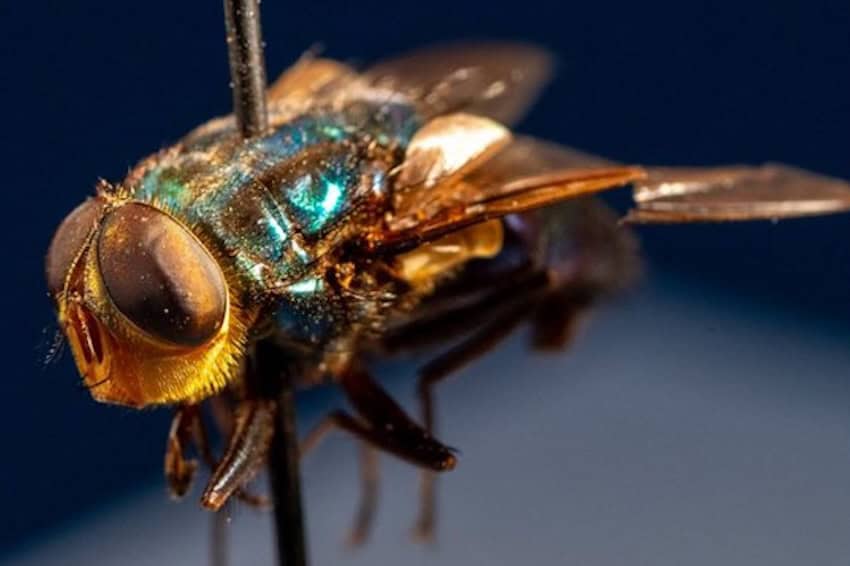
NWS is a species of parasitic blowfly whose larvae burrow into open wounds and eat the living tissue of warm-blooded animals. It has been steadily moving north from Central America over the past 16 months, putting the U.S. cattle industry on alert.
The U.S. twice suspended imports of cattle from Mexico last year before the discovery of new cases near the border in September led to a third closure.

However, the threat has continued to move north.
Mexico’s National Service for Agrifood Health, Safety and Quality (Senasica) announced last week that the border state of Tamaulipas has reported 11 active cases of myiasis caused by NWS in cattle since the first case was detected there on Dec. 31, 2025. The initial case was identified as a six-day-old calf in a grazing area with an umbilical lesion.
The spike in cases confirmed by Senasica prompted Texas Agriculture Commissioner Sid Miller and the Texas Department of Agriculture (TDA) to urge Texas livestock producers, especially those along the border, to check livestock every day and treat any wound as a potential entry point.
“Pay close attention to navels on young animals, isolate anything suspicious and report concerns without delay,” Miller said. “Early detection and aggressive surveillance are how we protect Texas livestock. Texas producers need to stay on high alert along our border.”
The TDA said that, as it has not received confirmation that the affected animals reported by Senasica have a history of movement outside Tamaulipas, the pest may now be spreading naturally rather than being introduced through animal movement.

The agency reported that as of Jan. 7, there were 692 active cases of NWS in 13 Mexican states. Chiapas leads with 137 cases, followed by Oaxaca with 134, Veracruz 117, Guerrero 65 and Quintana Roo 46.
Of the total active cases, 343 are in cattle and 184 in dogs, while 45 pigs, 28 horses, 13 sheep, six goats, five cats and one farm bird are also infected.
With reports from El Universal, Texas Border Business and Imagen Radio