Michoacán authorities are investigating another death connected to the El Rosario monarch butterfly sanctuary after a part-time tour guide at the reserve was found dead on Saturday.
The body of Raúl Hernández Romero, 44, was found just three days after that of the park’s director, Homero Gómez González, was discovered in a well two weeks after he had gone missing.
Hernández’s body had been attacked with a sharp object. He was last seen on January 27 in the municipality of Angangueo, where the butterfly sanctuary is located. His wife reported him missing on January 31.
Authorities said they had not found any evidence to connect the two deaths to each other or to their conservation work.
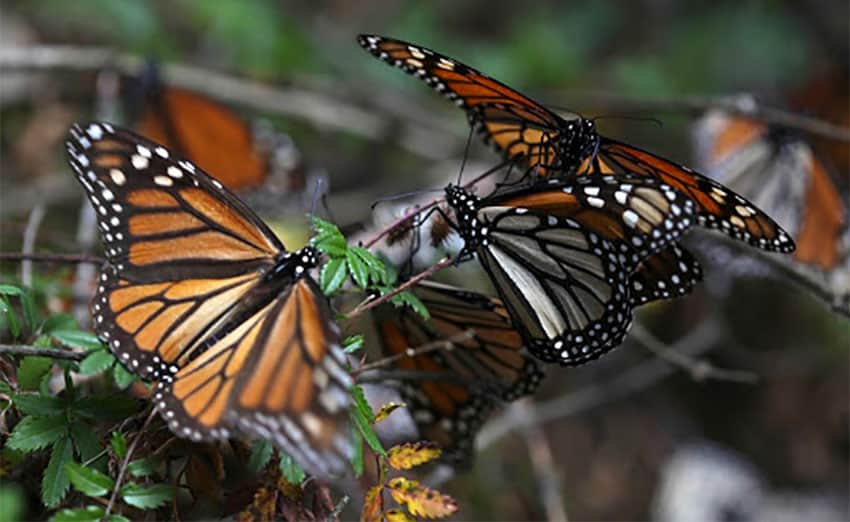
Their deaths occurred during the area’s high season for tourists, who come to see the monarch butterflies after they arrive from Canada and the United States to winter among the oyamel trees in remote stretches of Michoacán’s forests.
Hernández led tours of the El Rosario sanctuary, showing Mexican and foreign tourists the dense clusters and bright orange clouds of butterflies and informing them of the insects’ journey and importance to the ecosystem.
The Michoacán Attorney General’s Office (FGE) said that the activists’ conservation work was among “several lines of investigation” it is following to shed light on their deaths.

Initial reports had said that the most likely cause of Gómez’s death was drowning. But the FGE released a statement on Thursday saying that an autopsy of the body had revealed signs of head trauma.
Illegal logging interests with connections to organized crime have been at odds with conservation efforts in recent years, as environmental activists worked to ban logging from Michoacán’s butterfly sanctuaries.
The region lost 461 hectares of forest to illegal logging between 2005 and 2006, posing a significant threat to the largest butterfly migration in the world.
Despite calls from the public and even the federal Secretariat of the Environment (Semarnat) to clear up facts in the case and find those responsible, statistics show that such outcomes are highly unlikely.
A 2018 study by the nonprofit Impunidad Cero (Zero Impunity) found that the possibility of a crime being reported, investigated and solved in Mexico was just 1.14%.
The organizations Amnesty International and Global Witness warned in October that Mexico is growing increasingly dangerous for environmental activists.
“All of these losses are horrible,” said regional director for the Natural Protected Areas Commission (Conanp) Gloria Tavera. “All of these people are important.”
Sources: Washington Post (en), Reforma (sp)