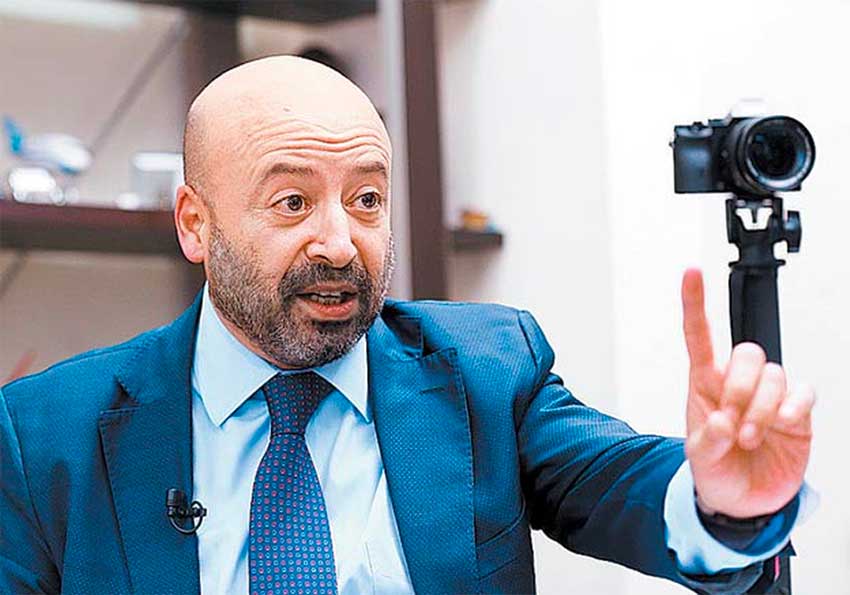
Mexico’s national security commissioner has rejected a claim that the new federal government will inherit a security situation that is “in ruins.”
In an interview with Milenio Televisión, Renato Sales conceded “there are many [security] problems” in the country but argued that the strategies adopted by the current federal government to combat them have been the right ones.
“. . . I would have to say that we’re not in the best of possible worlds in the matter but nor are we, I believe, on the wrong path. I believe that what has been done during the administration of President Enrique Peña Nieto on security is correct,” he said.
Alfonso Durazo, president-elect Andrés Manuel López Obrador’s nominee to head up a newly created Secretariat of Public Security, said at last week’s peace forum in Morelia, Michoacán, that “the next government will receive a security [situation] in ruins.” That, he said, “speaks to the scale of the challenge we will have to face.”
He also said assertions that Mexico had turned into a grave were “deserved.”
The incoming government has indicated that it intends to make significant changes to Mexico’s security strategy, which could include implementing an amnesty law that would pardon low-level criminals and legalizing some drugs.
Mexican and U.S. law enforcement authorities last week announced new security strategies including the creation of a joint investigative team that will target the leaders and finances of Mexican cartels.

But Durazo indicated that the next government would not treat combating cartel leaders and cartel finances as equal priorities.
“It will be more important to go after drug trafficking money than the drug traffickers themselves,” he said, explaining that the former was most crucial to their capacity to operate.
While Sales agreed that “you have to go after the money of these people,” he also charged that the targeting of organized crime bosses, as has occurred under the current administration, should continue, highlighting that 110 of 122 priority targets have been arrested during Peña Nieto’s term.
“. . . Capturing them is very important and it has had a very good influence [on the security situation]. Are we going to allow these targets to continue operating? . . . The arrests have reduced the rates of violence and homicides,” he said.
Sales added that some constitutional and legal modifications are needed in order to better combat crimes such as arms trafficking and money laundering but stressed that wholesale changes to the security strategy were not required.
“I would not be of the opinion that what has been done in this and other administrations [needs to be] radically dismantled,” he said.
Asked why homicide numbers have spiked in the past two years, the security commissioner said the government would need “to be self-critical and review the internal and external factors” that allowed the current administration to initially reduce the homicide rate before it increased again.
Last year was the most violent in at least two decades with more than 31,000 homicides, according to figures reported by the federal statistics agency last month.
However, Sales said that violence in states such as Tamaulipas and Michoacán has decreased in comparison with times in the past when cartels such as the Zetas were directly attacking the civilian population.
Source: Milenio (sp), El Universal (sp)