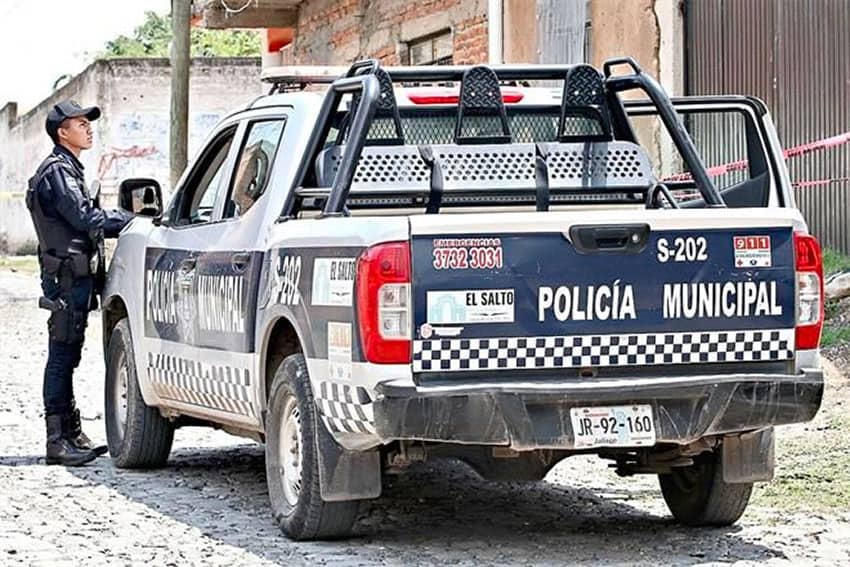
The federal government has a new plan for municipal police forces that will take them into completely new territory.
The so-called “super” police will have more to do than just carry out patrols and chasing criminals caught in the act of committing an offense.
They are to be security forces with the capacity to prevent crimes, carry out investigations, analyze evidence and receive criminal complaints. The new model calls for the creation of investigative teams within municipal police departments that will include criminologists, psychologists and legal professionals.
In addition to investigating crimes, the teams will be responsible for identifying criminal patterns and analyzing offenders’ aims and motivations.
“[It’s] urgent that [municipal] police assume a proactive and much more strategic role in order to contain, prevent and reduce security problems . . .” states a document that explains the plan, part of a new National Police Model designed by the National Public Security System (SNSP) and approved last month by the National Security Council.
The SNSP – a division of the Interior Secretariat – proposes the construction or adaptation of municipal police stations so that officers are able to offer personalized attention to victims of crime in an environment that generates trust.
“At the very least, these spaces must include areas for medical, legal and psychological attention as well as a [children’s] play center,” the document says.

In addition to having the capacity to file criminal complaints at police stations, municipal officers should also be able to do so remotely, the SNSP said.
Such a system is already in effect in Querétaro, where both municipal and state police use tablet computers to file robbery reports at the scene of a crime.
The police model document says that if municipal officers have the capacity to receive criminal reports, the quality and quantity of information they have about security problems will increase.
That, the SNSP argues, will enable municipal police to develop more effective anti-crime strategies and thus reduce the incidence of offenses in the communities in which they work.
Municipal police are generally considered the weakest link in the chain of Mexico’s security forces, and have been implicated in countless cases of corruption and collusion with organized crime.
They are also short on numbers: President López Obrador said last week that more than 100,000 additional municipal and state officers are needed across the nation in order to meet international standards for per-capita police numbers.
Source: Reforma (sp)