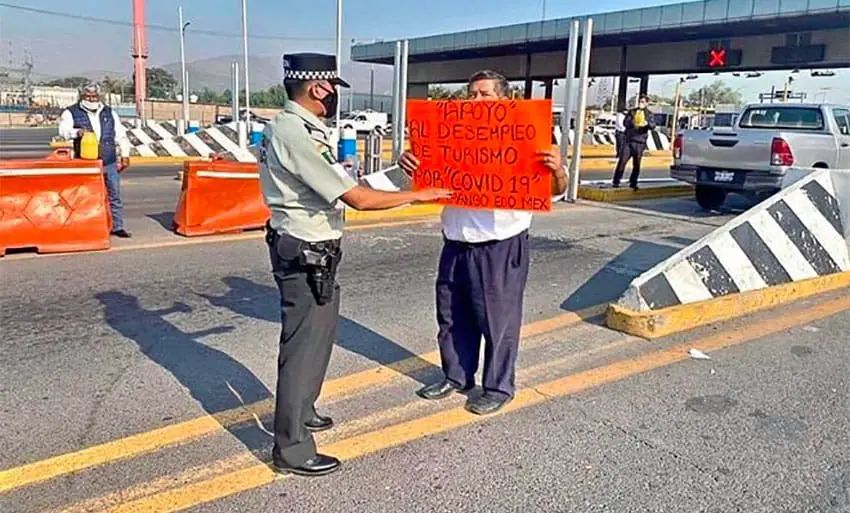
Hijacking toll plazas has become an important source of income for many people in Mexico. Last year alone the country saw losses of revenue totaling 3 billion pesos (US $127.4 million), according to Capufe, the federal highways and bridges agency.
And the coronavirus pandemic has only made things worse, says Capufe director Marco Antonio Frías, as the country’s economic crisis worsens.
Circus performers, railway workers, street vendors and bus drivers are among the groups of people who commandeer toll plazas for personal gain, he says. In most cases, motorists are charged a discounted toll.
The problem is particularly pronounced in Nayarit, where toll thieves have taken some 2 billion (US $85 million) pesos this year alone.
The groups gain control of the toll plazas by attacking personnel with chains, sticks and stones, Frías told the news agency Reforma.
“It is a kind of organized crime. There are different groups but at some point they have a connection between them, they share strategies and take control of the toll booths in a staggered manner,” Frías said. Some illegal toll-takers cite social causes as the reason behind their theft, and motorists who do not cooperate have been beaten.
The phenomenon is spreading across the country, with incidents reported in the México valley, Michoacán, Nayarit, Baja California, Sonora and Jalisco.

Some groups, such as Pacific Civil Resistance, organize the taking of toll booths via social media. Frías urged federal authorities to act, and said that the groups and leaders are well known, it’s simply a matter of issuing warrants for their arrest.
“Ultimately there is a perverse incentive that is precisely that of impunity,” he said