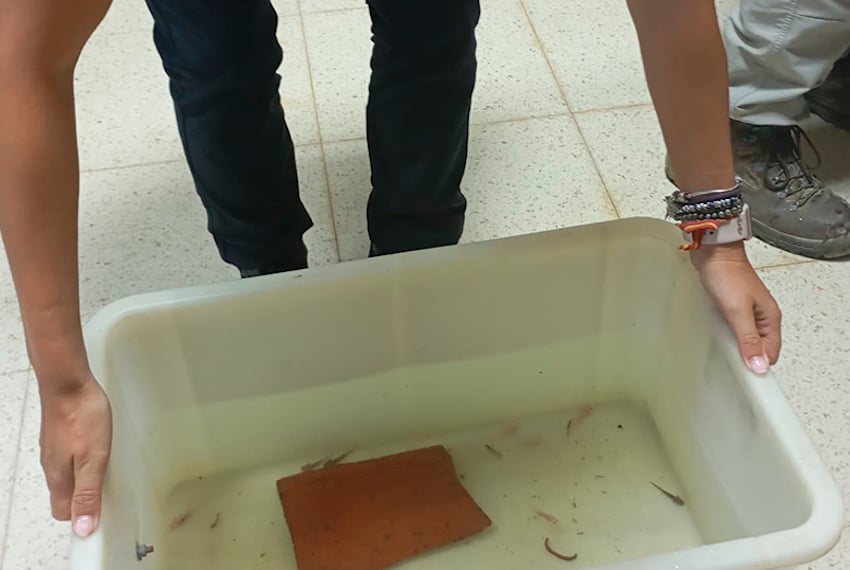
Spain’s National Police have recovered 29 axolotls, a critically endangered amphibian endemic to Mexico that survives in the wild only in the canal system of Xochimilco in Mexico City.
Spanish authorities confiscated the specimens in the city of Granada and are investigating a Mexican national for his alleged participation in illegally trading the axolotls.
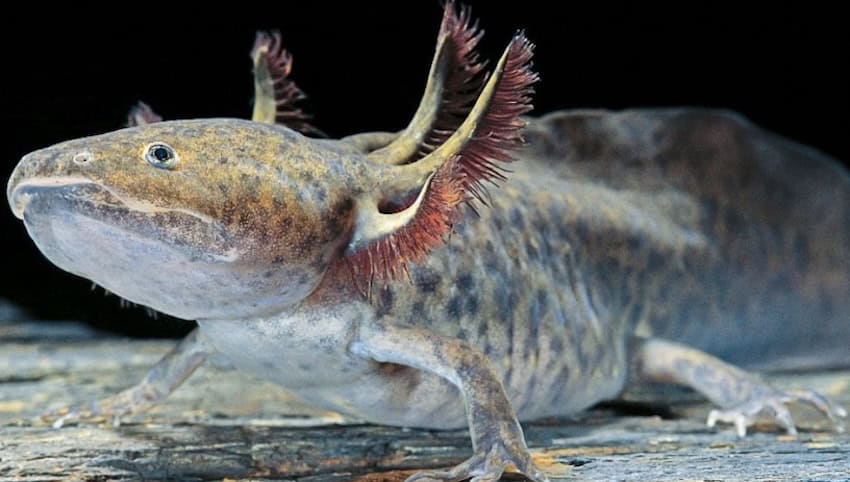
Although the International Union for Conservation of Nature classifies the axolotl as a critically endangered species — the category immediately preceding extinction in the wild — its international trade is legal, though strictly regulated.
The species is included in Appendix II of the Convention on International Trade in Endangered Species of Wild Fauna and Flora. As such, international trade must be controlled and supported by the necessary documentation to prove the legal origin and traceability of the specimens.
Spanish authorities say the suspect did not have the proper documentation. Therefore, they seized the axolotls and are pursuing charges of unauthorized possession and sale of specimens of a protected species.
Meanwhile, the axolotls are under the supervision of specialized veterinary personnel at the Zoobotanical Biodiversity Conservation Center of Jerez de la Frontera, in Cadiz.
The natural population of axolotls in Mexico has suffered a marked decline as a result of habitat destruction and degradation, water pollution, urban sprawl and the introduction of invasive species into the Xochimilco canal system.

This precarious situation contrasts sharply with their growing popularity as pets, making it especially important to control the origin of these carnivorous amphibians and prevent demand from fueling their illegal trade.
Even so, Mexican media have reported that axolotls are illegally sold (for around 500 pesos, or US $30) at the Mixhuca Market in the Venustiano Carranza borough of Mexico City.
In addition to Europe, the illegal trade reaches as far as South America, where Chilean officials confiscated 65 axolotls in April. Chilean officials have estimated that nine in 10 axolotls die of asphyxiation, dehydration or exposure to extreme temperatures during the transition.
Although appreciated as exotic pets, a lack of adequate information and unsuitable captive conditions endanger the lives of these amphibians. Placing an axolotl in a fish tank with clean water overlooks the reality that they are an extremely delicate species with very specific needs.
With reports from LopezDoriga.com, El Heraldo de México and N+