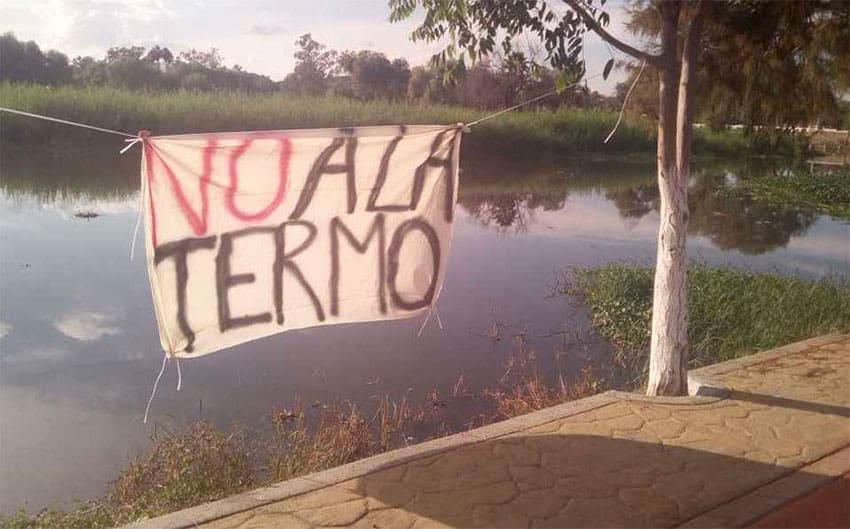
Political leaders in Jalisco and Baja California Sur have rejected private and federal government plans to build power plants that would run on non-renewable energy sources.
Jalisco Governor Enrique Alfaro said construction of a US $759-million thermal power station by the Spanish firm Fisterra in the municipality of Juanacatlán is not viable as it would violate his government’s commitment to tackle climate change.
“. . . We want to make it perfectly clear . . . that the governments of Jalisco and Juanacatlán will not allow the thermoelectric project in this municipality,” he said.
He said the state government’s message to private investors is that Jalisco intends to resolve its energy shortage problems by “betting on clean energy.”
“We’re not going to continue jeopardizing the future of new generations,” Alfaro said.
The governor said that permits already granted to Fisterra will be revoked through a legal process.
State Environment Secretary Sergio Graf said that if the plant were to go ahead, overall carbon emissions in Jalisco would increase by 24%.

“To give us an idea, the Juanacatlán plant would emit 21% of the emissions generated by the entire transportation sector including private vehicles, 63% of those generated by the entire livestock sector or 62% of those generated by the management [burning] of all solid waste in urban areas,” he said.
For her part, Juanacatlán Mayor Adriana Cortés González said the municipality needs investment and progress but stressed that it shouldn’t come at the cost of residents’ health.
“Installation [of the plant] is not viable . . .” she declared.
In La Paz, Baja California Sur, Mayor Rubén Gregorio Muñoz Álvarez has similarly rejected a plan to build a power plant that would run on non-renewable energy sources.
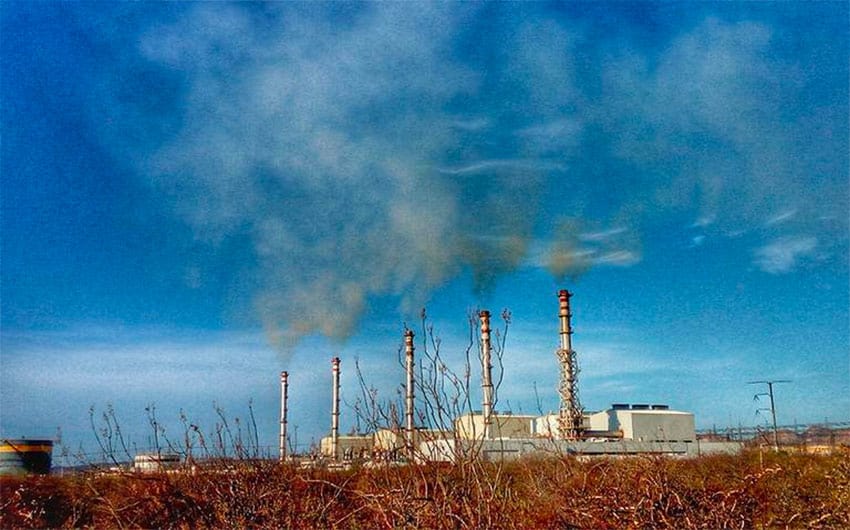
At a council meeting earlier this month, he proposed refusing to grant land use permits to the Federal Electricity Commission (CFE) to build a fossil fuel power station.
Muñoz said the municipal council must use its authority to stop a plant that would produce “toxic energy” and proposed meeting with CFE officials to discuss alternative generation methods.
Five councilors supported his proposal but five voted against it and four abstained, meaning that the mayor failed to get the support he required to ensure that land use permits won’t be granted to the utility.
José María Avilés Castro, one of the councilors who didn’t support Muñoz’s proposal, said he isn’t against banning contaminating energy sources but added that it was too soon to make a definitive decision.
“. . . It all depends on where it will be located . . . There are circumstances that have to be assessed to see if we will approve the land use [permit] or not,” he said.
“We can’t approve [or disapprove] a possible land use application that hasn’t been made . . .” Avilés added.
Muñoz said the councilors who didn’t support his proposal will have to face up to society for their actions.
The mayor did receive strong support from the Mexico Climate and Energy Platform (PMCE), an umbrella group of organizations that advocate for a reduction of greenhouse gases and propose public policies to decarbonize the Mexican economy.
The PMCE said the power plants in both La Paz and Juanacatlán were “unacceptable when there are renewable energy alternatives that don’t produce greenhouse gas emissions and . . . contaminants that are harmful to health.”
The group also said that renewable energy is cheaper to generate and that the Jalisco plant would use a lot of water that is needed for human consumption and agriculture.
Source: Milenio (sp), El Independiente (sp)