The dangers of highway travel and cheap flights were factors in the strong 2019 growth of airline passenger numbers, according to the director of a Mexico City think tank.
Government statistics show that passenger numbers at Mexico’s 10 busiest airports increased 6% last year to 157.5 million.
José Luis de la Cruz Gallegos of the Institute for Industrial Development and Economic Growth (IDIC) told the newspaper El Economista that people feel safer flying in Mexico than traveling on the nation’s roads.
“Due to the rise of criminal offenses on highways, such as kidnappings, homicides and extortion, as well as the presence of organized crime, people prefer to travel by air,” he said.
De la Cruz added that, in their quest to grow their market, airlines now offer “relatively accessible prices,” which helps get more people on to planes.
He said the government’s decision to disband the Tourism Promotion Council (the marketing agency’s budget was diverted to the Maya Train project) and implement a range of austerity measures did not have a significant impact on tourism in the country.
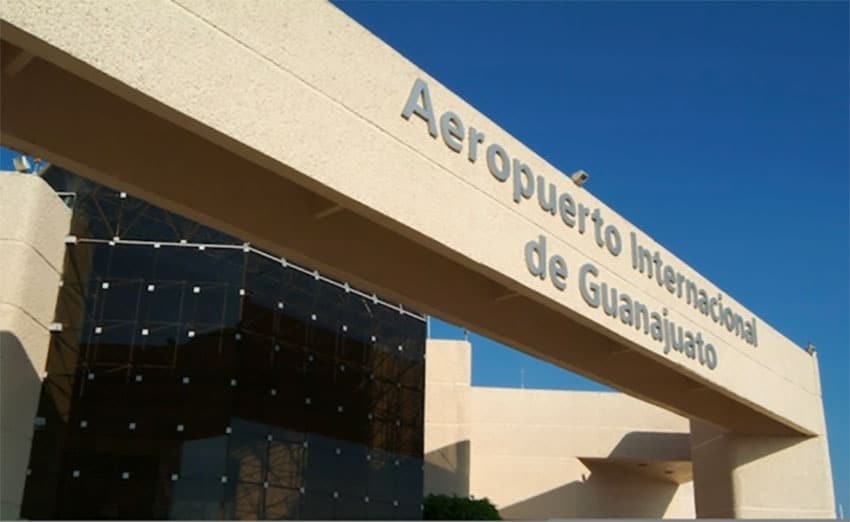
Official statistics show that of the 10 busiest airports in the country, those in Guanajuato, Tijuana and Mérida experienced the strongest growth last year, attracting 18.2%, 14% and 13.8% more passengers respectively than in 2018.

An academic at the University of Guanajuato told El Economista that the growth in passenger numbers at the Guanajuato airport, also known as Del Bajío International, was due to “the industrial vocation of the state” and the efforts of the state government to improve logistics and attract new investment.
“A large part of this growth is linked to manufacturing development,” Lari Arthur Viianto said.
“In Guanajuato, there’s an industrial corridor and dry ports. What we’ve seen is that the arrival of foreign companies from Asia has increased,” he said, adding that industrial growth translates into higher passenger numbers.
The academic also said that important business meetings and sporting events were held in Guanajuato last year, which helped to boost arrivals and departures at the Guanajuato airport.
As for Tijuana, Economic Development Secretary Arturo Pérez Behr said the strong economy in the northern border city, medical tourism and industry all contributed to the substantial growth in passenger numbers. Tijuana’s proximity to the United States and its airport’s cross-border tunnel also make it attractive to U.S.-bound travelers.
“We have the most important market [in the world] a few steps away. . .There’s a constant flow of people [crossing the border]. Our gastronomic tourism is also attracting visitors; we [Baja California] are the state of craft beer,” Pérez said.
The strong passenger growth in Mérida is because the Yucatán Peninsula is becoming both a tourism powerhouse and the most important center of economic development in the southeast of the country, said de la Cruz of IDIC.
Passenger numbers at the seven other airports among the nation’s 10 busiest – Mexico City, Guadalajara, Puerto Vallarta, San José del Cabo, Culiacán, Monterrey and Cancún – all increased but none achieved growth above 10%.
Still, passenger traffic at the Mexico City airport accounted for almost one-third of the total, while that of Cancún handled 16.2%.
With regard to air freight, the volumes transported via the 10 busiest airports declined 2.8% last year to 1.03 million tonnes. Only Tijuana, Mérida and Hermosillo increased the volume of freight they transported, growing by 13%, 8.7% and 6% respectively.
The biggest decline in freight volumes was at Monterrey airport, which saw 7.6% less cargo than in 2018, followed by those in Querétaro and Mexico City, where volumes decreased by 4.6% and 4.4% respectively.
Source: El Economista (sp)