As the Gulf of Mexico encroaches on the Tabasco coastal plain, some communities are working to recover natural barriers that protect the coast from erosion.
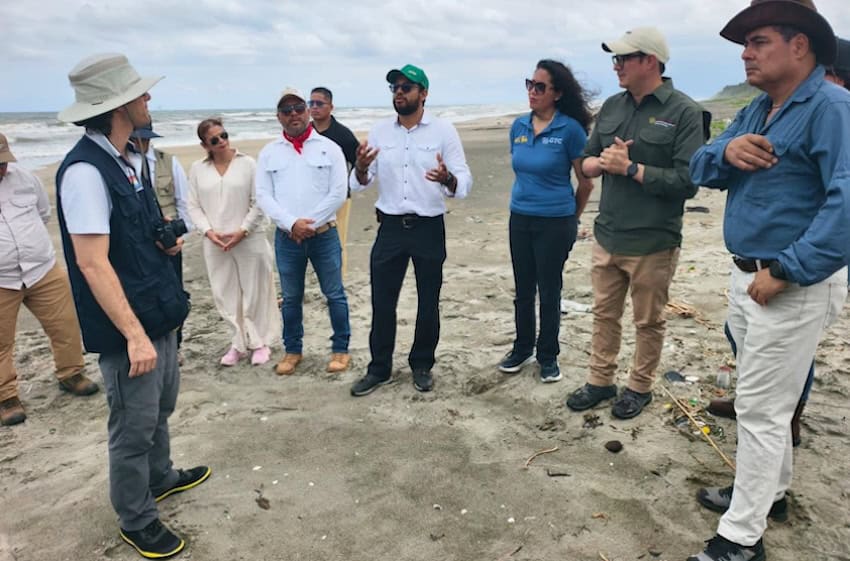
Residents of Barra de Santa Ana — a sandy strip of land separating the Gulf from the Carmen-Pajonal-Machona Lagoon System — have received training from Eni Mexico (the Mexican subsidiary of an Italian multinational energy company) and UNESCO to revegetate coastal dunes.
Climate change and the resulting rise in sea level threaten Santa Ana and other coastal communities and has resulted in the erosion of 85% of the 30 kilometers of coastline between Boca de Santa Ana and Boca de Panteones.
Up to 3.5 meters of shoreline are lost each year, prompting the development of the Dunas Vivas project (Living Dunes), which includes a temporary paid-work scheme to carry out its activities.
The project is part of a plan to reduce disaster risk and strengthen community resilience through science-based solutions and sustainable management of natural and cultural heritage. Community participation is critical to these restoration processes, ensuring ownership and long-term continuity.
With the additional help of local universities, ejido authorities and government officials, a 30-member brigade selected by the community was given a crash course in strategic planting to rebuild the vegetative barrier and the installation of sand catchers made from organic materials (to facilitate dune formation).

Additionally, the brigade will operate botanical nurseries and collect the germplasm (seeds, plant tissues, pollen, DNA, etc.) needed for the controlled propagation of species ideal for revegetation.
Coastal dunes are among the main natural defenses against hurricanes and storm surges, while also protecting communities, infrastructure and mangroves.
El Heraldo de Tabasco newspaper reported that the state has 50,044 hectares of mangrove forest, but large stretches of these coastal intertidal zones have scarce vegetation.
Government mapping of the area last year identified 2,179 hectares of disturbed mangrove compared to 406 hectares in the 2020 assessment.
A January 2026 report outlined the vulnerability of the Tabasco coast and the problems affecting the areas between the Gulf and lagoons.
In August 2026, a report prepared by the Navy warned of critical levels of erosion in El Alacrán, near La Machona Lagoon, as well as in Barra Santa Ana and in Paraíso further to the east.
With reports from UNESCO, Prevention Web and El Heraldo de Tabasco