A third migrant caravan made up of 450 men, women and children from El Salvador entered Mexico yesterday at the same southern border crossing where two other contingents of migrants recently arrived.
The group crossed the border bridge between Tecún Umán, Guatemala, and Ciudad Hidalgo, Chiapas, legally and registered asylum requests with Mexican immigration authorities.
Caravan spokesman Juan Bonilla said the migrants left El Salvador on October 28 to escape poverty and violence.
Some members are aiming to reach the United States while others wish to remain in Mexico, he said.
Unlike most members of the two other migrant caravans, the Salvadorans agreed to register for the Estás en tu Casa (You are at Home) program announced last week by President Peña Nieto.
The scheme offers shelter, medical attention, schooling and jobs to the Central American migrants on the condition that they formally apply for refugee status with the National Immigration Institute (INM) and remain in either Chiapas or Oaxaca.
Bonilla said authorities told the migrants that they would check to see if they had criminal records in their country of origin and if not they would be taken to a shelter.

Meanwhile, the second caravan of migrants — who clashed with Federal Police at the border Sunday — reached Tapachula after a six-hour walk from Ciudad Hidalgo.
During the journey, a five-month-old baby was treated by paramedics for fever, the newspaper El Universal reported.
Farther north, members of the first and largest migrant caravan continued their journey through Oaxaca yesterday to reach the city of Juchitán.
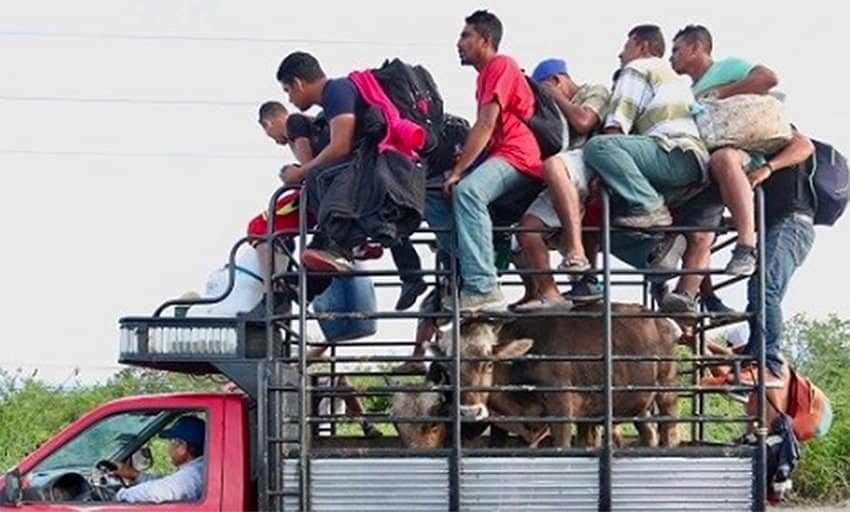
The migrants traveled to the Isthmus of Tehuantepec city from Santiago Niltepec in a variety of ways: on board buses, hanging off the back of passing trucks and fuel tankers, walking, in taxis and even riding on mototaxis.
They joined more than 500 migrants who had already arrived and were staying in a shelter set up by municipal authorities at an abandoned bus station.
Juchitán Civil Protection services said that there were 3,600 migrants at the shelter including 900 children and at least 20 pregnant women.
The National Human Rights Commission (CNDH) is urging migrants and authorities to pay close attention to the well-being of children and especially babies.
“. . . A child can become dehydrated quickly, placing their life in danger,” said CNDH official Édgar Corzo.
Source: El Universal (sp)