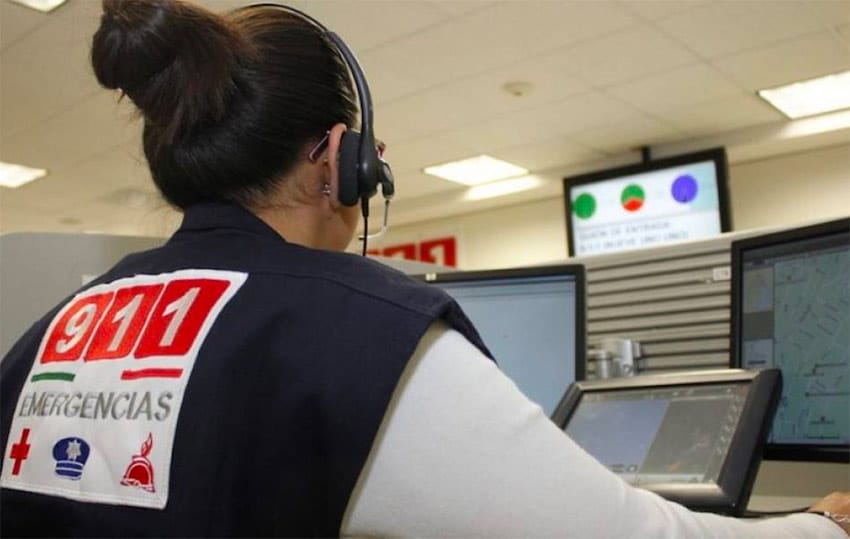
Non-emergency 911 calls are a big problem in Jalisco: every day about 20,000 calls are made to the state’s emergency telephone number, which since January 2017 has been 911.
But according to the director of the state’s emergency call center, the vast majority of those calls — about 18,000, or 90% — are prank calls that don’t relate to real emergencies or were made in error.
“We have . . . a serious problem with inappropriate calls, children who are pretending to be obscene adults, people who dial the number by mistake and unfortunately we get about 18,000 [of those calls] per day,” Salvador Medina said.
In order to reduce the number of phony calls, Ceinco — as the state’s communications center is known — has developed an algorithm known as a “virtual expert agent” which detects numbers that have previously been used to make prank calls.
Instead of being transferred to a human telephone operator, callers from those numbers hear a recorded message that requests they not abuse the emergency number.
Under state law, improper use of an emergency number can result in a fine of up to 1,760 pesos (US $87). But due to the high number of prank calls, in the majority of cases the law is not enforced, Medina said.
He explained that the average length of an emergency call is one minute and 33 seconds, a period in which the operator determines which emergency service should be notified.

Once a person reporting a genuine emergency in the metropolitan area of Guadalajara hangs up, an average of 16 minutes elapses before assistance arrives at the requested address, Medina said.
However, he added that it is not uncommon for the emergency response to be delayed because of a shortage of ambulances and other emergency vehicles.
“We receive the calls and transfer them to the municipalities [but] on many occasions we find there is a lack of ambulances, a lack of police cars and that’s something that afflicts the service,” Medina said.
Jalisco’s problem with prank and improper calls is not unique to the state but rather representative of a wider problem in Mexico.
The federal Interior Secretary (Segob) commented on the problem in its first quarterly report of 2018 in which it emphasized that 911 is purely an emergency number and should not be used for any other purpose.
Among other reasons people called the number in the first three months of this year were to report blackouts and cuts to water service, Segob said.
Between January 1 and March 31, there were almost 22.8 million 911 calls made across the country but only 3.67 million calls, or 16%, related to real emergencies.
The most common single reason people called the number across Mexico in the first quarter of 2018 was to report the presence of a suspicious person.
The next most common reason was to alert authorities to the presence of an aggressive person and thirdly, to report car accidents in which nobody was injured.
Source: Milenio (sp)