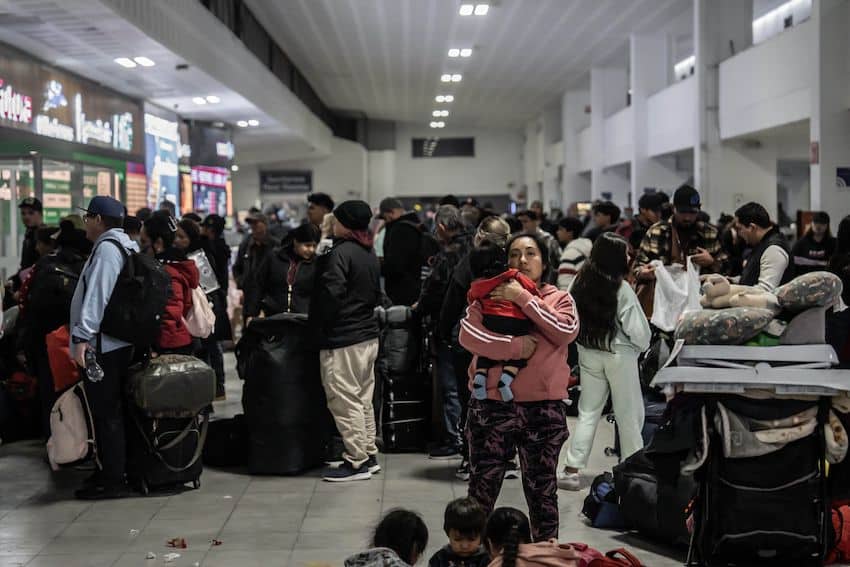
The municipal government of Tijuana approved on Monday an emergency declaration as it prepares for a possible influx of migrants deported from the United States after Donald Trump returns to the White House next week.
In a post to social media on Monday night, Tijuana Mayor Ismael Burgueño Ruiz said that an extraordinary meeting of the city council was held “with the objective of preparing Tijuana in the face of a possible mass arrival of migrants.”
Esta tarde, llevamos a cabo la Sesión Extraordinaria de Cabildo con el objetivo de preparar a Tijuana ante la posible llegada masiva de migrantes.
Aprobamos por unanimidad la declaratoria de emergencia para garantizar un trato digno, el respeto a los derechos humanos y la… pic.twitter.com/3FIfqI2M91
— Ismael Burgueño Ruiz (@ismaelburguenor) January 14, 2025
“We unanimously approved the emergency declaration to guarantee dignified treatment [of deportees], respect for human rights and the allocation of necessary resources,” the mayor said.
Trump, who will commence his second term as U.S. president next Monday, has pledged to carry out the “largest deportation operation in American history,” but it is unclear how many immigrants will be expelled from the United States and how quickly the deportations will occur.

According to a proposal sent by Burgueño to councilors before Monday afternoon’s meeting, the emergency declaration allows the municipal government to promptly access local funds to respond to the “atypical situation” that would occur if large numbers of deportees were to arrive in Tijuana.
The San Diego Union-Tribune reported that “the money — it’s not clear how much — could be used for hiring personnel, leasing facilities, utilities, Internet and legal services, among other needs.”
The emergency declaration also allows Tijuana to apply for federal funds to respond to an influx of deportees.
Some deportees would likely need to be housed and fed for a period as they make plans for their new lives in Mexico. There are already numerous migrant shelters in Tijuana, including many that have opened recently, but they could be overwhelmed if large numbers of deportees arrive in the border city.
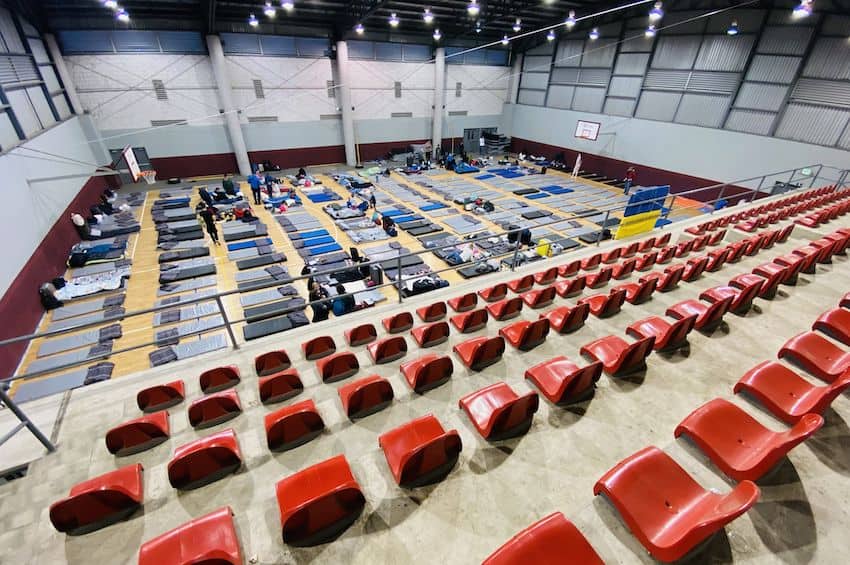
According to the San Diego Union-Tribune, Burgueño has proposed renting an industrial building in southern Tijuana with the capacity to house 5,000 people.
After Monday’s meeting, the mayor said that municipal authorities in Tijuana were collaborating closely with the Baja California and federal governments to prepare for the possible arrival of large numbers of deportees.
President Claudia Sheinbaum said on Jan. 2 that the federal plan to receive deportees is “ready,” but the government has not yet presented it.
How many undocumented Mexicans live in the US?
Alicia Bárcena, former foreign affairs minister and current Environment Minister, said last year that some 5.3 million undocumented Mexicans live in the United States. Other estimates place the figure between 4 million and 5 million.
The San Diego Union-Tribune reported that there are around 120,000 undocumented Mexicans in San Diego County, according to the Mexican Consulate.
Undocumented Mexicans appear to be vulnerable to deportation during Trump’s second term, even though they make a valuable contribution to the United States economy — as Mexican officials have stressed.
Mexico could also receive non-Mexican deportees, although the federal government would prefer to see such people returned directly to their countries of origin.
Sheinbaum said on Jan. 3 that “we’re going to ask the United States to, as far as is possible, send migrants who aren’t from Mexico to their countries of origin.”
However, she added that “if they can’t, we could collaborate through different mechanisms.”
With reports from El Universal, The San Diego Union-Tribune and AFP