The suspension of water service in Mexico City to carry out maintenance work in November wasn’t necessary, according to the new chief of the National Water Commission (Conagua).
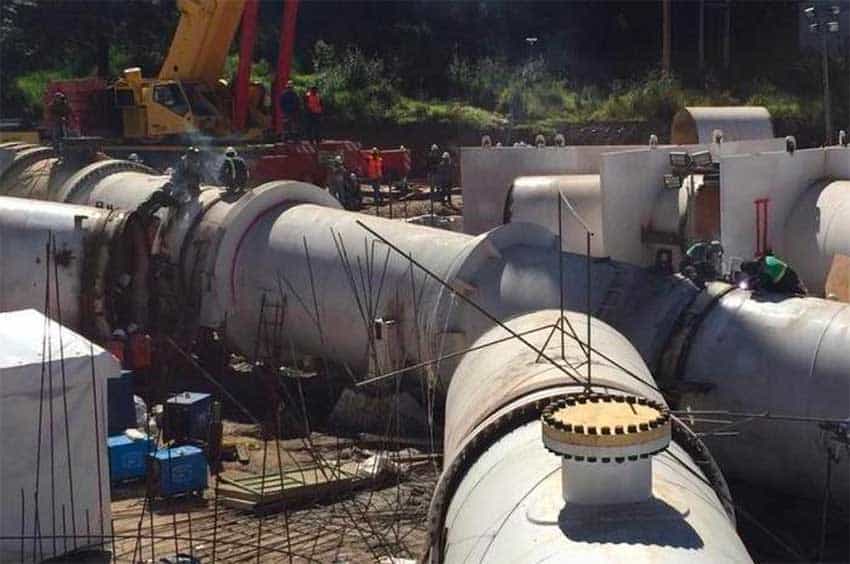
Blanca Jiménez Cisneros told a press conference yesterday that placing a massive piece of pipe known as an “inverted K” into the Cutzamala system could have been done without cutting off the water to 13 boroughs in the capital and several México state municipalities in the greater metropolitan area.
The disruption lasted 156 hours – 84 more than scheduled – and millions of affected residents had to wait up to three more days until running water arrived in their homes.
“It was nothing more than [a matter of] considering [the use of] the valve system. The change could have been made without cutting off Mexico City’s water,” Jiménez said.
“It’s an issue that I had the opportunity to look at with a group of . . . engineers who were planning and designing and they said: ‘Look, [it could have been done] like this.’ That’s why it’s important to have technical people. We still have other work to do, we still have to increase the pumping capacity but there is a way to do it without affecting [water] service,” she added.
During its installation, the inverted K shifted out of position by four centimeters, a mishap that delayed the completion of the maintenance work.
The Conagua chief said that one of two companies contracted to put the piece in place, Canadian-Mexican firm Consultoría de Ingeniería para Soluciones Integradas (CISI), was fined 5 million pesos (US $258,000) by the previous government, which initiated an investigation into the bungled installation.

Eduardo Seldner Ávila, a Conagua deputy director, explained how the amount of the fine was determined.
“The 5 million pesos is basically related to the cost of the installation of the piece . . . The piece cost a little more than 20 million pesos, the cost of installation, which is what failed, was 5 million. That’s what the economic sanction on the company was based on,” he said.
CISI, a Mexico City-based firm founded in 2010, was awarded 15 government contracts during the administrations of past presidents Felipe Calderón and Enrique Peña Nieto, which collectively were worth just under 618 million pesos (US $31.9 million at today’s exchange rate).
Seven contracts were for work on the Cutzamala system, one of the largest water supply systems in the world, including the 500-million-peso (US $25.8 million) project to install the inverted K, which CISI worked on with the México state company Consultoría en Obras Estructurales de Tubería.
However, the president of CISI said in a radio interview yesterday that Conagua has not paid for the work.
“Until now, we haven’t been paid a single peso for the inverted K project,” Mario Hasbum said, adding that he was confident that the new government would act transparently to resolve the situation.
“The manufacture and installation of the piece corresponded to me . . . I complied with my part . . .” he declared.
Jiménez, who became the chief of Conagua last month, said that investigations into the inverted K project as well as other Conagua contracts awarded by the previous administration are ongoing.
Source: Sin Embargo (sp), Milenio (sp), El Universal (sp)