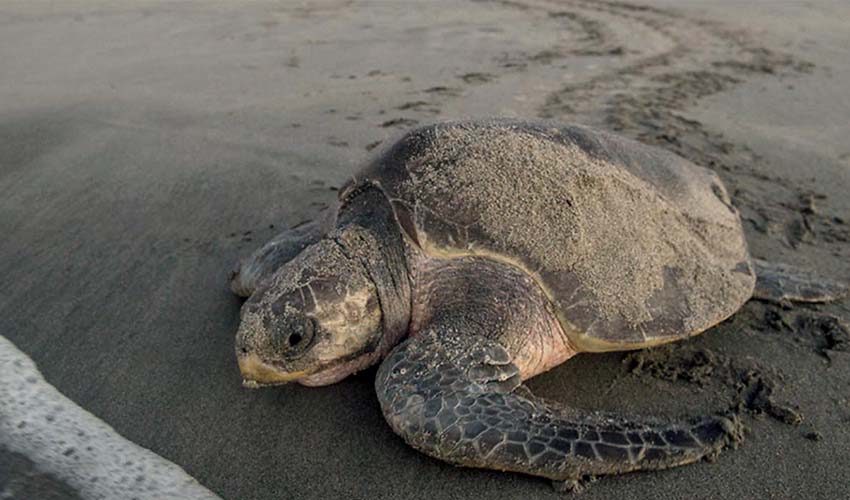
As turtles arrive on Chiapas beaches, their eggs appear in the marketplace

With sea turtles once again nesting on the coast of Chiapas, turtle eggs have reappeared on the black market in the southern state.

The newspaper Diario de Sur reported that poachers are removing olive ridley turtle eggs from beaches in Mazatán, a coastal municipality in southern Chiapas that borders Tapachula.

On the black market, a dozen eggs sell for around 70 pesos (US $3.40), according to José Alfredo González Gerardo, a biologist who collaborates with a Mazatán community group dedicated to the protection of flora and fauna.

Unfortunately, some people see the poaching and sale of turtle eggs as a money-making exercise, he told Diario de Sur. González said that a single poacher can collect up to 20 dozen eggs in a night and make 1,400 pesos (US $68) by selling them on the black market.
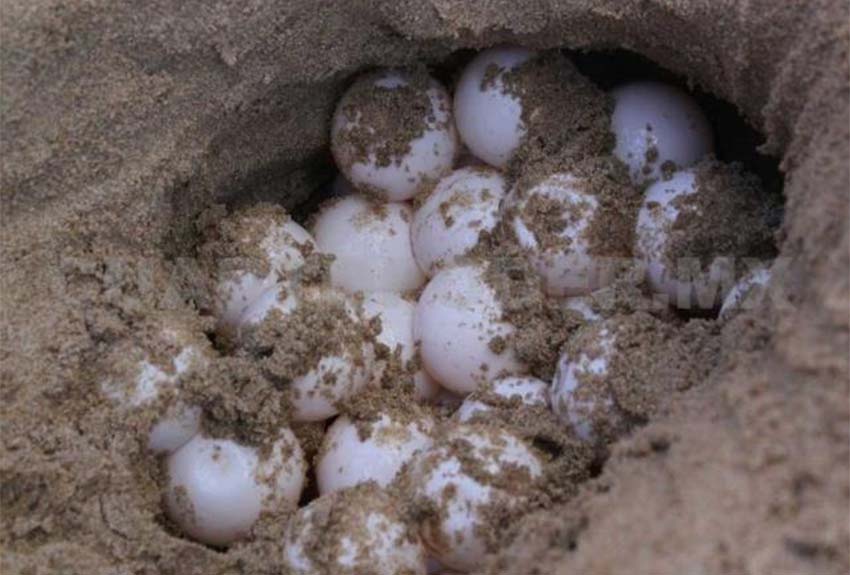
turtle eggs
Despite being illegal contraband, turtle eggs are an entrenched food in southern Chiapas.

During nesting season, large numbers of poachers descend on Mazatán beaches to look for eggs, he said. Authorities do little to stop the illegal practice and volunteers attempting to protect nests are outnumbered and outpaced by the poachers, many of whom use quad bikes.

González said the eggs are subsequently sold in municipalities such as Tapachula, Tuxtla Chico, Cacahoatán, Unión Juárez and Suchiate. People from those municipalities come to Mazatán to remove eggs from turtle nests, he added.

González said the eggs are illegally sold in public markets and served as snacks in bars and cantinas.

He attributed the high demand for turtle eggs to the erroneous conception that they are an aphrodisiac. There is no conclusive medical evidence that they are, he said.

The biologist called on authorities to do more to stop the poaching, especially on the Emiliano Zapata ejido (communal land), which is easily accessible via a coastal highway that runs through Mazatán. Under federal law, the poaching of turtle eggs is punishable by imprisonment of up to nine years as well as large fines.

Despite a federal ban on the hunting, sale and consumption of sea turtle eggs taking effect over 30 years ago, they continue to be poached, sold and eaten in some other parts of the country, such as Oaxaca’s Isthmus of Tehuantepec region.

With reports from Diario del Sur

Have something to say? Paid Subscribers get all access to make & read comments.
Manzanillo, Colima, México, 13 de marzo de 2026. La doctora Claudia Sheinbaum Pardo, presidenta Constitucional de los Estados Unidos Mexicanos en conferencia de prensa matutina, “Conferencia del Pueblo” desde Colima. La acompañan Indira Vizcaíno Silva, gobernadora Constitucional del Estado de Colima; Omar García Harfuch, secretario de Seguridad y Protección Ciudadana (SSPC); Raymundo Pedro Morales Ángeles, secretario de Marina (Semar); Bulmaro Juárez Pérez, divulgador de lenguas originarias, presentador de la sección “Suave Patria”; Ricardo Trevilla Trejo, secretario de la Defensa Nacional (Sedena); Jesús Antonio Esteva Medina, secretario de Infraestructura, Comunicaciones y Transportes; Bryant Alejandro García Ramírez, fiscal general del Estado de Colima; Fabián Ricardo Gómez Calcáneo; Rocío Bárcena Molina, subsecretaria de Desarrollo Democrático, Participación Social y Asuntos Religiosos de la Secretaría de Gobernación; Efraín Morales López, director general de la Comisión Nacional del Agua (Conagua); Marcela Figueroa Franco, secretaria ejecutiva del Sistema Nacional de Seguridad Pública (SESNSP) y Guillermo Briseño Lobera, comandante de la Guardia Nacional (GN). Foto: Saúl López / Presidencia

Mexico’s week in review: Congress deals Sheinbaum her first legislative defeat

1
The week of March 9 in Mexico was marked by standoffs between allies in Congress and adversaries at the airport. Here's what you missed.
A soldier displays seized handguns

The US and Mexico, growing together and growing apart: A perspective from our CEO

1
From a historic drop in homicides to opposite bets on electric vehicles, Mexico News Daily's CEO breaks down where the U.S. and Mexico are converging — and where they're not.
Veracruz Gov.

Veracruz governor blames private vessel for 200-kilometer Gulf Coast oil spill

1
The spill, which has spread to over 200 kilometers of Mexico's Gulf Coast beaches, has been traced to a private oil tanker off the coast of Tabasco.
BETA Version - Powered by Perplexity