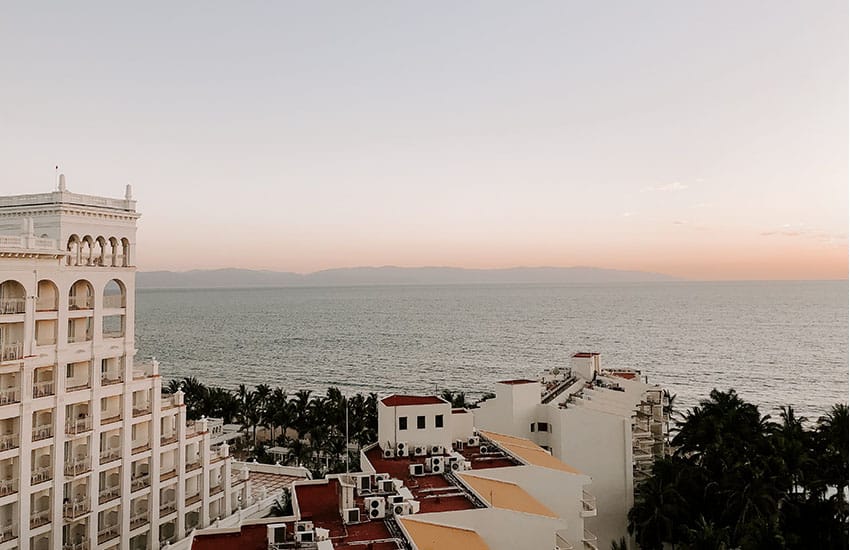
The United States government has sanctioned eight Mexican companies it says are involved in a cartel-backed fraud scheme that has targeted U.S. owners of timeshare properties in Mexico, particularly in the Puerto Vallarta area.
The U.S. Department of the Treasury said in a statement Thursday that its Office of Foreign Assets Control (OFAC) had sanctioned companies linked to timeshare fraud on behalf of the Jalisco New Generation Cartel (CJNG).
“Today’s action is the result of a collaboration between the United States and the Government of Mexico,” it said, noting that U.S. assets of the designated companies were blocked and that any assets of the companies in the possession of U.S residents must be reported to the OFAC.
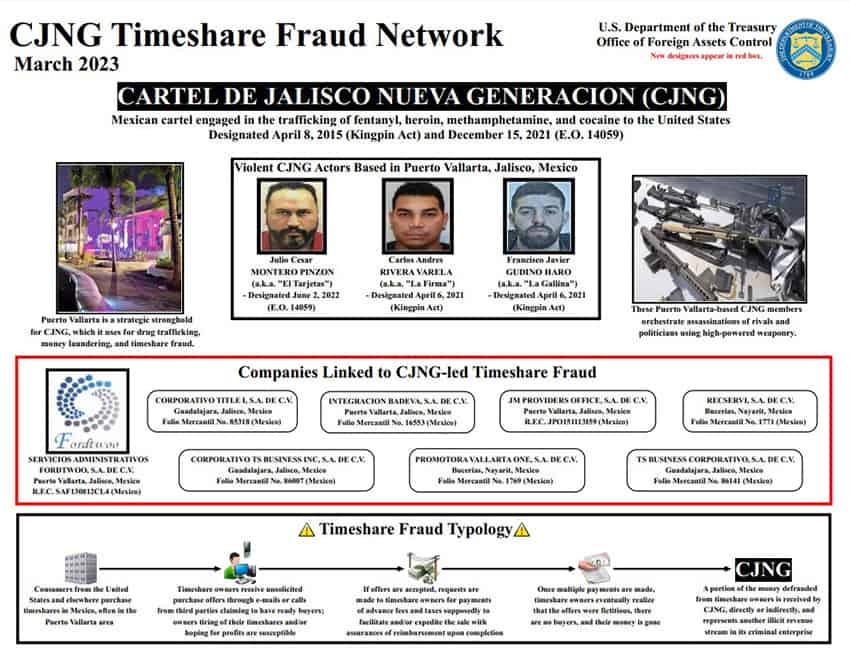
According to a chart published by Treasury, three of the companies are based in Puerto Vallarta, Jalisco; two are based in the nearby resort town of Bucerías, Nayarit; and three are located in Guadalajara.
They are Servicios Administrativos Fordtwoo, Integración Badeva, JM Providers Office, Promotora Vallarta Uno, Recservi, Corporativo Title I, Corporativo TS Business Inc and TS Business Corporativo.
The Treasury Department said that the eight companies claim to be financial services or real estate companies, but are linked directly or indirectly to CJNG’s timeshare fraud activities.
“As CJNG has consolidated territory over the past decade, it has added other crimes to its core activity of drug trafficking,” OFAC Director Andrea M. Gacki said Thursday.

“In tourist destinations such as Puerto Vallarta, CJNG has become heavily engaged in timeshare fraud, which often targets U.S. citizens,” she said.
“This crime, which can defraud victims of their life savings, results in another significant revenue stream for the cartel and strengthens its overall criminal enterprise. Today’s action exposes this CJNG scheme and also serves as a warning to potential victims, many of whom are elderly.”
The Treasury Department acknowledged that there are different types of timeshare fraud, but outlined characteristics that are common of many schemes.
It said that timeshare owners receive unsolicited purchase offers through-emails or calls from third parties claiming to have ready buyers.
“Owners tiring of their timeshares and/or hoping for profits are susceptible,” Treasury said.
If purchase offers are accepted, “requests are made to timeshare owners for payments of advance fees and taxes supposedly to facilitate and/or expedite the sale with assurances of reimbursement upon completion,” the department said.
“Once multiple payments are made, timeshare owners eventually realize that the offers were fictitious, that there are no buyers and that their money is gone.”
Treasury added that “a portion of the money defrauded from timeshare owners is received by CJNG, directly or indirectly.”
It didn’t say how many timeshare owners had been victims of fraud schemes that benefited CJNG or how much money they lost.
It noted that the FBI and the U.S. Securities and Exchange Commission in 2020 issued a joint warning to consumers concerning fraudsters targeting owners of timeshares in Mexico.
Headed by Nemesio “El Mencho” Oseguera Cervantes, the CJNG is generally considered Mexico’s most powerful criminal organization. It operates in most of Mexico’s 31 states as well as Mexico City, and smuggles large quantities of narcotics including fentanyl and cocaine into the United States.
Treasury said that Puerto Vallarta is a “strategic stronghold” for the cartel that it uses for drug trafficking, money laundering and timeshare fraud.
“OFAC has taken multiple actions against CJNG actors in Puerto Vallarta, including those who have ties to nightclubs, bars, and restaurants,” it said.
“Additionally, OFAC has designated senior CJNG members Carlos Andres Rivera Varela (a.k.a. “La Firma”), Francisco Javier Gudino Haro (a.k.a. “La Gallina”), and Julio Cesar Montero Pinzon (a.k.a. “El Tarjetas”), who are part of a CJNG enforcement group based in Puerto Vallarta that orchestrates assassinations of rivals and politicians using high-powered weaponry.”
Mexico News Daily