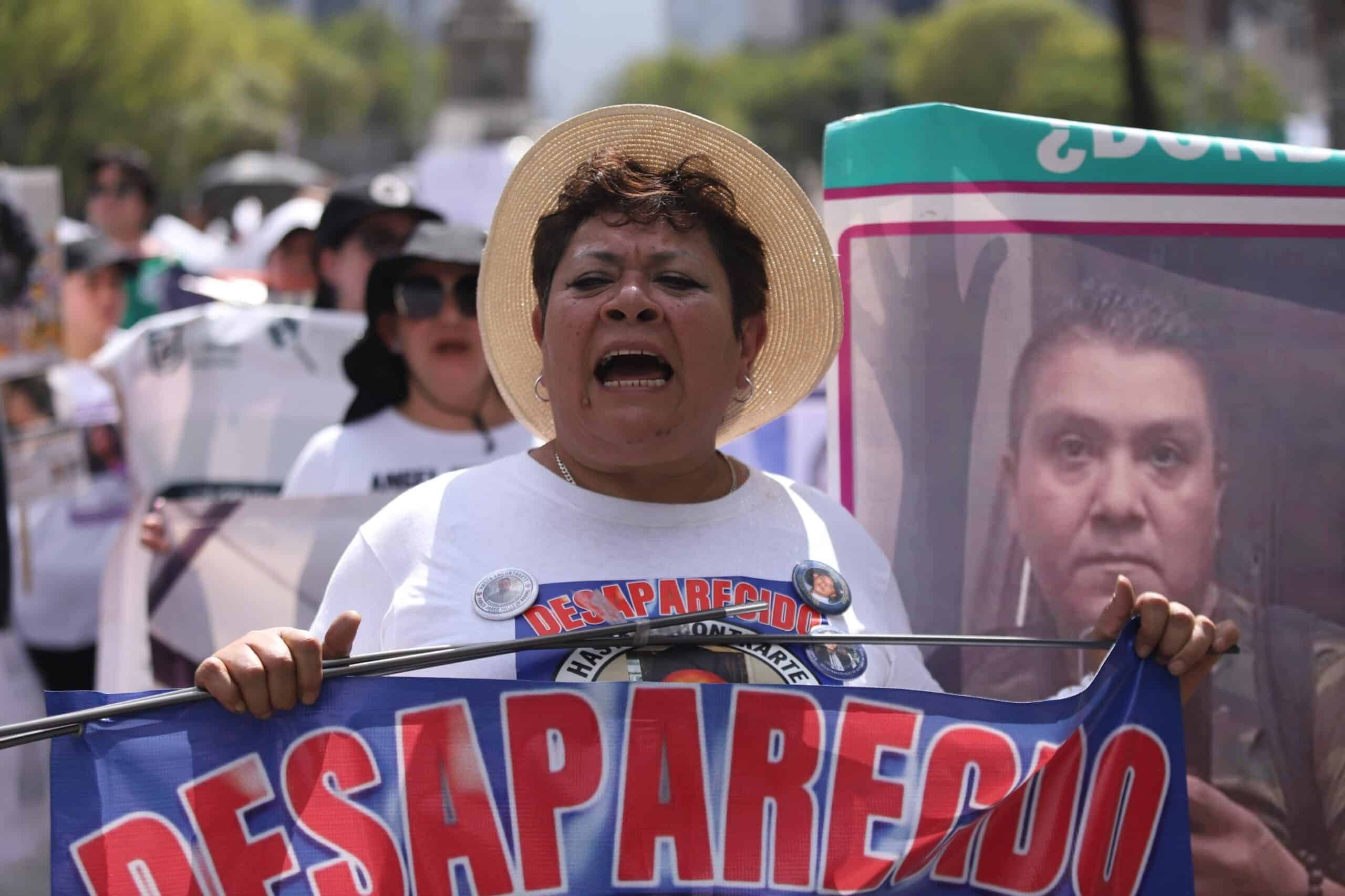
A U.N. committee responsible for monitoring the International Convention for the Protection of All Persons from Enforced Disappearance again pressed the General Assembly to take up the issue of disappearances in Mexico.
The chairman of the Committee on Enforced Disappearances on Tuesday presented the annual report to the General Assembly’s Social, Humanitarian and Cultural Committee (Sochum), reiterating its assertion that the situation in Mexico ought to be categorized as crimes against humanity, a proposal that Mexico has rejected.
Mañana compareceré ante la Tercera Comisión de la Asamblea General de la @ONU_es para presentar el informe anual del Comité contra la Desaparición Forzada @UNTreatyBodies.
Esta comparecencia tiene una relevancia particular. Por primera vez desde la entrada en vigor de la Convención, el Comité ha recurrido al artículo 34 para llevar una situación a la consideración de la Asamblea General.
Este procedimiento excepcional abre una oportunidad para movilizar la cooperación internacional en materia de búsqueda, investigación, esclarecimiento de la verdad y protección de las víctimas.
También informaré sobre los avances de nuestro trabajo y las graves consecuencias que la crisis financiera de las Naciones Unidas está teniendo para el cumplimiento de nuestro mandato.
En un momento especialmente difícil para el sistema internacional de derechos humanos, resulta fundamental que los mecanismos de protección puedan cumplir eficazmente las responsabilidades que los Estados les han confiado.
📅 Martes 20 de octubre, 15h00 (Nueva York).
🔴 Transmisión en vivo:
https://t.co/GLbxtfZ0Ax#UNGA81 #CED
— Juan Pablo Albán (@JuanPablo_Alban) October 19, 2026

Sochum is one of six permanent U.N. committees that include representatives of all 193 member states.
“[G]iven the existence of well-founded indications that enforced disappearances have been and continue to be perpetrated in [Mexico],” Juan Pablo Albán Alencastro of Ecuador, the chairman of the Committee on Enforced Disappearances (CED), urged the General Assembly to formally take up the matter.
This marks the first time since the entry into force of the International Convention against Enforced Disappearances (CPED) that the committee in charge of monitoring compliance has recommended that the situation in a specific country be examined by the General Assembly. Albán had initially brought the issue to the Assembly’s attention in April.
The submission of CED’s annual report does not mean a resolution has been issued regarding Mexico, however, nor does it imply that a judgment has been made.
“This exceptional procedure opens an opportunity to mobilize international cooperation in the search for the missing, the investigation of cases, as well as truth-telling and protection of victims,” Albán said.
The goal, Albán said, is to provide support “for the adoption of preventive measures that will enable Mexico to tackle the crisis effectively.”

On Friday, Mexico’s Interior Ministry presented the U.N. with a progress report on the National Strategy for the Search for Missing Persons, while declaring that more than 16,000 people had been located this year.
Mexico also said a group of national and international specialists, with the support of the U.N. High Commissioner for Human Rights, is reviewing the methodologies of the National Registry of Missing and Unlocated Persons.
The International Federation for Human Rights, which requested the U.N. activate CPED procedures, thanked the committee for its actions in a press release.
The decision “acknowledges the existence of international crimes that are emblematic of what victims are experiencing in [Mexico] and seeks to contribute to the adoption of measures aimed at preventing, investigating, punishing and eradicating such conducts,” it said.
With reports from El Universal, Aristegui Noticias and Milenio