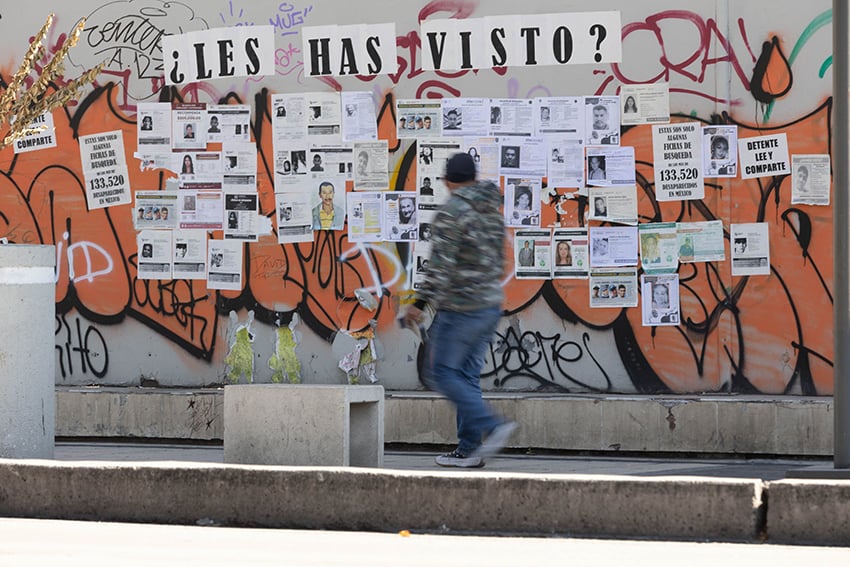
Mexico is pushing back against a U.N. report that asks the General Assembly to examine the situation of forced disappearances in the country, concluding that crimes against humanity have been and continue to be committed here.
The U.N. Committee against Enforced Disappearances said it has “well-founded indications that … multiple widespread or systematic attacks against the civilian population have taken place at different moments and in different parts of the country.”
In an unprecedented move, the committee requested that U.N. Secretary-General Antonio Guterres “urgently refer” the issue to the General Assembly so that it may consider measures to support Mexico in the prevention, investigation, punishment and eradication of this crime.
The Mexican government issued a statement strenuously rejecting the findings, describing the committee’s resolution as “biased” and lacking legal rigor, while also insisting it ignored “the institutional progress achieved since 2019.”
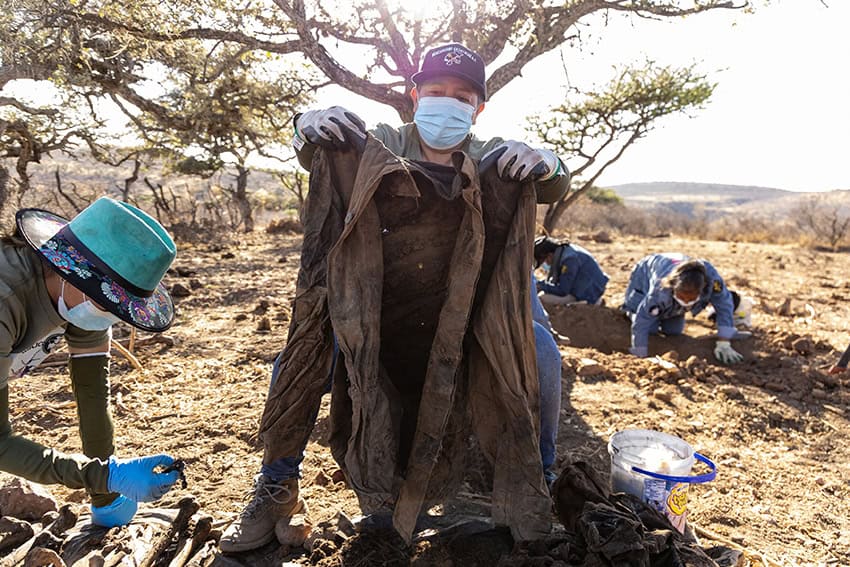
Almost immediately thereafter, human rights activists and relatives of the disappeared condemned the official response, demanding that the government accept international aid to face a crisis that has resulted in more than 132,400 missing persons in Mexico, more than 4,500 clandestine graves and nearly 72,000 unidentified human remains.
The committee report does not seek to establish individual criminal responsibilities, but instead issues an urgent call for technical and financial cooperation for forensic and search work.
While asserting that its report is informed by more than a decade of monitoring and contributions from civil society, the U.N. clearly states that it found no evidence of a deliberate federal policy to commit disappearances.

Even so, it provides considerable documented evidence of regular patterns of disappearances perpetrated by organized crime with the direct participation, support or acquiescence of public officials at the municipal, state and federal levels.
“Authorities remain overwhelmed by the scale of the crisis,” it said, suggesting that the virtually absolute impunity with regard to disappearances encourages the proliferation of these crimes.
In a joint statement issued by the Foreign Affairs and Interior ministries, the government rejected the report, saying it “failed to consider the observations, analyses and updates submitted by the government, which demonstrate that the arguments do not align with either the Committee’s own definition of enforced disappearance or the institutional progress achieved since 2019 and particularly since 2025.”
While acknowledging that the report mainly refers to events that occurred from 2009-2017 and is limited to four states, it called the committee’s decision “partial and biased.”
The joint statement claims that the committee refused to “study updated information before publishing its resolution” and also ignored new tools such as the National Search Alert, improvements to the National Forensic Data Bank and the creation of special prosecutors’ offices.
Signs of life found for 40,000 of Mexico’s 132,000 missing persons
Human rights groups and civic organizations were quick to decry the government reply.
In a social media post, the Centro Prodh, a prominent Mexican non-profit human rights organization, criticized the government’s condemnation of the report.
“We regret the State’s response to this determination … [which] does not rise to the level of the crisis the country is experiencing in terms of disappearances,” it said.
The rights group added that the government is “repeating previous actions by various administrations that have disparaged international organizations when they have revealed the reality of human rights violations in the country.”
The Jesuit University System also backed U.N. General Assembly involvement, saying in a statement that “[f]or years, there has been a profound crisis regarding the disappearance of people.”
Guadalupe Fernández, a member of the United Forces for Our Disappeared in Coahuila search collective, expressed sadness regarding the government’s response.
“You can see the intolerance, you can see the denigration of what is happening,” she told the digital news outlet Animal Político.
With reports from La Jornada, Proceso, Animal Político and El Universal