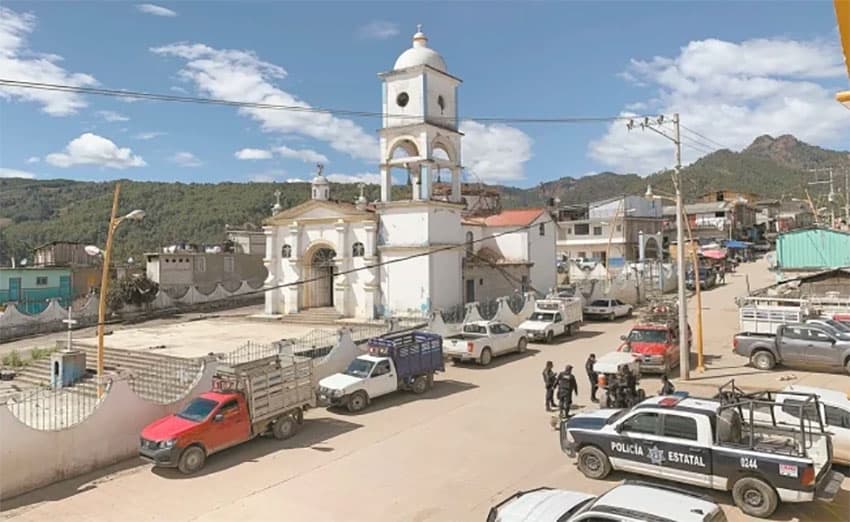
Guerrero is ill-prepared to respond to the coronavirus pandemic given that many municipalities don’t have hospitals capable of providing critical care to Covid-19 patients. So many residents are hours away from health care facilities should they require urgent medical attention.
Making the situation worse is that the state government has not yet executed its plan to convert eight hospitals into specially-designated Covid-19 facilities.
Statistics already show that Guerrero residents are more likely to die from Covid-19 than Mexicans more broadly: there have been 29 deaths in the state from 200 confirmed cases, a fatality rate of 14.5% – more than 5% higher than the nationwide rate of 9.2%.
Part of the health care accessibility problem is that there are 10 incomplete health care facilities in the state.
Five of them are in Chilapa de Álvarez, located in the Montaña region east of the state capital, Chilpancingo.
One of the incomplete facilities is the general hospital, which is 85% finished eight years after construction began. However, the army was given the task last week of preparing it to receive Covid-19 patients although it is not known when it will be ready.
The other five incomplete facilities are a community hospital in Tlacoapa, clinics in Chilpancingo, Acapulco and Marquelia and the general hospital in Ayutla. The latter project is only 25% complete even though it was originally scheduled for completion in 2019.

With no facilities in Chilapa or the wider Montaña region currently equipped to receive coronavirus patients, residents requiring hospitalization for Covid-19 would have to travel to Chilpancingo.
For residents of Tlapa de Comonfort, the trip to the state capital takes five hours while for those in Cochoapa el Grande, it’s an eight-hour journey. The chances of survival for a critically ill coronavirus patient could diminish in minutes without adequate care let alone hours, leaving residents of medically-isolated communities particularly vulnerable.
The situation is similar for some residents of the Costa Chica and Costa Grande regions.
Residents of San Marcos and Copala in the former region, where there are already confirmed cases of Covid-19, and Coyuca de Benítez in the Costa Grande would have to be transported to Acapulco for treatment should they fall critically ill, El Universal said.
However, even in Acapulco they might struggle to find a hospital where they can receive the specialist treatment they require: state authorities are planning to convert eight hospitals into dedicated Covid-19 facilities, including two in the Pacific coast resort city, but Governor Héctor Astudillo has indicated that the conversions might not occur until May 23.
As things currently stand, no hospital in Guerrero is ready to confront a pandemic of the size of the coronavirus crisis, said Chilpancingo doctor Verónica Ortiz Zúñiga.
Even if the government goes ahead with the plan to convert eight hospitals for the treatment of Covid-19 patients, they might not have enough specialist medical personnel to staff them because specialized doctors are at a premium, she said.
She explained that there is only one specialist intensive care doctor at her workplace, Chilpancingo’s Raymundo Abarca Alarcón General Hospital, and seven or eight internists.
There are six beds in intensive care but only four of them are in working condition, Ortiz said, adding that there are only two ventilators in the ward.
With coronavirus cases rising quickly in Guerrero – case numbers increased by about 60% over the past week – hospitals in the state capital and elsewhere in the state could quickly become overwhelmed.
Thirty-five people have tested positive for Covid-19 in Chilpancingo, the second most affected municipality in Guerrero after Acapulco, where there were 92 confirmed cases as of Sunday.
Source: El Universal (sp)